
脑转移瘤患者认知功能保护策略:综述
Strategies to Preserve Cognition in Patients With Brain Metastases: A Review.
作者信息
Robin Tyler P, Rusthoven Chad G
机构信息
Department of Radiation Oncology, University of Colorado School of Medicine, Aurora, CO, United States.
出版信息
Front Oncol. 2018 Oct 9;8:415. doi: 10.3389/fonc.2018.00415. eCollection 2018.
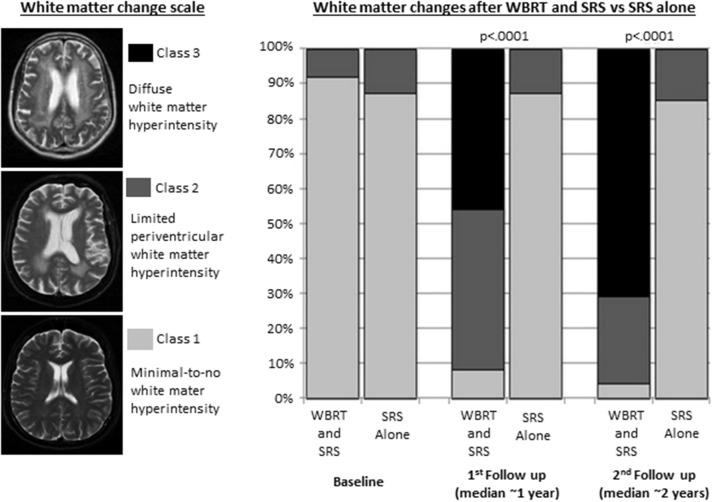
Brain metastases are common to the natural history of many advanced malignancies. Historically, whole brain radiation therapy (WBRT) has played a key role in the management of brain metastases, especially for patients with multiple lesions. However, prospective trials have demonstrated consistent neurocognitive toxicities after WBRT, and various pharmacologic and anatomic strategies designed to mitigate these toxicities have been studied in recent years. Memantine, an NMDA receptor antagonist, taken during and after WBRT improved cognitive preservation in a randomized trial over placebo. Deliberate reductions in radiation dose to the hippocampus, via hippocampal-avoidance (HA)-WBRT, resulted in improved cognition over historic controls in a phase II trial, and follow-up randomized trials are now ongoing to evaluate cognitive outcomes with HA vs. conventional brain radiation techniques. Nevertheless, some of the most promising strategies currently available to reduce the cognitive effects of brain radiation may be found in efforts to avoid or delay WBRT administration altogether. Stereotactic radiosurgery (SRS), involving focused, high-dose radiation to central nervous system (CNS) lesions with maximal sparing of normal brain parenchyma, has become the standard for limited brain metastases (classically 1-3 or 4 lesions) in the wake of multiple randomized trials demonstrating equivalent survival and improved cognition with SRS alone compared to SRS plus WBRT. Today, there is growing evidence to support SRS alone for multiple (≥4) brain metastases, with comparable survival to SRS alone in patients with fewer lesions. In patients with small-cell lung cancer, the routine use of prophylactic cranial irradiation (PCI) for extensive-stage disease has been also been challenged following the results of a randomized trial supporting an alternative strategy of MRI brain surveillance and early salvage radiation for the development of brain metastases. Moreover, new systemic agents are demonstrating increasing CNS penetration and activity, with the potential to offer greater control of widespread and microscopic brain disease that was previously only achievable with WBRT. In this review, we endeavor to put these clinical data on cognition and brain metastases into historical context and to survey the evolving landscape of strategies to improve future outcomes.
脑转移是许多晚期恶性肿瘤自然病程中的常见情况。从历史上看,全脑放射治疗(WBRT)在脑转移的治疗中发挥了关键作用,尤其是对于有多个病灶的患者。然而,前瞻性试验表明WBRT后存在持续的神经认知毒性,近年来已经研究了各种旨在减轻这些毒性的药物和解剖学策略。在一项随机试验中,与安慰剂相比,在WBRT期间及之后服用美金刚(一种NMDA受体拮抗剂)可改善认知功能的保留。通过海马回避(HA)-WBRT有意降低海马体的辐射剂量,在一项II期试验中,与历史对照相比,认知功能得到改善,目前正在进行后续随机试验以评估HA与传统脑部放射技术的认知结果。尽管如此,目前一些最有前景的减少脑部放射认知影响的策略可能在于完全避免或延迟WBRT的使用。立体定向放射外科(SRS),即对中枢神经系统(CNS)病变进行聚焦、高剂量放射,同时最大程度地保留正常脑实质,在多项随机试验表明单独使用SRS与SRS加WBRT相比具有同等生存率且认知功能改善后,已成为局限性脑转移(经典的1 - 3个或4个病灶)的标准治疗方法。如今,越来越多的证据支持单独使用SRS治疗多个(≥4个)脑转移,其生存率与病灶较少的患者单独使用SRS相当。在小细胞肺癌患者中,一项随机试验的结果支持对脑转移的发生采用MRI脑部监测和早期挽救性放疗的替代策略,这也对广泛期疾病常规使用预防性颅脑照射(PCI)提出了挑战。此外,新的全身药物显示出越来越高的中枢神经系统渗透性和活性,有可能更好地控制广泛的和微小的脑部疾病,而这些疾病以前只有通过WBRT才能实现控制。在这篇综述中,我们努力将这些关于认知和脑转移的临床数据置于历史背景中,并审视不断演变的改善未来治疗结果的策略格局。
 Zotero 插件