Mariotto Elena, Viola Giampietro, Ronca Roberto, Persano Luca, Aveic Sanja, Bhujwalla Zaver M, Mori Noriko, Accordi Benedetta, Serafin Valentina, López-Cara Luisa Carlota, Bortolozzi Roberta
Pediatric Hematooncology Laboratory, Department of Women's and Children's health, University of Padova, 35128 Padova, Italy.
Fondazione Istituto di Ricerca Pediatrica Città della Speranza, 35127 Padova, Italy.
Cancers (Basel). 2018 Oct 22;10(10):391. doi: 10.3390/cancers10100391.
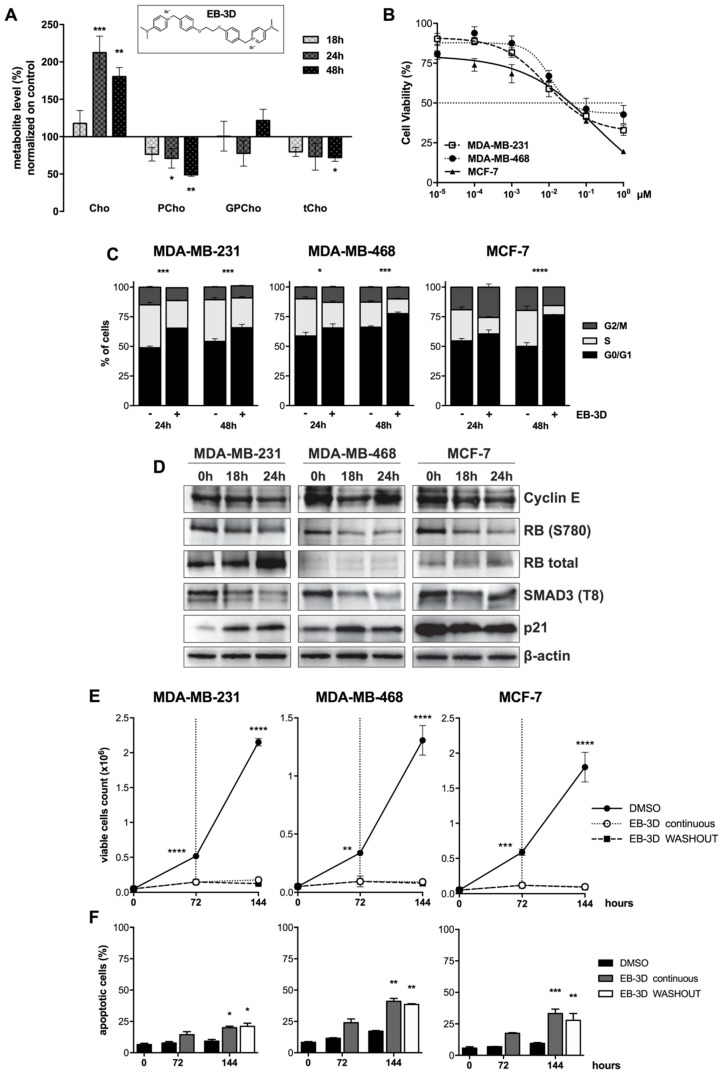
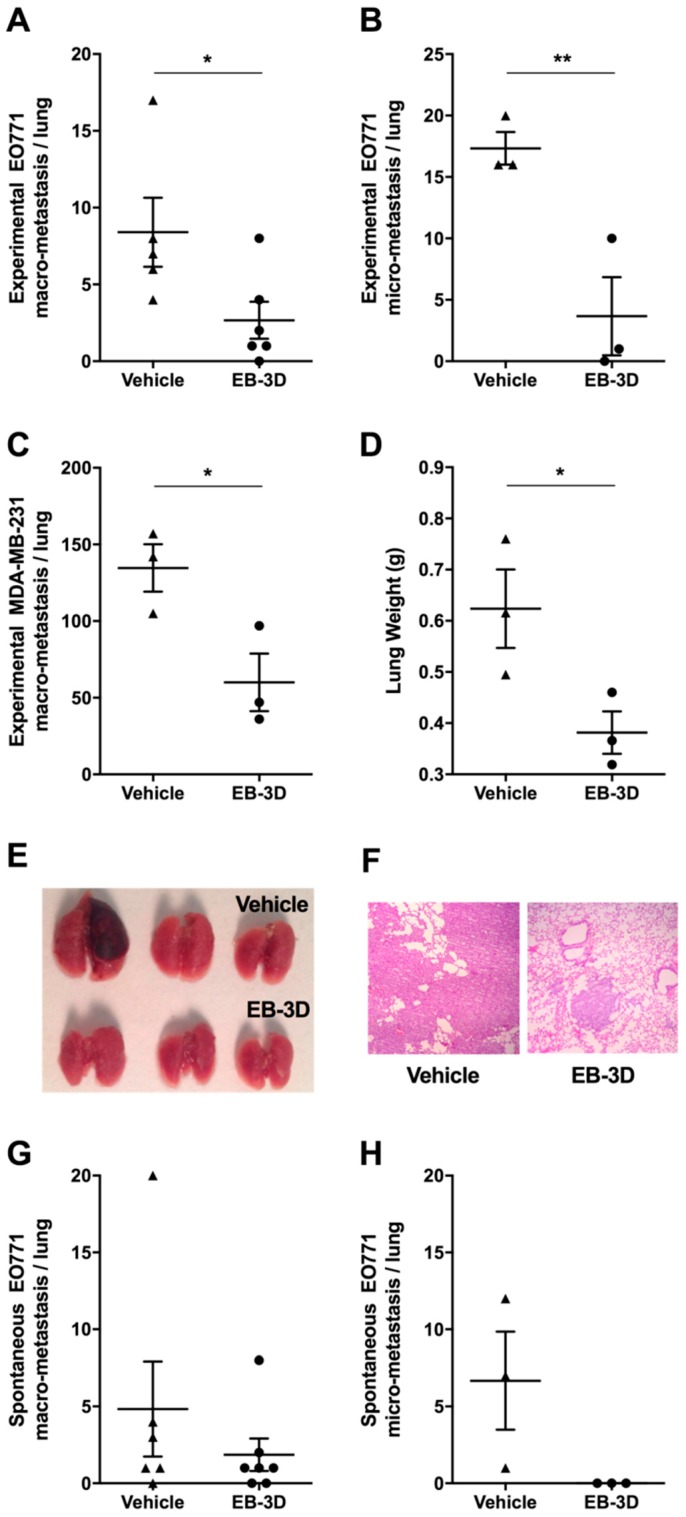
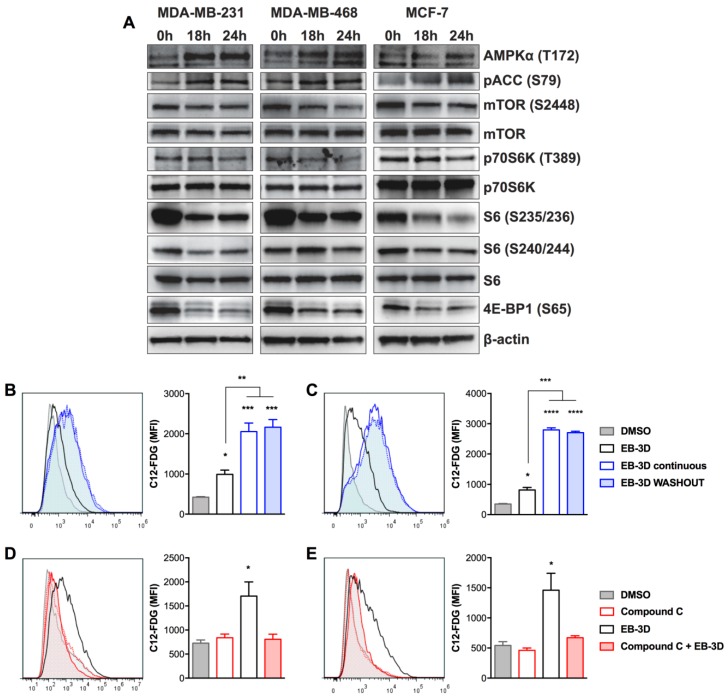
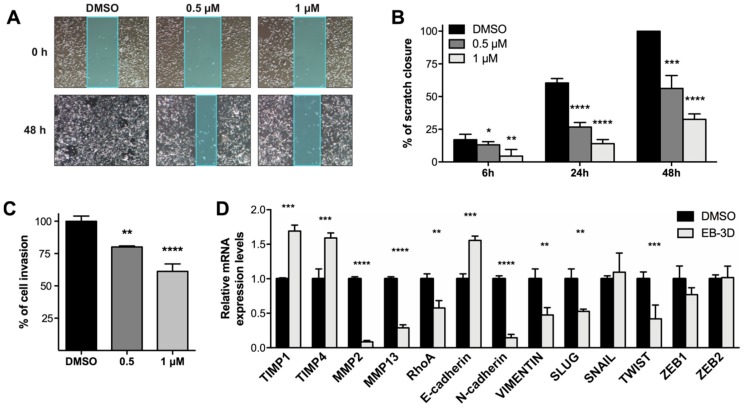
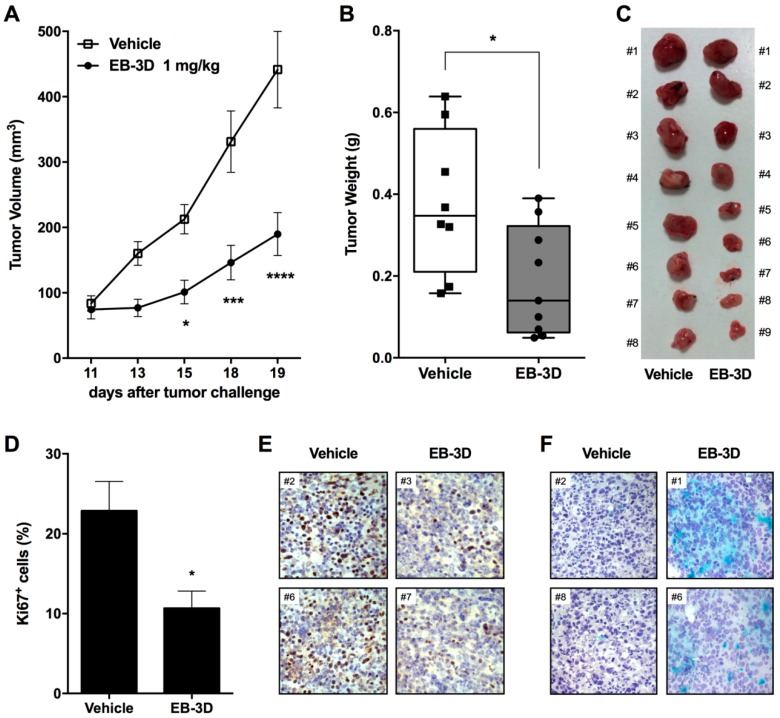
Choline kinase (ChoK) is the first enzyme of the Kennedy pathway leading to the biosynthesis of phosphatidylcholine (PtdCho), the most abundant phospholipid in eukaryotic cell membranes. EB-3D is a novel choline kinase α1 (ChoKα1) inhibitor with potent antiproliferative activity against a panel of several cancer cell lines. ChoKα1 is particularly overexpressed and hyperactivated in aggressive breast cancer. By NMR analysis, we demonstrated that EB-3D is able to reduce the synthesis of phosphocholine, and using flow cytometry, immunoblotting, and q-RT-PCR as well as proliferation and invasion assays, we proved that EB-3D strongly impairs breast cancer cell proliferation, migration, and invasion. EB-3D induces senescence in breast cancer cell lines through the activation of the metabolic sensor AMPK and the subsequent dephosphorylation of mTORC1 downstream targets, such as p70S6K, S6 ribosomal protein, and 4E-BP1. Moreover, EB-3D strongly synergizes with drugs commonly used for breast cancer treatment. The antitumorigenic potential of EB-3D was evaluated in vivo in the syngeneic orthotopic E0771 mouse model of breast cancer, where it induces a significant reduction of the tumor mass at low doses. In addition, EB-3D showed an antimetastatic effect in experimental and spontaneous metastasis models. Altogether, our results indicate that EB-3D could be a promising new anticancer agent to improve aggressive breast cancer treatment protocols.
胆碱激酶(ChoK)是肯尼迪途径中的首个酶,该途径通向磷脂酰胆碱(PtdCho)的生物合成,磷脂酰胆碱是真核细胞膜中最丰富的磷脂。EB-3D是一种新型胆碱激酶α1(ChoKα1)抑制剂,对多种癌细胞系具有强大的抗增殖活性。ChoKα1在侵袭性乳腺癌中尤其过度表达且过度活化。通过核磁共振分析,我们证明EB-3D能够减少磷酸胆碱的合成,并且使用流式细胞术、免疫印迹、定量逆转录聚合酶链反应以及增殖和侵袭试验,我们证实EB-3D强烈损害乳腺癌细胞的增殖、迁移和侵袭。EB-3D通过激活代谢传感器AMPK以及随后使mTORC1下游靶点(如p70S6K、核糖体蛋白S6和4E-BP1)去磷酸化,从而诱导乳腺癌细胞系衰老。此外,EB-3D与常用于乳腺癌治疗的药物具有强烈的协同作用。在同基因原位E0771乳腺癌小鼠模型中对EB-3D的抗肿瘤潜力进行了体内评估,在该模型中,低剂量的EB-3D可显著减少肿瘤体积。此外,EB-3D在实验性和自发性转移模型中显示出抗转移作用。总之,我们的结果表明EB-3D可能是一种有前景的新型抗癌药物,可用于改进侵袭性乳腺癌的治疗方案。