Coleman Kristine, Robertson Nicola D, Maier Adriane, Bethea Cynthia L
Division of Neuroscience, Oregon National Primate Research Center, Beaverton, OR 97006, USA.
Division of Comparative Medicine, Behavioral Sciences Unit, Oregon National Primate Research Center, Beaverton, OR 97006, USA.
J Obes. 2018 Sep 27;2018:1810275. doi: 10.1155/2018/1810275. eCollection 2018.
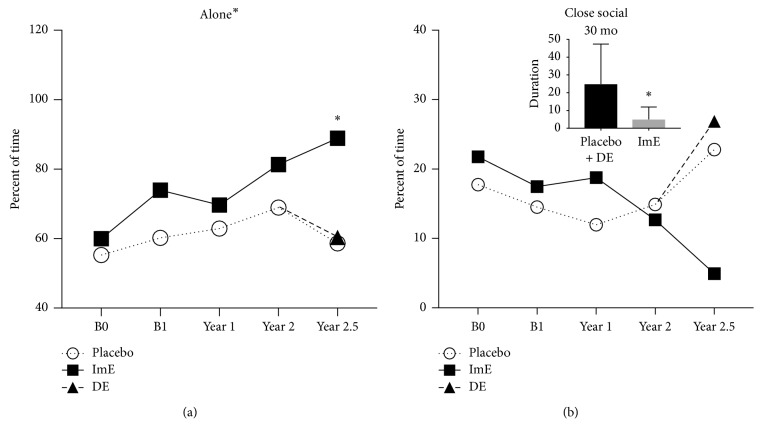
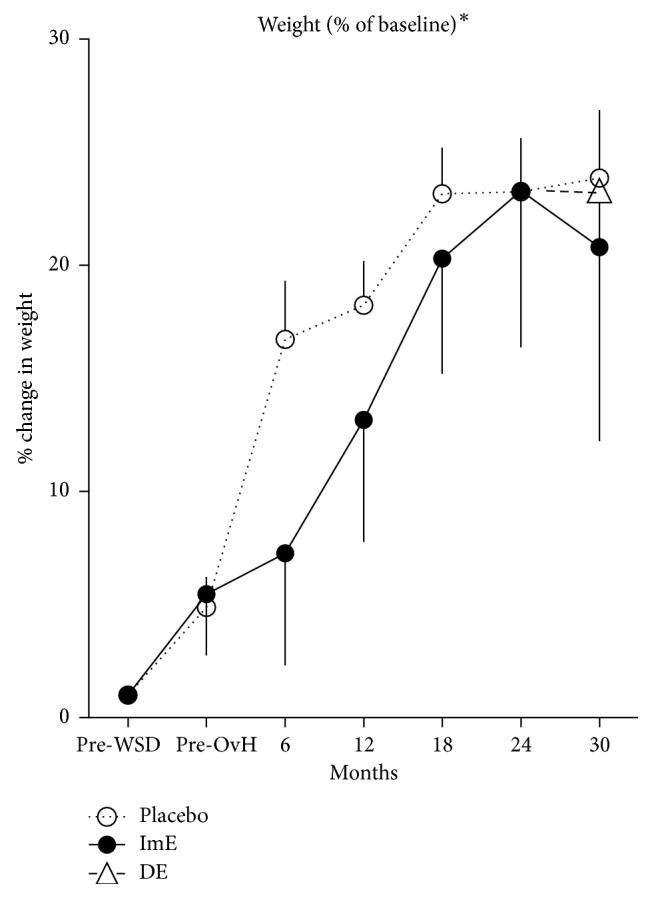
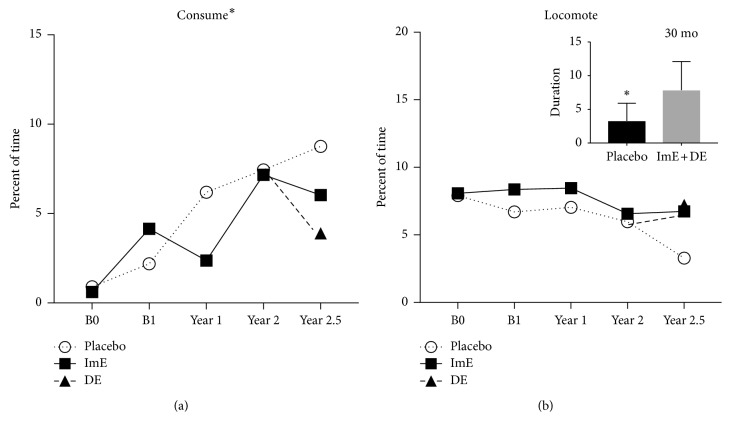
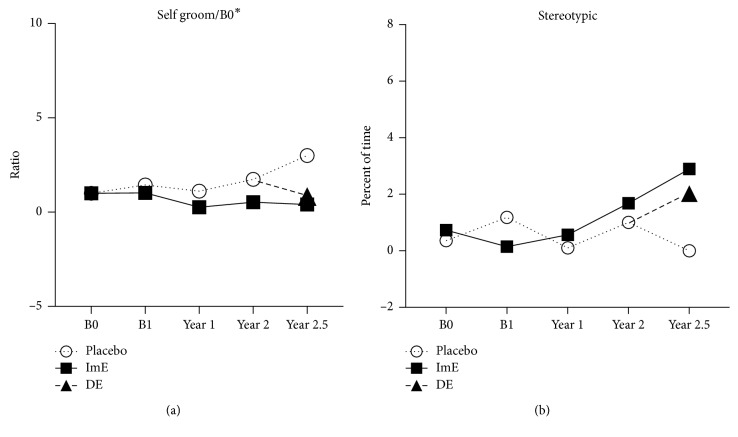
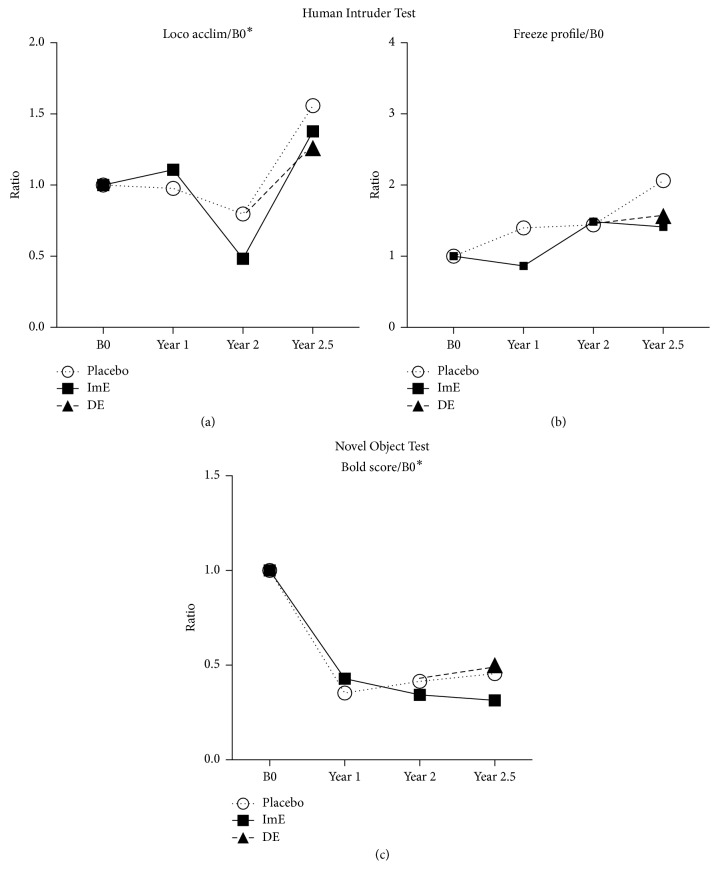
Macaques have served as effective models of human disease, including pathological processes associated with obesity and the metabolic syndrome. This study approached several questions: (1) does a western-style diet (WSD) contribute to sedentary behavior or is sedentary behavior a consequence of obesity and (2) does estradiol (E) hormone therapy offset WSD or ameliorate sedentary behavior? We further questioned whether the timing of E administration (immediately following hysterectomy, ImE; or after a 2-year delay, DE) would impact behavior. Focal observations were taken on the animals in social housing over a period of 2.5 years before and after initiation of the WSD and hysterectomy. In addition, anxiety was assessed through the Human Intruder and Novel Object Tests. All animals gained weight, but ImE delayed the time to maximum weight achieved at 18 months. Over the course of the study, ImE-treated monkeys spent more time "alone" and less time in "close social" contact than placebo-controls. The DE-treated monkeys were not different from placebo-controls in these 2 outcomes. The placebo-control group exhibited more "self-groom" behavior, an indicator of anxiety, than did the ImE-treated group, and DE-treated animals approached levels observed in the ImE-treated animals. All animals exhibited an increase in "consume" behavior over time with no statistical difference between the groups. By the end of the protocol, the placebo-control group exhibited less activity compared to ImE + DE-treated animals combined. Animals also showed increased anxiety after starting on the WSD in the Human Intruder Test and the Novel Object Test. In summary, the data indicated that WSD per se promoted increased consummatory behavior, sedentary behavior, and anxiety-type behaviors, whereas ImE promoted activity. Thus, WSD may precipitate the behaviors observed in humans who then become obese, sedentary, anxious, and socially isolated. ImE replacement ameliorates some of these behaviors, but not all.
猕猴已成为人类疾病的有效模型,包括与肥胖和代谢综合征相关的病理过程。本研究探讨了几个问题:(1)西式饮食(WSD)是否会导致久坐行为,或者久坐行为是否是肥胖的结果;(2)雌二醇(E)激素疗法能否抵消WSD或改善久坐行为?我们还质疑了E给药的时间(子宫切除术后立即给药,即ImE;或延迟2年后给药,即DE)是否会影响行为。在开始WSD和子宫切除术之前和之后的2.5年时间里,对群居动物进行了重点观察。此外,通过人类入侵者测试和新物体测试评估焦虑情况。所有动物体重均增加,但ImE组延迟了达到18个月时最大体重的时间。在研究过程中,接受ImE治疗的猴子比安慰剂对照组花更多时间“独处”,花更少时间进行“密切社交”接触。在这两个结果方面,接受DE治疗的猴子与安慰剂对照组没有差异。安慰剂对照组比接受ImE治疗的组表现出更多的“自我梳理”行为,这是焦虑的一个指标,而接受DE治疗的动物接近接受ImE治疗的动物所观察到的水平。随着时间的推移,所有动物的“进食”行为都有所增加,各组之间无统计学差异。到实验方案结束时,与接受ImE + DE治疗的动物组合相比,安慰剂对照组的活动较少。在人类入侵者测试和新物体测试中,动物在开始WSD后也表现出焦虑增加。总之,数据表明WSD本身会促进进食行为、久坐行为和焦虑型行为增加,而ImE则促进活动。因此,WSD可能会引发在人类中观察到的行为,这些人随后会变得肥胖、久坐、焦虑和社交孤立。ImE替代疗法可改善其中一些行为,但并非全部。