Assadiasl Sara, Mousavi Mohammad Javad, Amirzargar Aliakbar
Molecular Immunology Research Center, Tehran University of Medical Sciences, Tehran, Iran.
Department of Immunology, School of Medicine, Tehran University of Medical Sciences, Tehran, Iran.
J Transplant. 2018 Oct 1;2018:6492034. doi: 10.1155/2018/6492034. eCollection 2018.
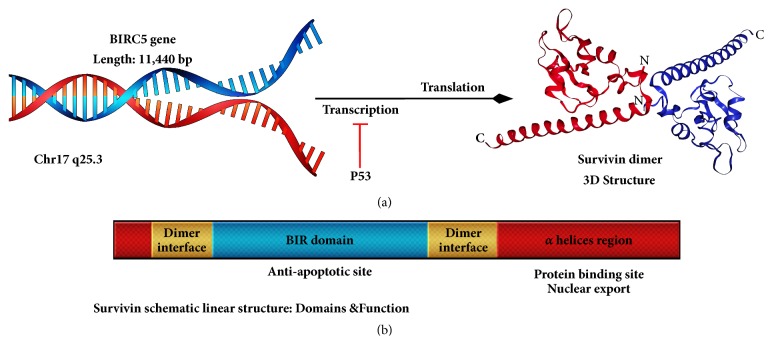
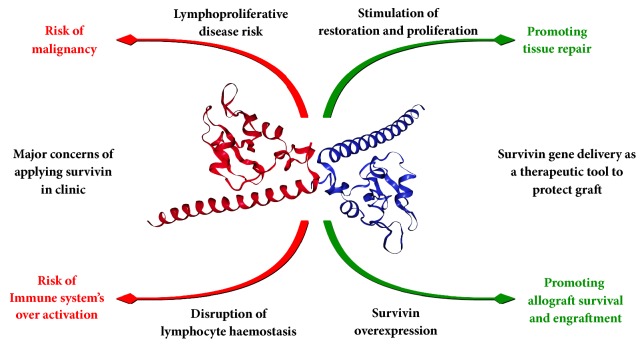
Survivin, an antiapoptotic molecule from inhibitor of apoptosis protein (IAP) family, is most known for its implication in cancer as there are some efforts to apply it for diagnostic as well as therapeutic purposes in oncology. On the other hand, it could be a useful molecule to be positively targeted when trying to save tissue and promote cells viability. Since protecting the allograft from ischemia reperfusion injury and inflammation-induced damage is a considerable objective in transplantation, it is reasonable to take advantage from antiapoptotic agents like survivin in order to achieve this goal. However, survivin's potential ability to induce malignancies makes some concerns about its use in clinic. The other barrier is this molecule's involvement in lymphocytes development and proliferation which might increase the risk of graft rejection due to adaptive immune system overactivation. In this review we summarize the few studies carried out about survivin's effect on graft survival and probable advantages and disadvantages of its overexpression in transplantation.
生存素是凋亡抑制蛋白(IAP)家族中的一种抗凋亡分子,因其与癌症的关联而最为人所知,目前人们正努力将其应用于肿瘤学的诊断和治疗。另一方面,在试图挽救组织并促进细胞活力时,它可能是一个可被正向靶向的有用分子。由于保护同种异体移植物免受缺血再灌注损伤和炎症诱导的损伤是移植中的一个重要目标,利用生存素等抗凋亡药物来实现这一目标是合理的。然而,生存素诱导恶性肿瘤的潜在能力引发了对其临床应用的一些担忧。另一个障碍是该分子参与淋巴细胞的发育和增殖,这可能会因适应性免疫系统过度激活而增加移植排斥的风险。在这篇综述中,我们总结了关于生存素对移植物存活的影响以及其在移植中过表达可能的优缺点的少数研究。