Key Laboratory of Biology and Genetic Improvement of Triticeae Crops, Ministry of Agriculture, Institute of Crop Science, Chinese Academy of Agricultural Sciences (CAAS)/National Key Facility for Crop Gene Resources and Genetic Improvement, Beijing, 100081, China.
College of Agronomy, Northwest A&F University, Yangling, 712100, Shaanxi, China.
BMC Plant Biol. 2018 Oct 26;18(1):259. doi: 10.1186/s12870-018-1485-0.
Heat stress is a severe environmental stress that affects plant growth and reduces yield. Bax inhibitor-1 (BI-1) is a cytoprotective protein that is involved in the response to biotic and abiotic stresses. The Arabidopsis (Arabidopsis thaliana) BI-1 mutants atbi1-1 and atbi1-2 are hypersensitive to heat stress, and AtBI-1 overexpression rescues thermotolerance deficiency in atbi1 plants. Nevertheless, the mechanism of BI-1 in plant thermotolerance is still unclear.
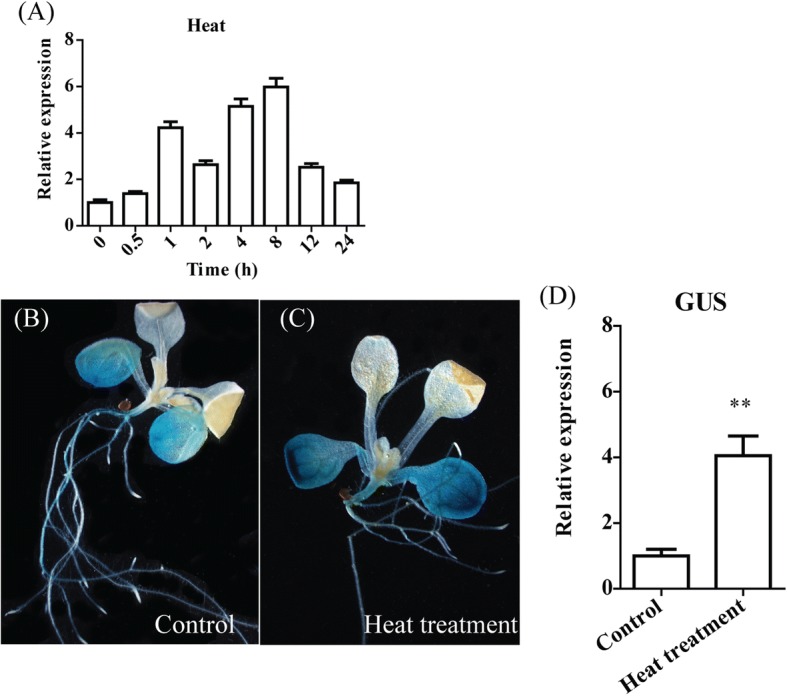
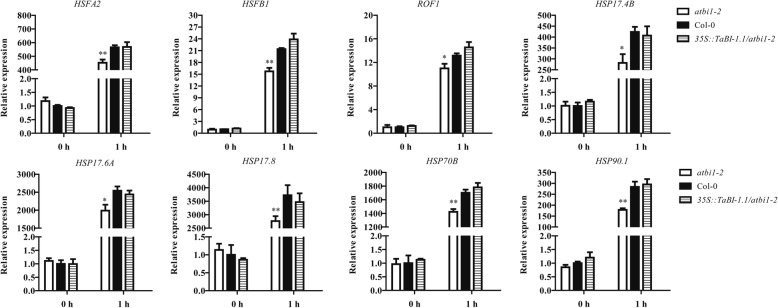
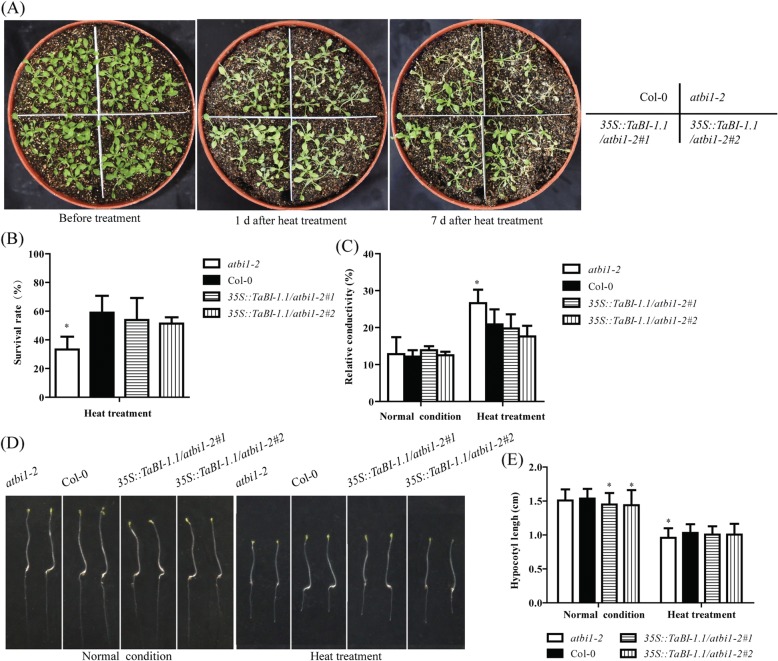
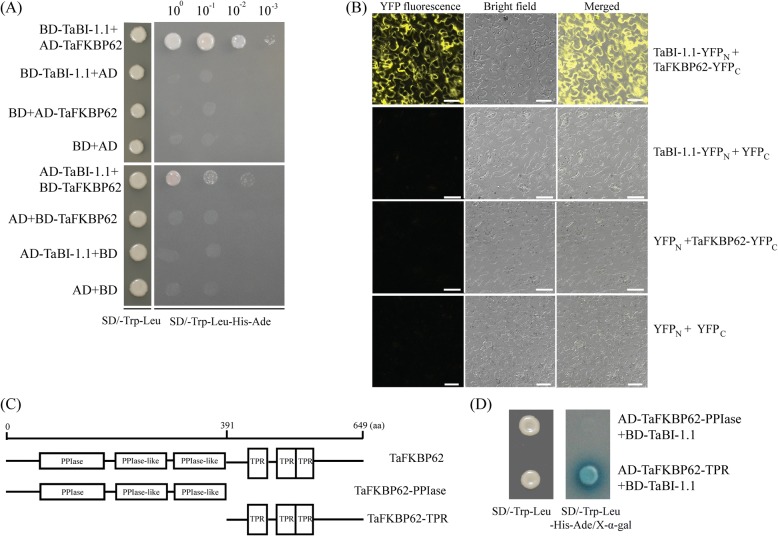
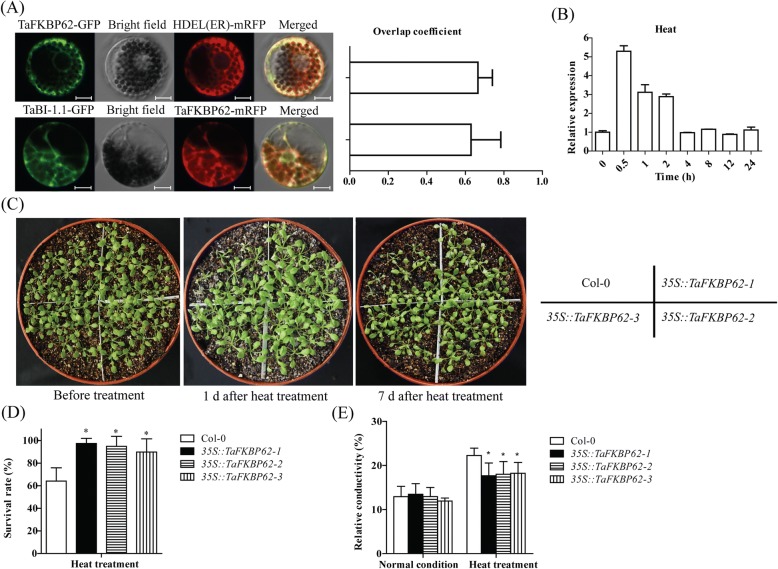
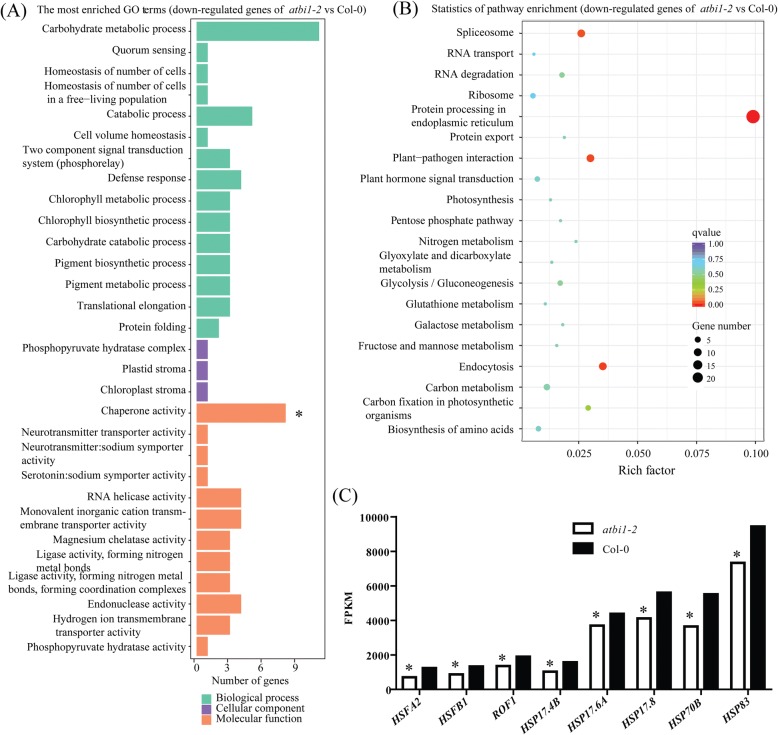
We identified a wheat (Triticum aestivum L.) BI-1 gene, TaBI-1.1, which was highly upregulated in an RNA sequencing (RNA-seq) analysis of heat-treated wheat. The upregulation of TaBI-1.1 under heat stress was further demonstrated by real time quantitative PCR (qRT-PCR) and β-glucuronidase (GUS) staining. Compared with the wild type Col-0, the atbi1-2 mutant is hypersensitive to heat stress, and constitutive expression of TaBI-1.1 in atbi1-2 (35S::TaBI-1.1/ atbi1-2) rescued the deficiency of atbi1-2 under heat stress. Furthermore, we identified TaFKBP62 as a TaBI-1.1-interacting protein that co-localized with TaBI-1.1 on the endoplasmic reticulum (ER) membrane and enhanced heat stress tolerance. Additionally, HSFA2, HSFB1, ROF1, HSP17.4B, HSP17.6A, HSP17.8, HSP70B, and HSP90.1 expression levels were suppressed in atbi1-2 plants under heat stress. In contrast, 35S::TaBI-1.1/atbi1-2 relieved the inhibitory effect of AtBI-1 loss of function.
TaBI-1.1 interacted with TaFKBP62 and co-localized with TaFKBP62 on the ER membrane. Both TaBI-1.1 and AtBI-1 regulated the expression of heat-responsive genes and were conserved in plant thermotolerance.
热应激是一种严重的环境胁迫,会影响植物的生长并降低产量。Bax 抑制剂-1(BI-1)是一种细胞保护蛋白,参与生物和非生物胁迫的反应。拟南芥(Arabidopsis thaliana)的 atbi1-1 和 atbi1-2 双突变体对热应激敏感,而 AtBI-1 的过表达可挽救 atbi1 植株的耐热性缺陷。然而,BI-1 在植物耐热性中的机制仍不清楚。
我们鉴定了一个小麦(Triticum aestivum L.)BI-1 基因,TaBI-1.1,其在热处理小麦的 RNA 测序(RNA-seq)分析中高度上调。实时定量 PCR(qRT-PCR)和β-葡萄糖醛酸酶(GUS)染色进一步证明了 TaBI-1.1 在热应激下的上调。与野生型 Col-0 相比,atbi1-2 突变体对热应激敏感,而 atbi1-2(35S::TaBI-1.1/atbi1-2)中的 TaBI-1.1 组成型表达挽救了 atbi1-2 在热应激下的缺陷。此外,我们鉴定了 TaFKBP62 作为 TaBI-1.1 的互作蛋白,它与 TaBI-1.1 共定位于内质网(ER)膜上,并增强了耐热性。此外,在热应激下,atbi1-2 植株中 HSFA2、HSFB1、ROF1、HSP17.4B、HSP17.6A、HSP17.8、HSP70B 和 HSP90.1 的表达水平受到抑制。相比之下,35S::TaBI-1.1/atbi1-2 缓解了 AtBI-1 功能丧失的抑制作用。
TaBI-1.1 与 TaFKBP62 相互作用,并与 TaFKBP62 共定位于 ER 膜上。TaBI-1.1 和 AtBI-1 均调节热响应基因的表达,并在植物耐热性中保守。