Department of Medicine, University of Massachusetts Medical School, 364 Plantation Street, Worcester, MA, 01605, USA.
J Neuroinflammation. 2018 Oct 27;15(1):298. doi: 10.1186/s12974-018-1328-9.
The end-organ effects of alcohol span throughout the entire body, from the gastrointestinal tract to the central nervous system (CNS). In the intestine, alcohol use changes the microbiome composition and increases gut permeability allowing translocation of microbial components into the circulation. Gut-derived pathogen-associated signals initiate inflammatory responses in the liver and possibly elsewhere in the body. Because previous studies showed that the gut microbiome contributes to alcohol-induced liver disease, we hypothesized that antibiotic administration to reduce the gut microbiome would attenuate alcohol-induced inflammation in the brain and small intestine (SI).
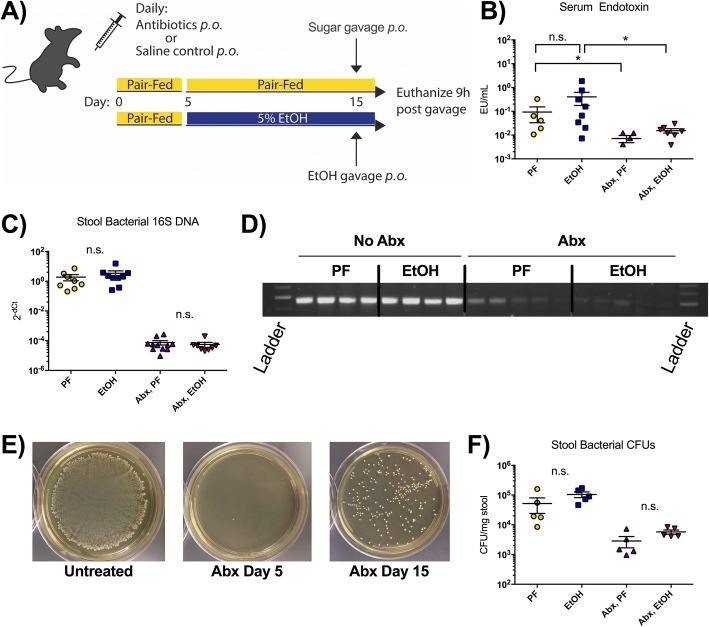
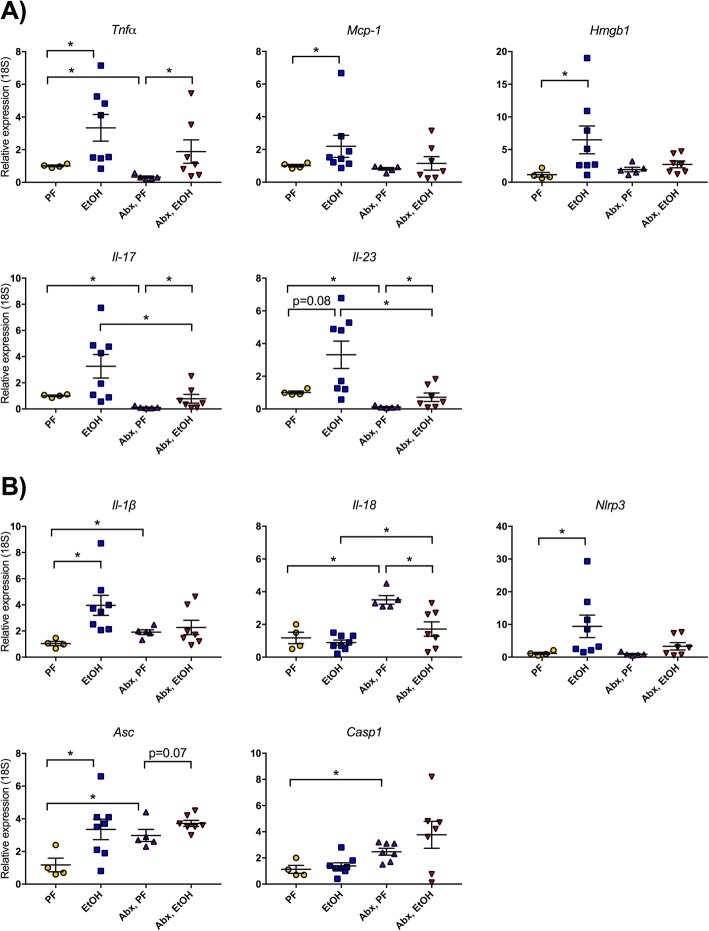
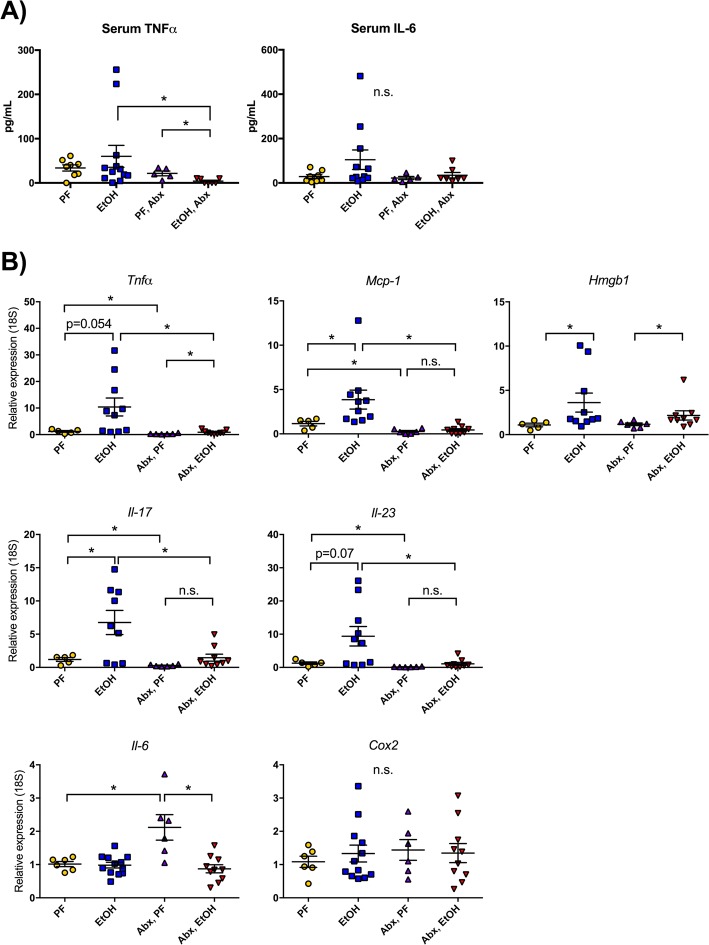
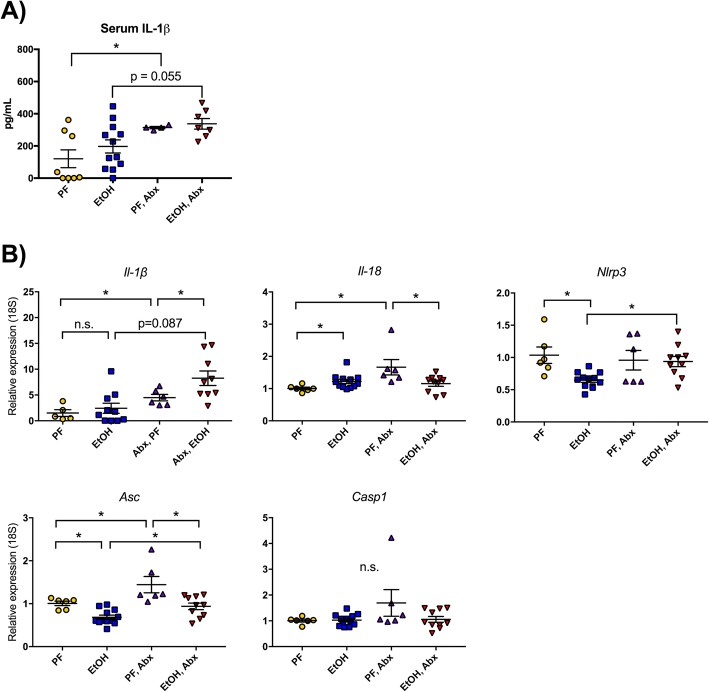
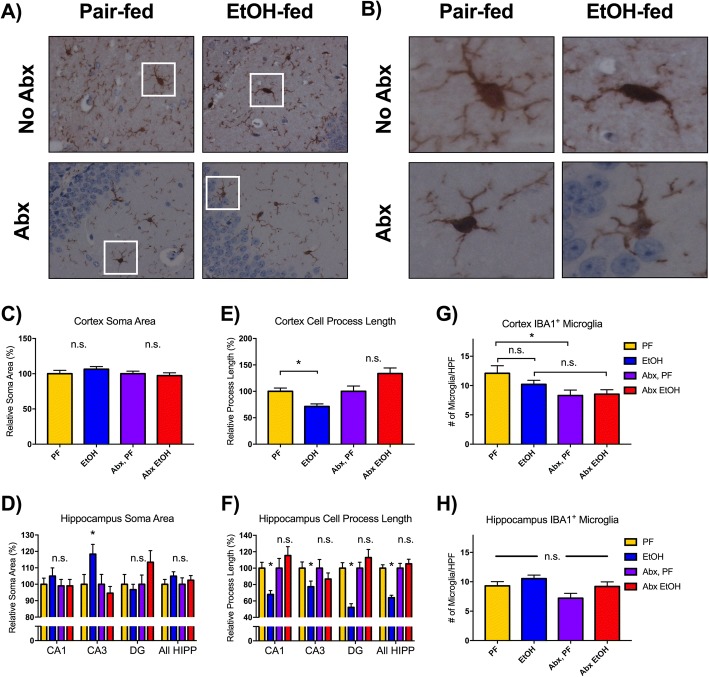
Six- to 8-week-old C57BL/6J female mice were fed alcohol in a liquid diet or a calorie-matched control diet for 10 days with an acute alcohol binge or sugar on the final day (acute-on-chronic alcohol administration). Some mice were treated with oral antibiotics daily to diminish the gut microbiome. We compared serum levels of TNFα, IL-6, and IL-1β by ELISA; expression of cytokines Tnfα, Mcp1, Hmgb1, Il-17, Il-23, Il-6, and Cox2; and inflammasome components Il-1β, Il-18, Casp1, Asc, and Nlrp3 in the CNS and SI by qRT-PCR. Microglial morphology was analyzed using immunohistochemical IBA1 staining in the cortex and hippocampus.
Antibiotics dramatically reduced the gut microbiome load in both alcohol- and pair-fed mice. Alcohol-induced neuroinflammation and increase in SI cytokine expression were attenuated in mice with antibiotic treatment. Acute-on-chronic alcohol did not induce serum TNFα, IL-6, and IL-1β. Alcohol feeding significantly increased the expression of proinflammatory cytokines such as Tnfα, Mcp1, Hmgb1, Il-17, and Il-23 in the brain and intestine. Reduction in the gut bacterial load, as a result of antibiotic treatment, attenuated the expression of all of these alcohol-induced proinflammatory cytokines in both the brain and SI. Alcohol feeding resulted in microglia activation and morphologic changes in the cortex and hippocampus characterized by a reactive phenotype. These alcohol-induced changes were abrogated following an antibiotic-induced reduction in the gut microbiome. Unexpectedly, antibiotic treatment increased the mRNA expression of some inflammasome components in both the brain and intestine.
Our data show for the first time that the acute-on-chronic alcohol administration in mice induces both neuroinflammation and intestinal inflammation and that reduction in the intestinal bacterial load can attenuate alcohol-associated CNS and gut inflammation. Gut microbiome-derived signals contribute to neuroinflammation in acute-on-chronic alcohol exposure.
酒精对终末器官的影响遍及全身,从胃肠道到中枢神经系统(CNS)。在肠道中,酒精使用会改变微生物群落组成并增加肠道通透性,使微生物成分易位到循环中。肠道来源的病原体相关信号在肝脏中引发炎症反应,并且可能在体内其他部位引发炎症反应。由于先前的研究表明肠道微生物组有助于酒精性肝病,我们假设用抗生素减少肠道微生物组会减轻酒精诱导的大脑和小肠(SI)炎症。
将 6 至 8 周龄的 C57BL/6J 雌性小鼠用液体饮食或热量匹配的对照饮食喂养 10 天,每天有急性酒精 binge 或最后一天的糖(慢性急性酒精给药)。一些小鼠用口服抗生素每天治疗以减少肠道微生物组。我们通过 ELISA 比较血清 TNFα、IL-6 和 IL-1β水平;通过 qRT-PCR 比较 CNS 和 SI 中细胞因子 Tnfα、Mcp1、Hmgb1、Il-17、Il-23、Il-6 和 Cox2 的表达;以及炎症小体成分 Il-1β、Il-18、Casp1、Asc 和 Nlrp3。在大脑皮质和海马中用 IBA1 免疫组化染色分析小胶质细胞形态。
抗生素可显著降低酒精和配对喂养小鼠的肠道微生物组负荷。抗生素治疗可减轻酒精诱导的神经炎症和 SI 细胞因子表达增加。急性慢性酒精并未诱导血清 TNFα、IL-6 和 IL-1β。酒精喂养显著增加了大脑和肠道中促炎细胞因子如 Tnfα、Mcp1、Hmgb1、Il-17 和 Il-23 的表达。抗生素治疗减少肠道细菌负荷,从而减轻了大脑和 SI 中所有这些酒精诱导的促炎细胞因子的表达。酒精喂养导致皮质和海马中小胶质细胞激活和形态改变,表现为反应性表型。这些酒精诱导的变化在肠道微生物组减少后被抗生素治疗所消除。出乎意料的是,抗生素治疗增加了大脑和肠道中一些炎症小体成分的 mRNA 表达。
我们的数据首次表明,急性慢性酒精给药在小鼠中可诱导神经炎症和肠道炎症,减少肠道细菌负荷可减轻酒精相关的中枢神经系统和肠道炎症。肠道微生物组衍生的信号有助于急性慢性酒精暴露中的神经炎症。