Department of Pharmacology and Nutritional Sciences, University of Kentucky College of Medicine, 132 Health Sciences Research Building, 1095 Veterans Drive, Lexington, KY, 40536, USA.
J Neuroinflammation. 2018 Jul 5;15(1):197. doi: 10.1186/s12974-018-1241-2.
Neuroinflammation and microglial activation have been implicated in both alcohol use disorders (AUD) and fetal alcohol spectrum disorders (FASD). Chemokine monocyte chemoattractant protein 1 (MCP-1) and its receptor C-C chemokine receptor type 2 (CCR2) are critical mediators of neuroinflammation and microglial activation. FASD is the leading cause of mental retardation, and one of the most devastating outcomes of FASD is the loss of neurons in the central nervous system (CNS). The underlying molecular mechanisms, however, remain unclear. We hypothesize that MCP-1/CCR2 signaling mediates ethanol-induced neuroinflammation and microglial activation, which exacerbates neurodegeneration in the developing brain.
C57BL/6 mice and mice deficient of MCP-1 (MCP-1) and CCR2 (CCR2) were exposed to ethanol on postnatal day 4 (PD4). Neuroinflammation, and microglial activation, and neurodegeneration in the brain were evaluated by immunohistochemistry and immunoblotting. A neuronal and microglial co-culture system was used to evaluate the role of microglia and MCP-1/CCR2 signaling in ethanol-induced neurodegeneration. Specific inhibitors were employed to delineate the involved signaling pathways.
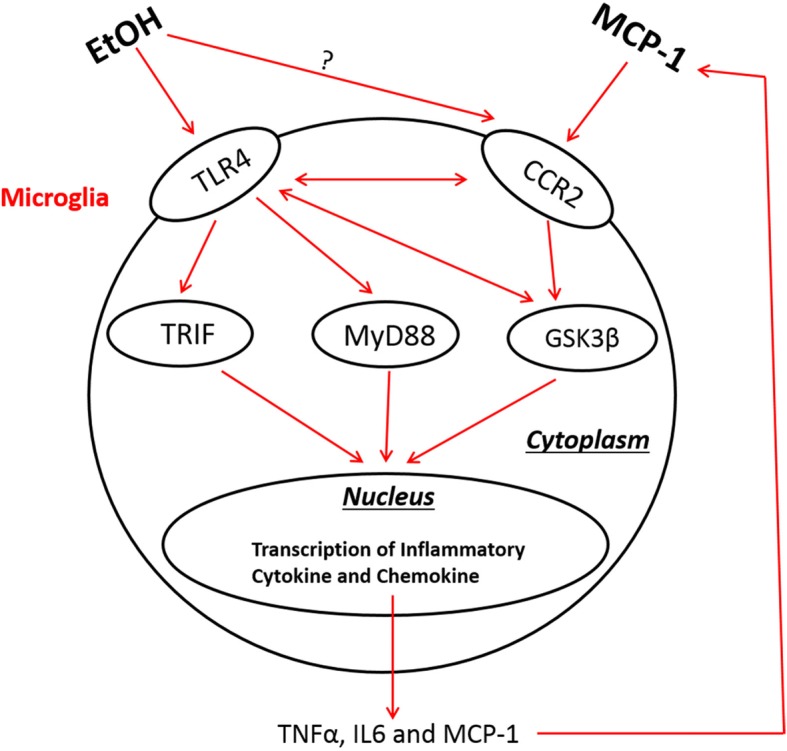
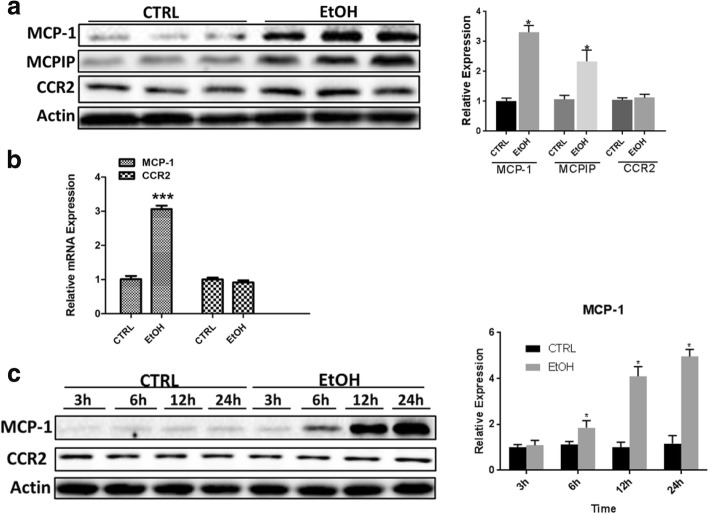
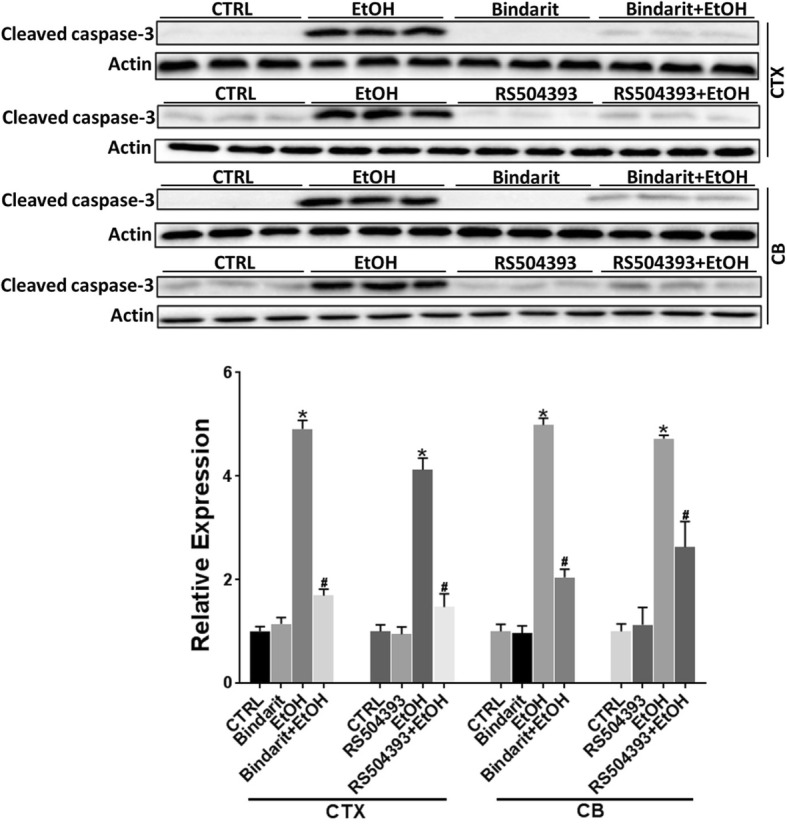
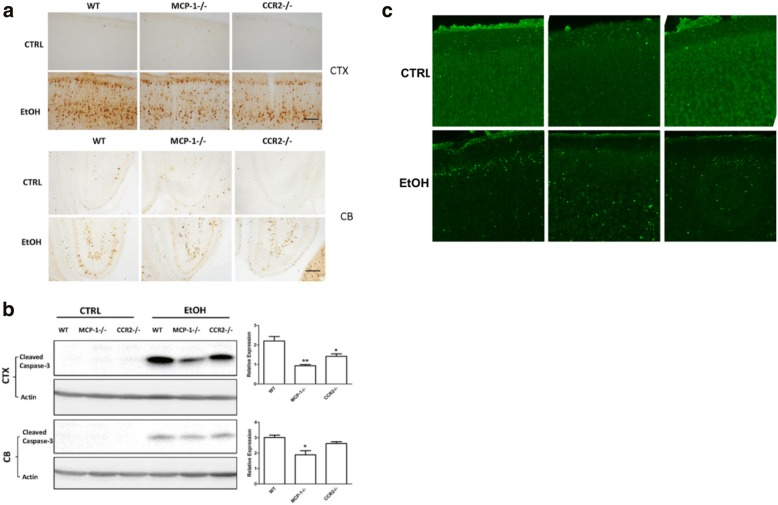
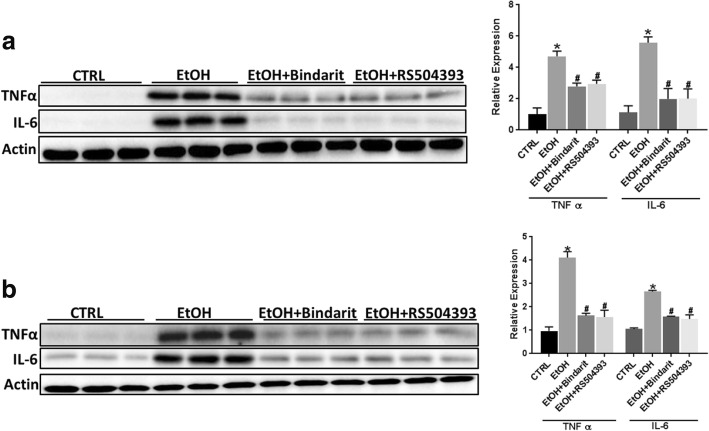
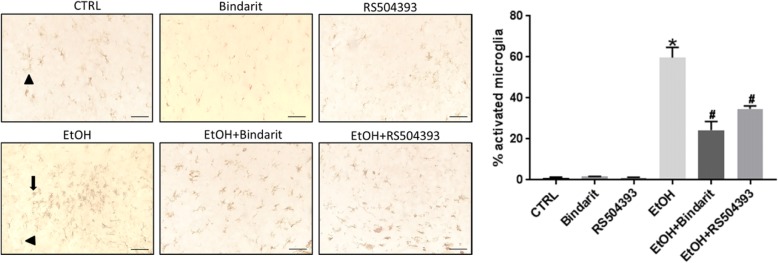
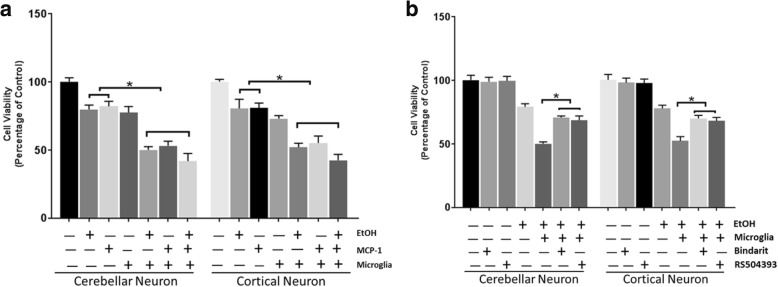
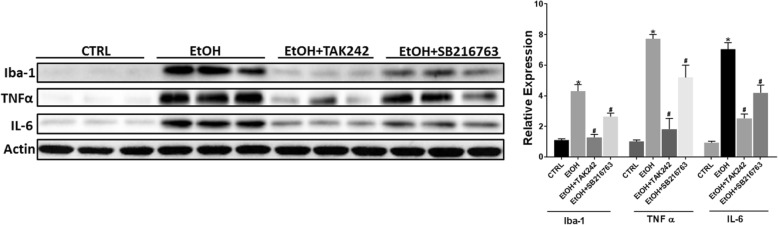
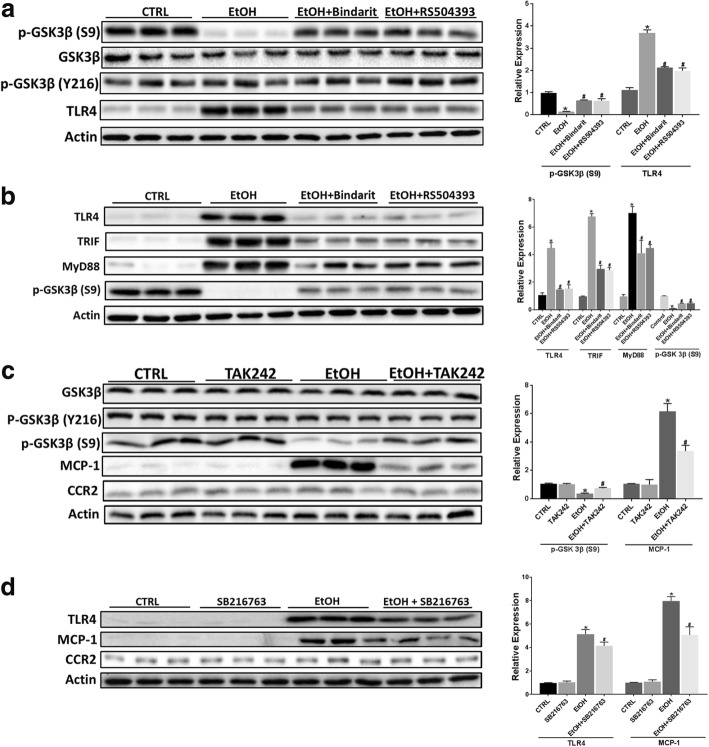
Ethanol-induced microglial activation, neuroinflammation, and a drastic increase in the mRNA and protein levels of MCP-1. Treatment of Bindarit (MCP-1 synthesis inhibitor) and RS504393 (CCR2 antagonist) significantly reduced ethanol-induced microglia activation/neuroinflammation, and neuroapoptosis in the developing brain. MCP-1 and CCR2 mice were more resistant to ethanol-induced neuroapoptosis. Moreover, ethanol plus MCP-1 caused more neuronal death in a neuron/microglia co-culture system than neuronal culture alone, and Bindarit and RS504393 attenuated ethanol-induced neuronal death in the co-culture system. Ethanol activated TLR4 and GSK3β, two key mediators of microglial activation in the brain and cultured microglial cells (SIM-A9). Blocking MCP-1/CCR2 signaling attenuated ethanol-induced activation of TLR4 and GSK3β.
MCP-1/CCR2 signaling played an important role in ethanol-induced microglial activation/neuroinflammation and neurodegeneration in the developing brain. The effects may be mediated by the interaction among MCP-1/CCR2 signaling, TLR4, and GSK3β.
神经炎症和小胶质细胞激活与酒精使用障碍(AUD)和胎儿酒精谱系障碍(FASD)都有关。趋化因子单核细胞趋化蛋白 1(MCP-1)及其受体 C-C 趋化因子受体 2(CCR2)是神经炎症和小胶质细胞激活的关键介质。FASD 是智力迟钝的主要原因,而 FASD 最具破坏性的后果之一是中枢神经系统(CNS)中的神经元丧失。然而,潜在的分子机制仍不清楚。我们假设 MCP-1/CCR2 信号转导介导乙醇诱导的神经炎症和小胶质细胞激活,从而加剧发育中大脑的神经退行性变。
C57BL/6 小鼠和缺乏 MCP-1(MCP-1)和 CCR2(CCR2)的小鼠在出生后第 4 天(PD4)暴露于乙醇。通过免疫组织化学和免疫印迹评估大脑中的神经炎症和小胶质细胞激活以及神经退行性变。使用神经元和小胶质细胞共培养系统来评估小胶质细胞和 MCP-1/CCR2 信号转导在乙醇诱导的神经退行性变中的作用。使用特定抑制剂描绘涉及的信号通路。
乙醇诱导小胶质细胞激活、神经炎症以及 MCP-1 的 mRNA 和蛋白水平大幅增加。Bindarit(MCP-1 合成抑制剂)和 RS504393(CCR2 拮抗剂)的治疗显著降低了发育中大脑中乙醇诱导的小胶质细胞激活/神经炎症和神经细胞凋亡。MCP-1 和 CCR2 小鼠对乙醇诱导的神经细胞凋亡更具抵抗力。此外,与神经元培养物相比,乙醇加 MCP-1 在神经元/小胶质细胞共培养物中引起更多的神经元死亡,并且 Bindarit 和 RS504393 减弱了共培养物中乙醇诱导的神经元死亡。乙醇激活了 TLR4 和 GSK3β,这是大脑中和培养的小胶质细胞(SIM-A9)中小胶质细胞激活的两个关键介质。阻断 MCP-1/CCR2 信号转导减弱了乙醇诱导的 TLR4 和 GSK3β 的激活。
MCP-1/CCR2 信号在乙醇诱导的发育中大脑中小胶质细胞激活/神经炎症和神经退行性变中起重要作用。这些作用可能是通过 MCP-1/CCR2 信号转导、TLR4 和 GSK3β 之间的相互作用介导的。