Center for Genetic Epidemiology and Genomics, School of Public Health, Soochow University, Suzhou, Jiangsu, China.
Jiangsu Key Laboratory of Preventive and Translational Medicine for Geriatric Diseases, School of Public Health, Soochow University, Suzhou, Jiangsu, China.
J Cell Mol Med. 2019 Feb;23(2):898-907. doi: 10.1111/jcmm.13991. Epub 2018 Oct 28.
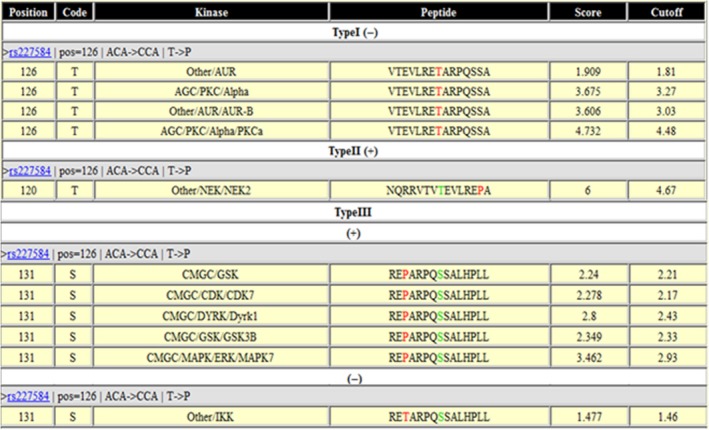
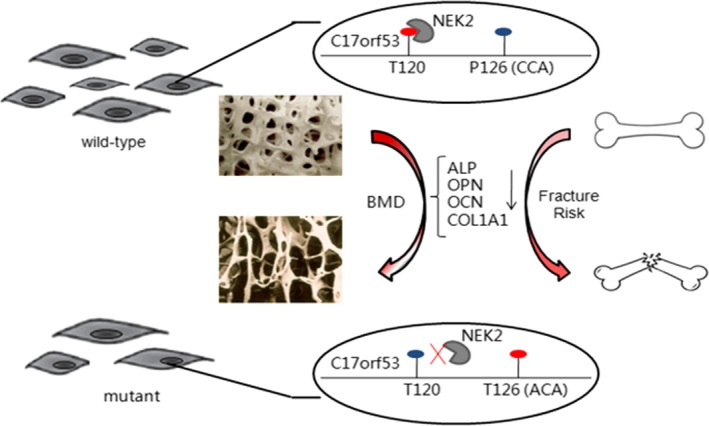
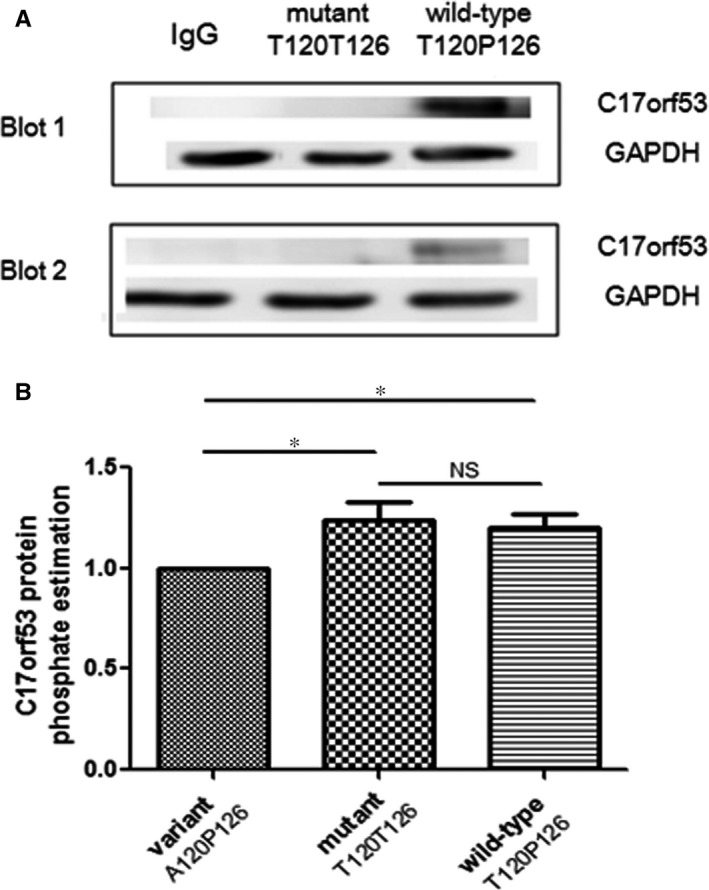
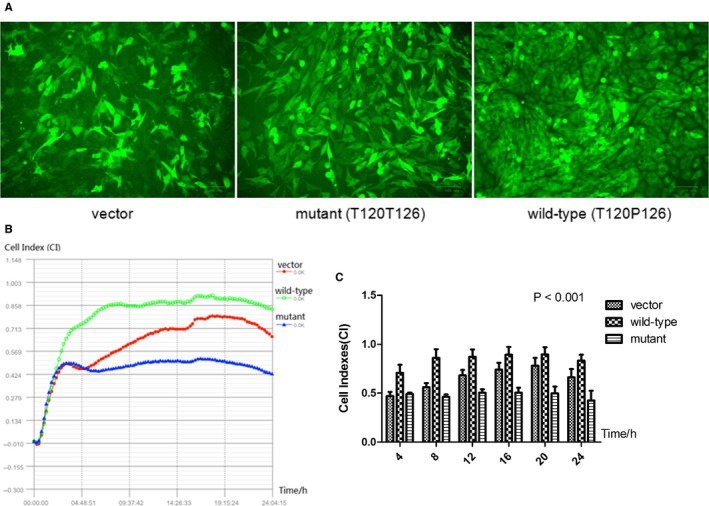
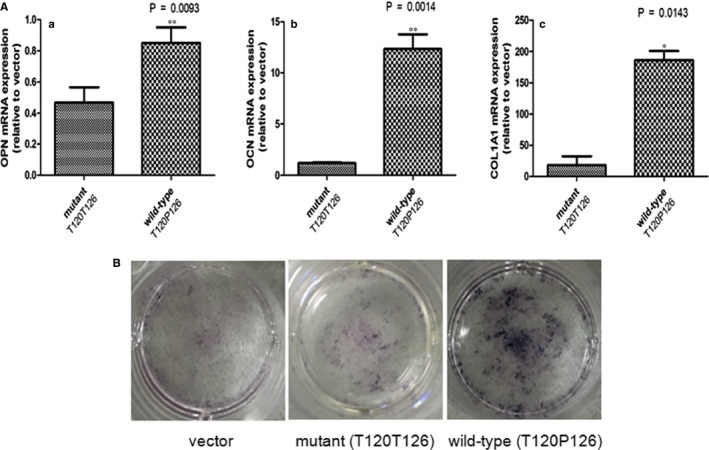
A large number of SNPs significant for osteoporosis (OP) had been identified by genome-wide association studies. However, the underlying association mechanisms were largely unknown. From the perspective of protein phosphorylation, gene expression regulation, and bone cell activity, this study aims to illustrate association mechanisms for representative SNPs of interest. We utilized public databases and bioinformatics tool to identify OP-associated SNPs which potentially influence protein phosphorylation (phosSNPs). Associations with hip/spine BMD, as well as fracture risk, in human populations for one significant phosSNP, that is, rs227584 (major/minor allele: C/A, EAS population) located in C17orf53 gene, were suggested in prior meta-analyses. Specifically, carriers of allele C had significant higher BMD and lower risk of low-trauma fractures than carriers of A. We pursued to test the molecular and cellular functions of rs227584 in bone through osteoblastic cell culture and multiple assays. We identified five phosSNPs significant for OP (P < 0.01). The osteoblastic cells, which was transfected with wild-type C17orf53 (allele C at rs227584, P126), demonstrated specific interaction with NEK2 kinase, increased expression levels of osteoblastic genes significantly (OPN, OCN, COL1A1, P < 0.05), and promoted osteoblast growth and ALP activity, in contrast to those transfected with mutant C17orf53 (allele A at rs227584, T126). In the light of the consistent evidences between the present functional study in human bone cells and the prior association studies in human populations, we conclude that the SNP rs227584, via altering protein-kinase interaction, regulates osteoblastic gene expression, influences osteoblast growth and activity, hence to affect BMD and fracture risk in humans.
大量与骨质疏松症(OP)相关的单核苷酸多态性(SNP)已通过全基因组关联研究确定。然而,其潜在的关联机制在很大程度上尚不清楚。从蛋白质磷酸化、基因表达调控和骨细胞活性的角度,本研究旨在阐明有代表性的OP 相关感兴趣 SNP 的关联机制。我们利用公共数据库和生物信息学工具来鉴定可能影响蛋白质磷酸化(phosSNP)的 OP 相关 SNP。先前的荟萃分析表明,位于 C17orf53 基因中的 rs227584 (主要/次要等位基因:C/A,EAS 人群)与髋部/脊柱 BMD 以及骨折风险相关。具体来说,与 A 等位基因携带者相比,C 等位基因携带者的 BMD 显著更高,低创伤性骨折的风险更低。我们通过成骨细胞培养和多种检测来研究 rs227584 在骨骼中的分子和细胞功能。我们鉴定了 5 个与 OP 相关的 phosSNP(P<0.01)。与转染野生型 C17orf53(rs227584 处的等位基因 C,P126)的成骨细胞相比,与 NEK2 激酶有特异性相互作用,显著增加成骨细胞基因的表达水平(OPN、OCN、COL1A1,P<0.05),并促进成骨细胞生长和 ALP 活性,而转染突变型 C17orf53(rs227584 处的等位基因 A,T126)则不然。鉴于本项在人类成骨细胞中的功能研究与先前在人类群体中的关联研究之间的一致证据,我们得出结论,SNP rs227584 通过改变蛋白激酶相互作用,调节成骨细胞基因表达,影响成骨细胞生长和活性,从而影响人类的 BMD 和骨折风险。