School of Medical Sciences, Örebro University, SE 701 82 Örebro, Sweden.
Department of Occupational and Environmental Medicine, Örebro University, SE 701 82 Örebro, Sweden.
Int J Environ Res Public Health. 2018 Oct 26;15(11):2371. doi: 10.3390/ijerph15112371.
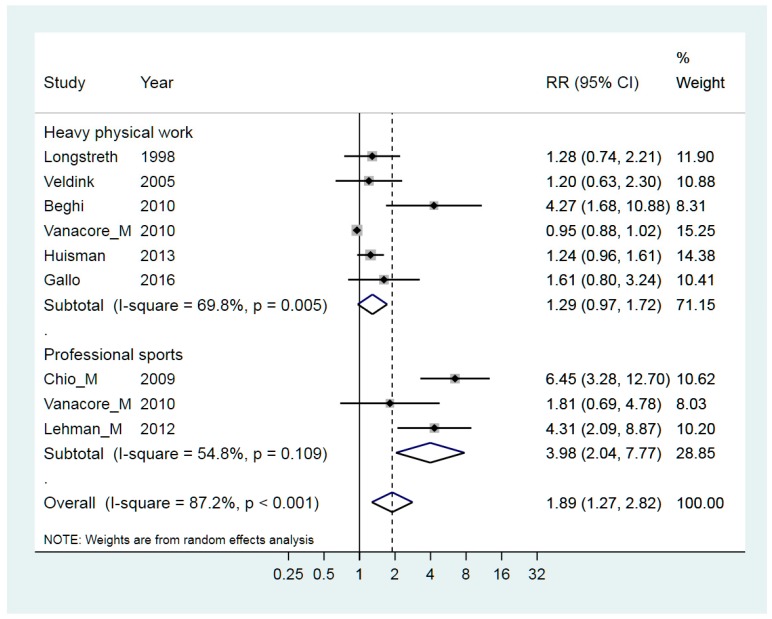
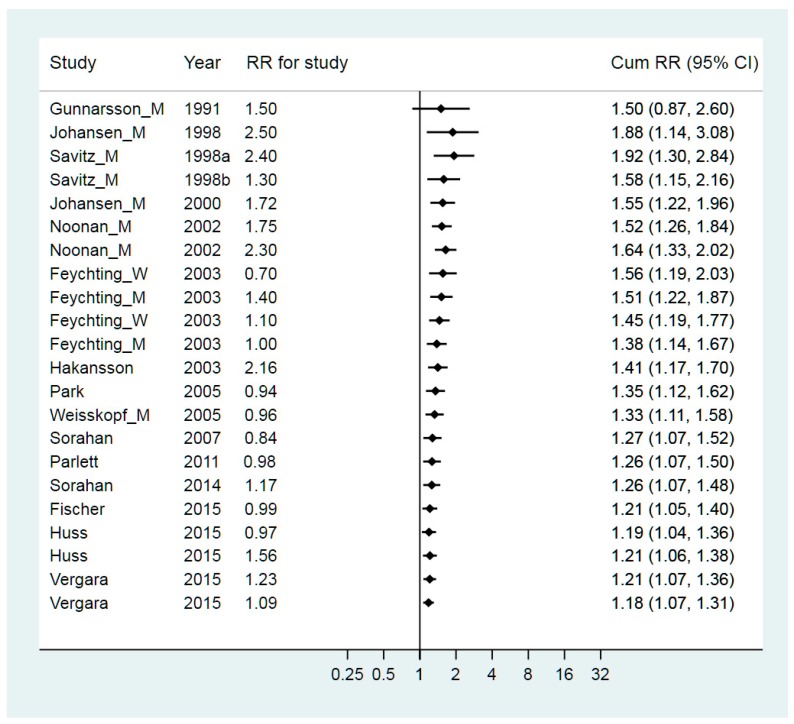
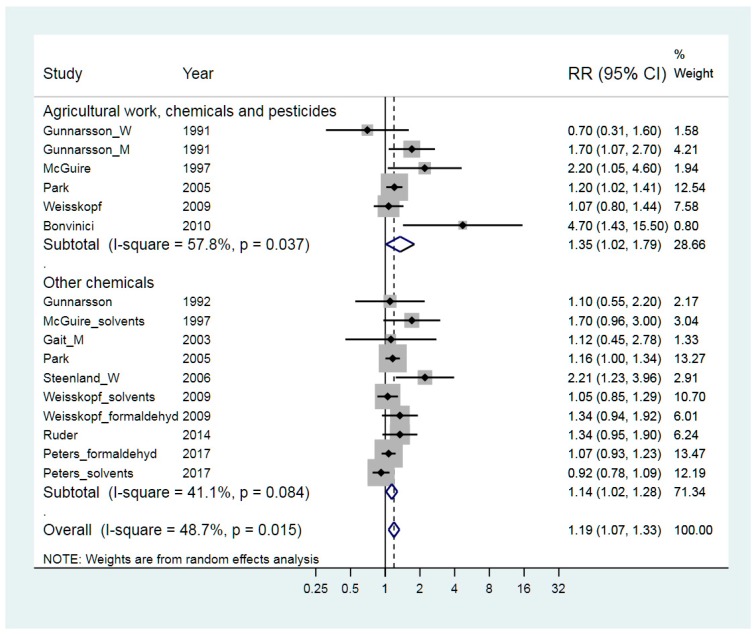
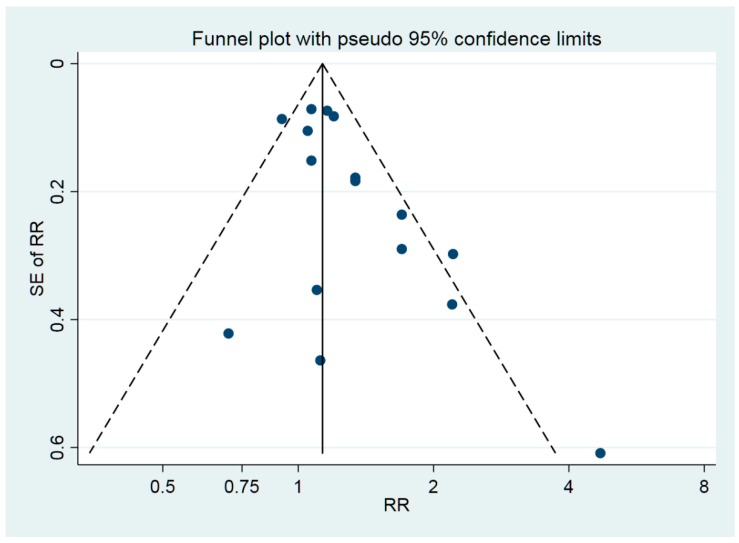
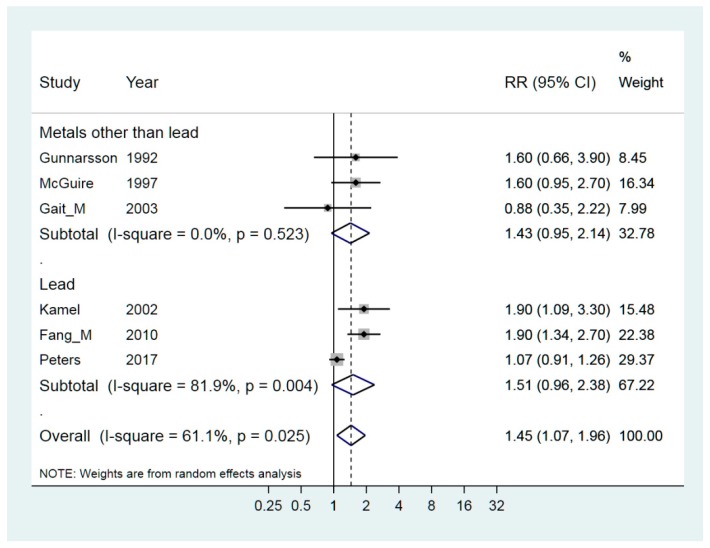
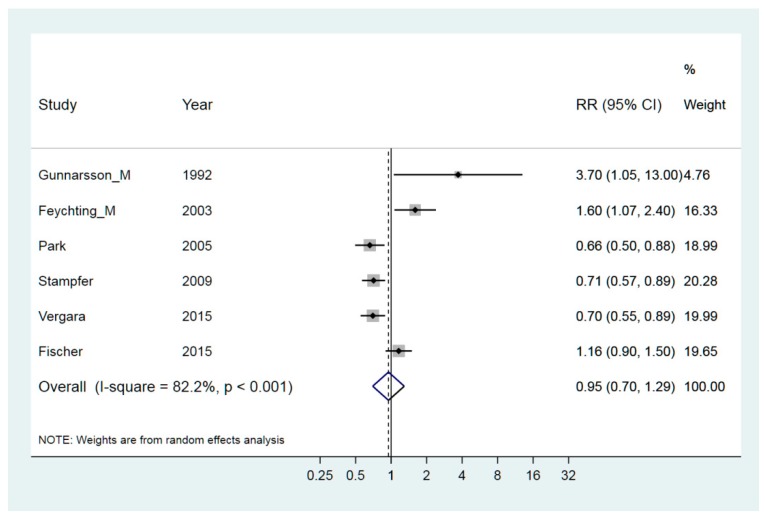
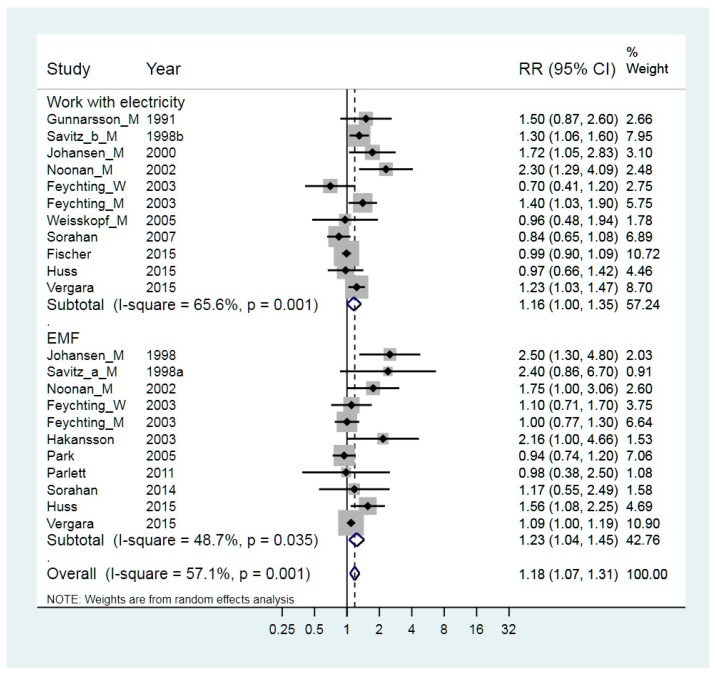
We conducted a systematic literature review to identify studies fulfilling good scientific epidemiological standards for use in meta-analyses of occupational risk factors for amyotrophic lateral sclerosis (ALS). : We identified 79 original publications on associations between work and ALS. The MOOSE (Meta-analysis Of Observational Studies in Epidemiology) and GRADE (Grading of Recommendations, Assessment, Development and Evaluations) guidelines were used to ensure high scientific quality, and reliable protocols were applied to classify the articles. Thirty-seven articles fulfilled good scientific standards, while 42 were methodologically deficient and thus were excluded from our meta-analyses. : The weighted relative risks for the various occupational exposures were respectively; 1.29 (95% confidence interval (CI): 0.97⁻1.72; six articles) for heavy physical work, 3.98 (95% CI: 2.04⁻7.77; three articles) for professional sports, 1.45 (95% CI: 1.07⁻1.96; six articles) for metals, 1.19 (95% CI: 1.07⁻1.33; 10 articles) for chemicals, 1.18 (95% CI: 1.07⁻1.31; 16 articles) for electromagnetic fields or working with electricity, and 1.18 (95% CI: 1.05⁻1.34; four articles) for working as a nurse or physician. : Meta-analyses based only on epidemiologic publications of good scientific quality show that the risk of ALS is statistically significantly elevated for occupational exposures to excessive physical work, chemicals (especially pesticides), metals (especially lead), and possibly also to electromagnetic fields and health care work. These results are not explained by publication bias.
我们进行了系统的文献回顾,以确定符合用于肌萎缩侧索硬化症(ALS)职业危险因素荟萃分析的良好科学流行病学标准的研究。我们确定了 79 项关于工作与 ALS 之间关联的原始出版物。使用 MOOSE(观察性研究荟萃分析流行病学)和 GRADE(推荐评估、制定与评估分级)指南确保了高科学质量,并应用可靠的方案对文章进行分类。37 篇文章符合良好的科学标准,而 42 篇方法学上存在缺陷,因此未纳入我们的荟萃分析。对于各种职业暴露,加权相对风险分别为:重体力劳动为 1.29(95%置信区间:0.97⁻1.72;6 篇文章),职业运动为 3.98(95%置信区间:2.04⁻7.77;3 篇文章),金属为 1.45(95%置信区间:1.07⁻1.96;6 篇文章),化学物质为 1.19(95%置信区间:1.07⁻1.33;10 篇文章),电磁场或电力工作为 1.18(95%置信区间:1.07⁻1.31;16 篇文章),护士或医生工作为 1.18(95%置信区间:1.05⁻1.34;4 篇文章)。基于仅有良好科学质量的流行病学出版物的荟萃分析表明,职业暴露于过度体力劳动、化学物质(尤其是农药)、金属(尤其是铅)以及电磁场和医疗保健工作与 ALS 的风险呈统计学显著升高。这些结果不能用发表偏倚来解释。