Functional Microbiology, Institute of Microbiology, Department of Pathobiology, University of Veterinary Medicine, Vienna, Austria.
Institute of Milk Hygiene, Milk Technology and Food Science, Department for Farm Animals and Veterinary Public Health, University of Veterinary Medicine, Vienna, Austria.
Sci Rep. 2018 Oct 29;8(1):15968. doi: 10.1038/s41598-018-34371-1.
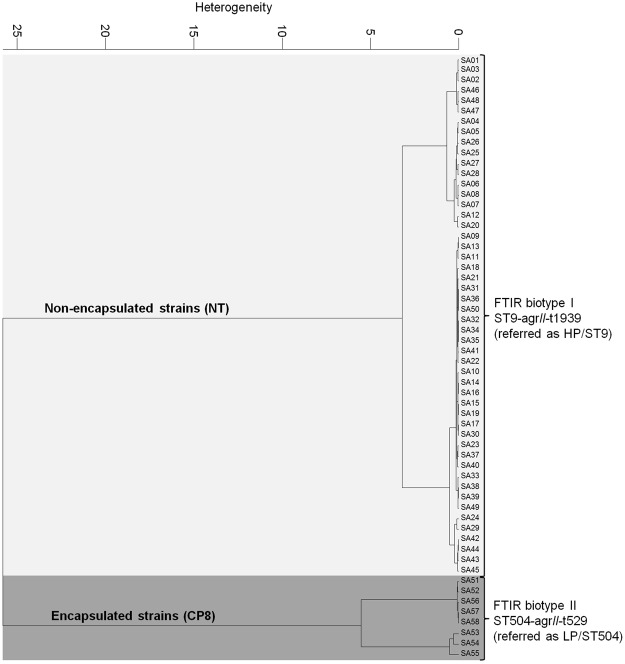
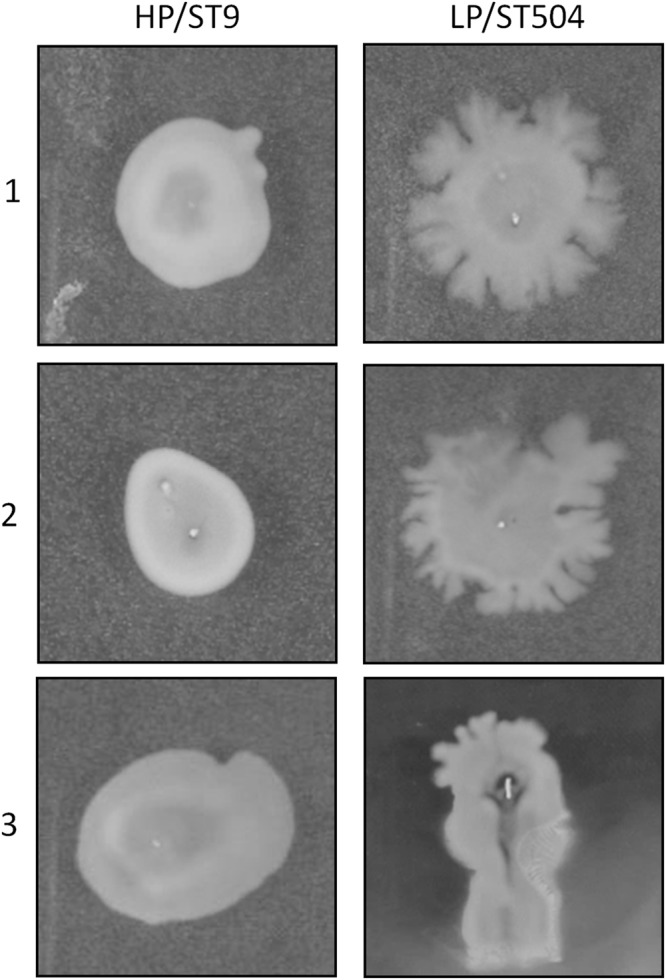
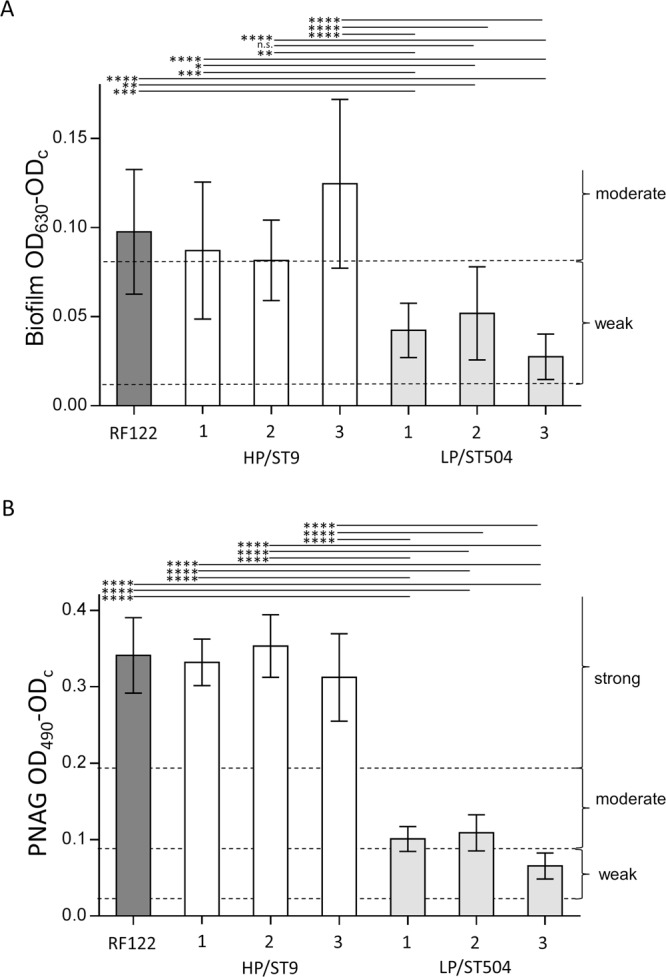
Staphylococcus aureus causing persistent, recurrent bovine intramammary infections are still a major challenge to dairy farming. Generally, one or a few clonal lineages are predominant in dairy herds, indicating animal-to-animal transfers and the existence of distinct pathotypic traits. The aim of this study was to determine if long term persistence and spreading of S. aureus are associated with specific phenotypic traits, including cellular invasion, cytotoxicity and biofilm formation. Mastitis isolates were collected over a 3-years period from a single dairy herd, resulting in two persistent subtypes, the high within-herd prevalent subtype ST9 (CC9)-methicillin-susceptible S. aureus (MSSA), designated HP/ST9, and the low within-herd prevalent subtype ST504 (CC705)-MSSA, designated LP/ST504. Characterization of the two different coexisting persistent subtypes showed that the following phenotypic traits are particularly associated with high within-herd prevalence: lack of capsular polysaccharide expression, high cellular invasiveness, low cytotoxicity and high biofilm/ poly-N-acetylglucosamine (PNAG) production, which may concomitantly contribute to the spreading of HP/ST9 within the herd. By contrast to HP/ST9, LP/ST504 is characterized by the formation of colony dendrites, which may help the bacteria to access deeper tissues as niches for persistence in single animals. Thus, within a single herd, two different types of persistence can be found in parallel, allowing longtime persistence of S. aureus in dairy cattle. Furthermore, this study indicates that ST9 (CC9)-MSSA strains, which are currently thought to have their primary reservoir in swine and humans, can also successfully spread to new hosts and persist in dairy herds for years.
金黄色葡萄球菌引起的持续、反复的奶牛乳腺炎仍然是奶牛养殖的主要挑战。通常,一个或几个克隆谱系在奶牛群中占优势,表明存在动物间的转移和不同的病原特征。本研究旨在确定金黄色葡萄球菌的长期持续存在和传播是否与特定的表型特征相关,包括细胞侵袭、细胞毒性和生物膜形成。从一个单一的奶牛场采集了 3 年的乳腺炎分离株,结果产生了两种持续存在的亚型,高 herd 内流行亚型 ST9 (CC9)-甲氧西林敏感金黄色葡萄球菌(MSSA),命名为 HP/ST9,和低 herd 内流行亚型 ST504 (CC705)-MSSA,命名为 LP/ST504。对两种不同共存的持续存在亚型的特征描述表明,以下表型特征与 herd 内高流行率特别相关:缺乏荚膜多糖表达、高细胞侵袭性、低细胞毒性和高生物膜/多-N-乙酰葡糖胺(PNAG)产生,这可能共同导致 HP/ST9 在 herd 内的传播。与 HP/ST9 相反,LP/ST504 的特征是形成菌落树突,这可能有助于细菌进入更深的组织作为在单个动物中持续存在的小生境。因此,在单个 herd 中,可以同时发现两种不同类型的持续性,从而允许金黄色葡萄球菌在奶牛中长时间持续存在。此外,本研究表明,目前认为主要储存在猪和人类中的 ST9 (CC9)-MSSA 菌株也可以成功传播到新的宿主,并在奶牛 herd 中持续存在多年。