1 Anne McLaren Laboratory, Wellcome Trust-Medical Research Council Cambridge Stem Cell Institute, Department of Medicine, University of Cambridge, Cambridge, United Kingdom.
2 Division of Clinical Neurosciences, Clifford Allbutt Building, Cambridge Biomedical Campus, Cambridge, United Kingdom.
Stem Cells Dev. 2019 Jan 15;28(2):81-100. doi: 10.1089/scd.2017.0234. Epub 2018 Dec 18.
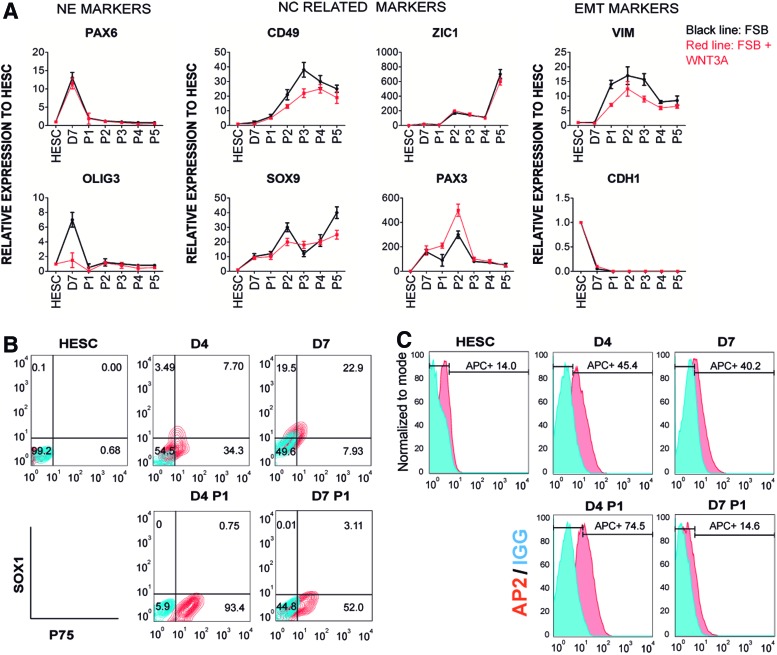
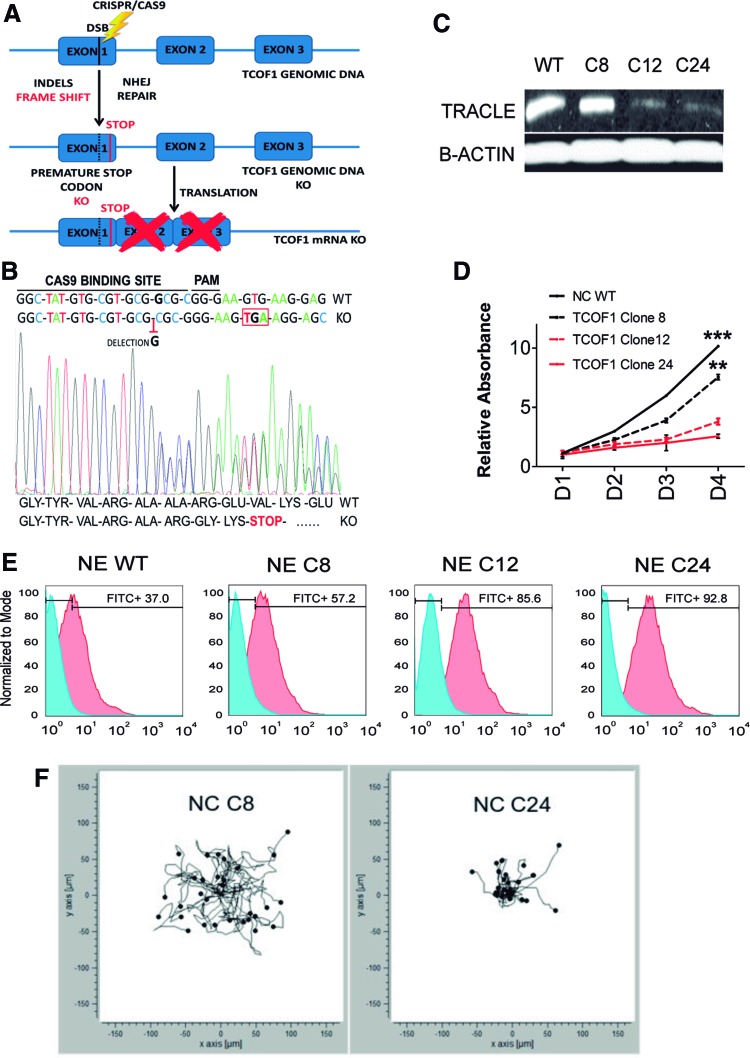
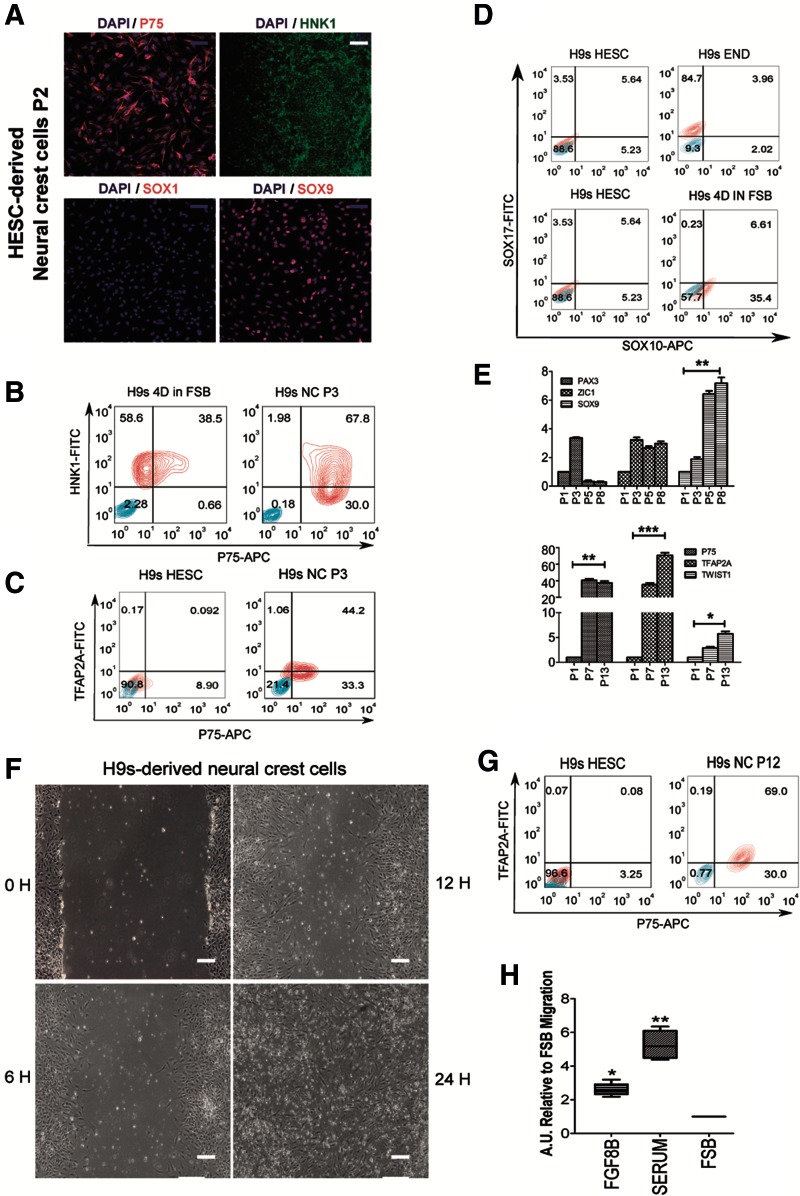
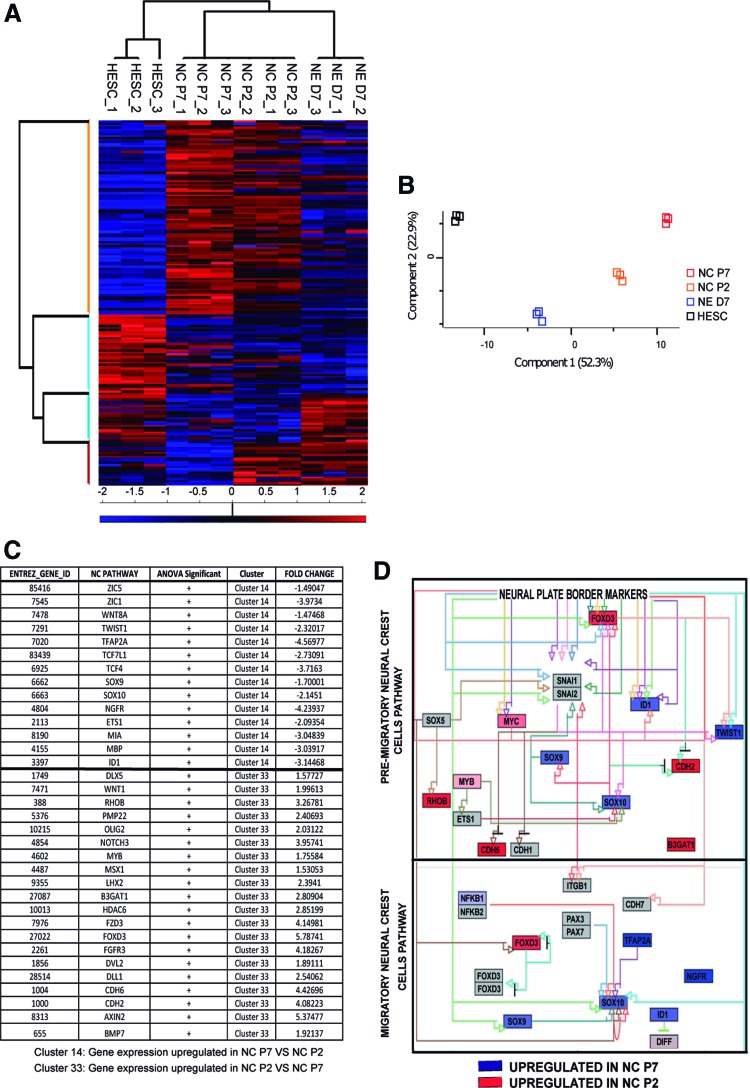
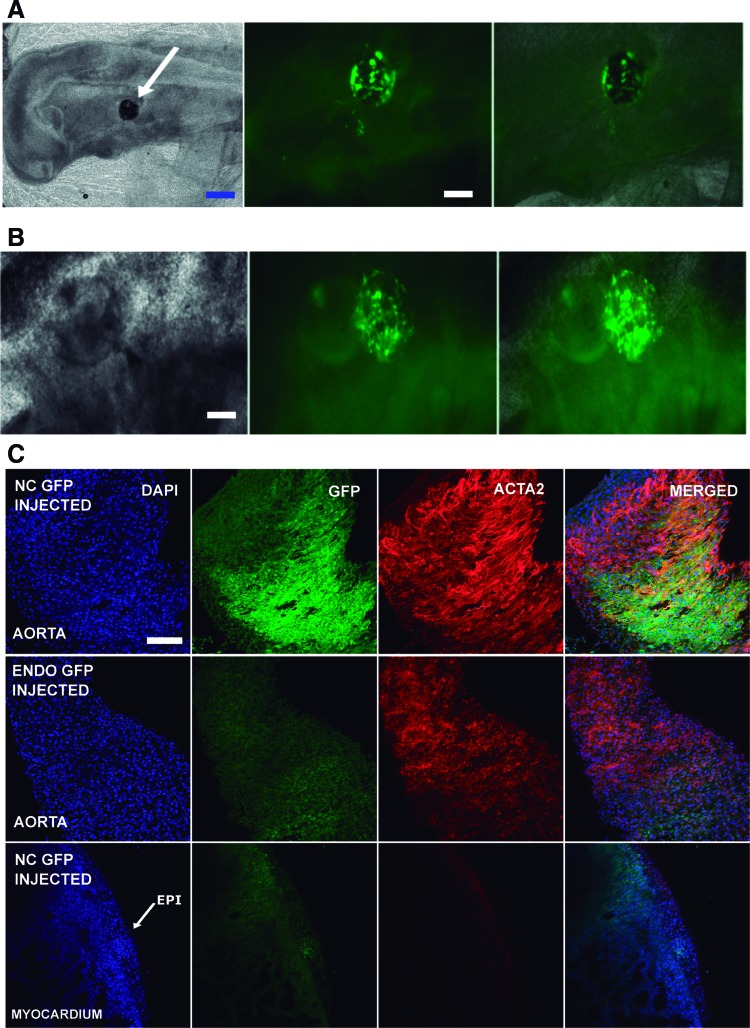
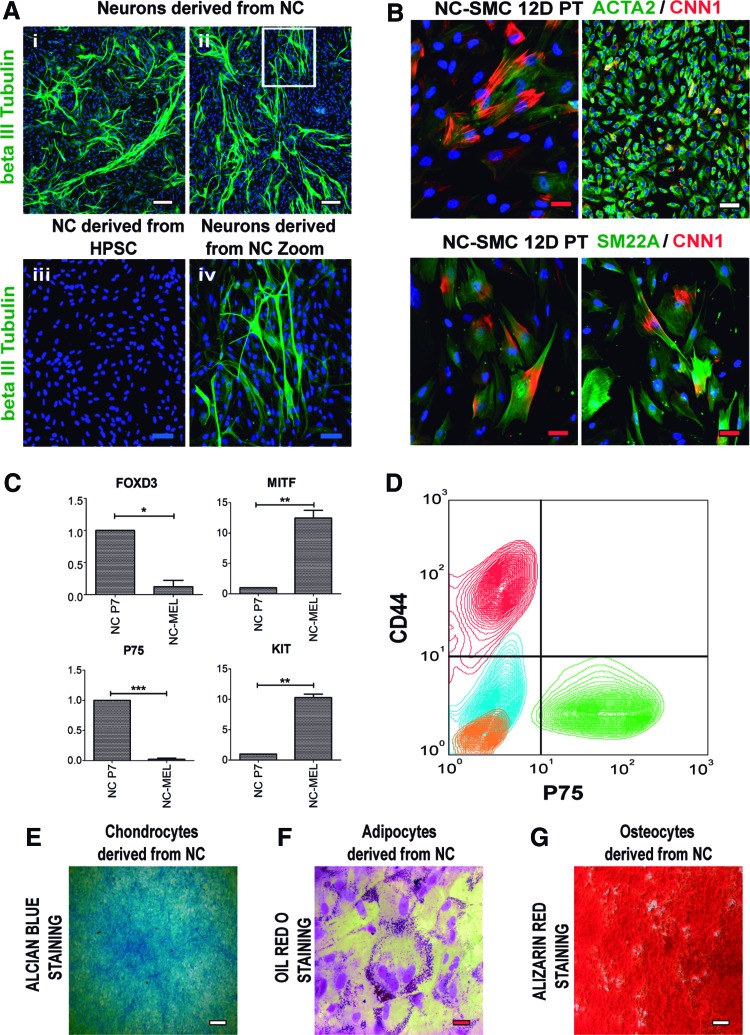
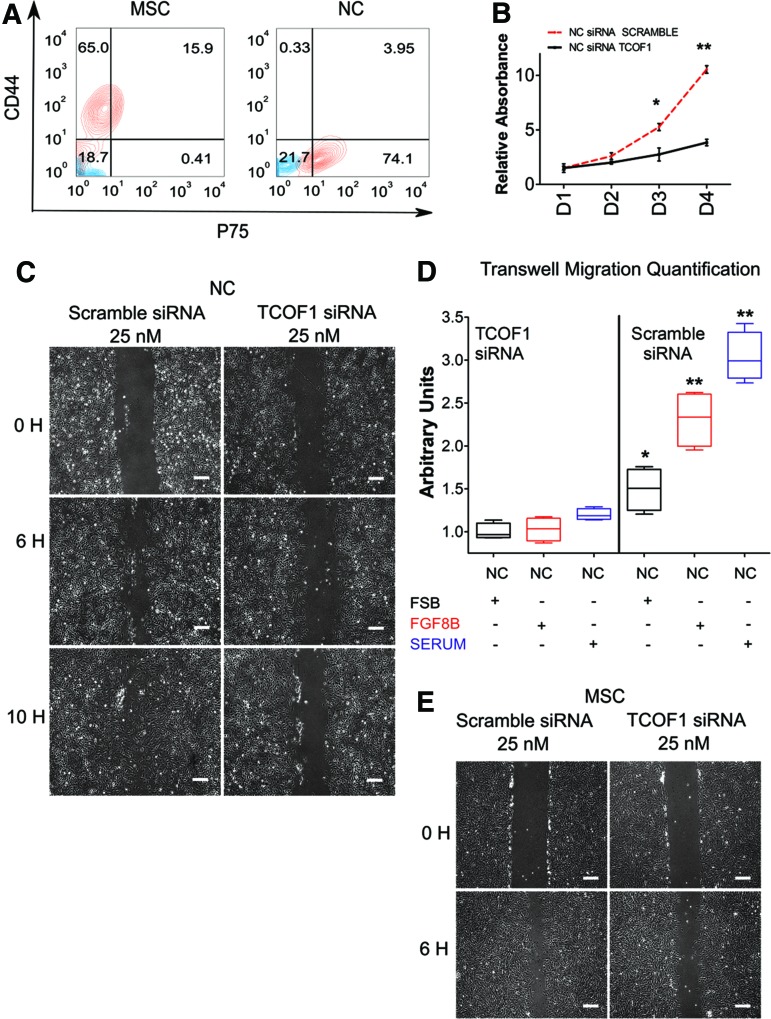
The neural crest (NC) is a transient multipotent cell population present during embryonic development. The NC can give rise to multiple cell types and is involved in a number of different diseases. Therefore, the development of new strategies to model NC in vitro enables investigations into the mechanisms involved in NC development and disease. In this study, we report a simple and efficient protocol to differentiate human pluripotent stem cells (HPSC) into NC using a chemically defined media, with basic fibroblast growth factor 2 (FGF2) and the transforming growth factor-β inhibitor SB-431542. The cell population generated expresses a range of NC markers, including P75, TWIST1, SOX10, and TFAP2A. NC purification was achieved in vitro through serial passaging of the population, recreating the developmental stages of NC differentiation. The generated NC cells are highly proliferative, capable of differentiating to their derivatives in vitro and engraft in vivo to NC specific locations. In addition, these cells could be frozen for storage and thawed with no loss of NC properties, nor the ability to generate cellular derivatives. We assessed the potential of the derived NC population to model the neurocristopathy, Treacher Collins Syndrome (TCS), using small interfering RNA (siRNA) knockdown of TCOF1 and by creating different TCOF1 HPSC lines through CRISPR/Cas9 technology. The NC cells derived from TCOF1 HPSC recapitulate the phenotype of the reported TCS murine model. We also report for the first time an impairment of migration in TCOF1 NC and mesenchymal stem cells. In conclusion, the developed protocol permits the generation of the large number of NC cells required for developmental studies, disease modeling, and for drug discovery platforms in vitro.
神经嵴(NC)是胚胎发育过程中存在的一种短暂的多能细胞群体。NC 可以产生多种细胞类型,并参与多种不同的疾病。因此,开发新的策略来体外模拟 NC 可以促进对 NC 发育和疾病相关机制的研究。在这项研究中,我们报告了一种使用化学定义的培养基,结合碱性成纤维细胞生长因子 2(FGF2)和转化生长因子-β抑制剂 SB-431542,从人多能干细胞(HPSC)中简单而高效地分化 NC 的方案。产生的细胞群体表达一系列 NC 标记物,包括 P75、TWIST1、SOX10 和 TFAP2A。通过对群体进行连续传代,在体外实现 NC 纯化,重现 NC 分化的发育阶段。生成的 NC 细胞具有高度增殖能力,能够在体外分化为其衍生物,并在体内植入 NC 特定部位。此外,这些细胞可以冷冻保存,解冻后不会失去 NC 特性,也不会失去生成细胞衍生物的能力。我们评估了衍生的 NC 群体在模拟神经嵴病变、Treacher Collins 综合征(TCS)方面的潜力,使用 TCOF1 的小干扰 RNA(siRNA)敲低和通过 CRISPR/Cas9 技术创建不同的 TCOF1 HPSC 系来实现。从 TCOF1 HPSC 中衍生的 NC 细胞再现了报道的 TCS 小鼠模型的表型。我们还首次报告了 TCOF1 NC 和间充质干细胞迁移受损。总之,该方案允许生成大量的 NC 细胞,用于发育研究、疾病建模以及体外药物发现平台。