Sousa David Magalhães, Alves Luís Cerqueira, Marques Ana, Gaspar Guilherme, Lima João Carlos, Ferreira Isabel
CENIMAT/I3N, Departamento de Ciência dos Materiais Universidade Nova de Lisboa Quinta da Torre, Campus Universitário, 2829-516, Caparica, Portugal.
Centro de Ciências e Tecnologias Nucleares Instituto Superior Técnico Estrada Nacional 10 (km 139,7), 2695-066, Bobadela, LRS, Portugal.
Sci Rep. 2018 Oct 30;8(1):15992. doi: 10.1038/s41598-018-34268-z.
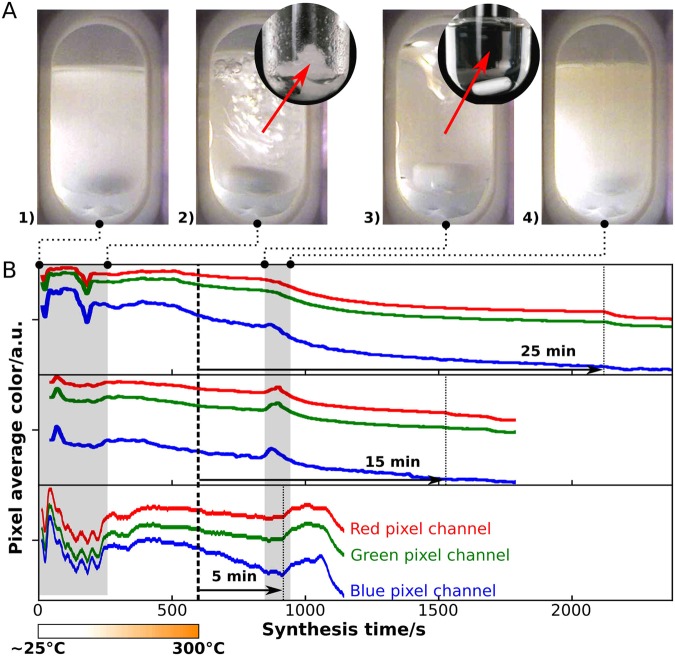
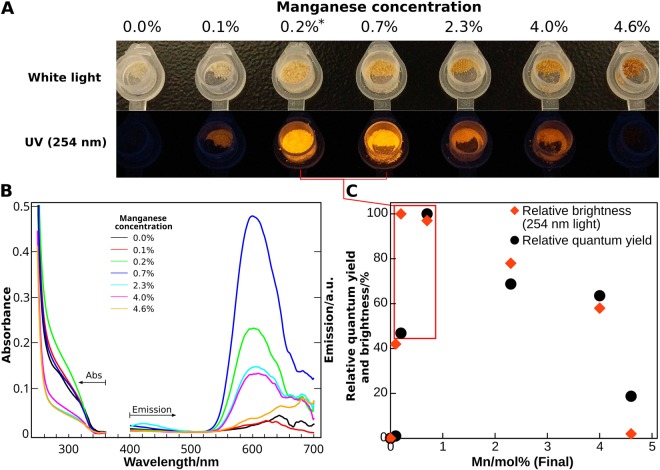
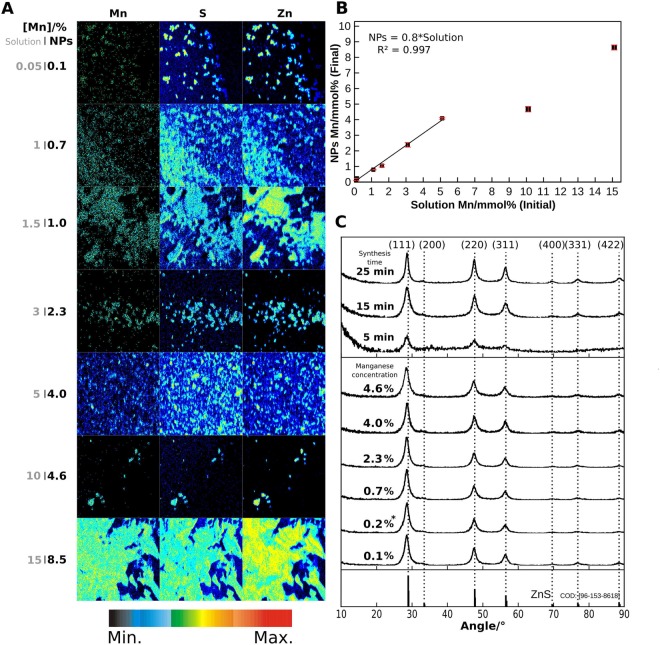
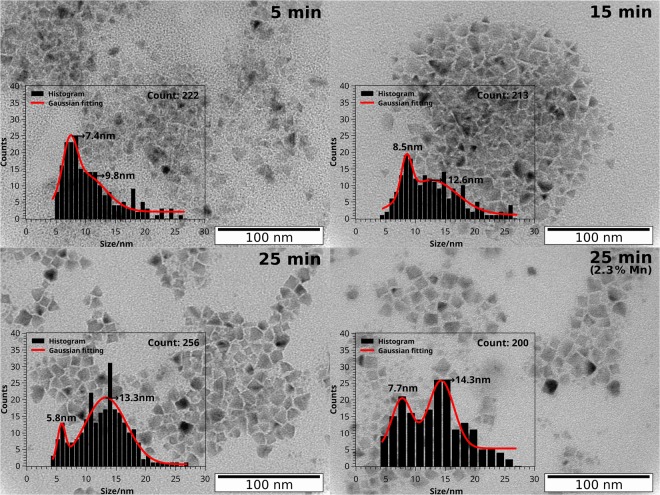
Undoped and manganese doped zinc sulfide nanoparticles were produced by a fast, one-step and two-component microwave-assisted synthesis method. The solid phase retains around 78% of the initial Mn concentration, as revealed by Particle Induced X-ray Emission analysis. X-ray diffraction patterns confirmed zinc blende structure and in the transmission electron microscopy images, nanoparticles with triangular prism and cube shapes were observed, respectively with an average particle size around 7 nm and 13 nm. Dried powders of zinc sulfide nanoparticles, doped with 0.1 mol% and 0.7 mol% of Mn ions, show highest brilliance of luminescence under UV light. Increasing dopant levels resulted in a diminishing emission that vanishes above 4% of dopant concentration. The synthesis of ZnS was monitored and two main events were detected, one at 145 °C corresponding to the sol-gel phase formation and another after ~3 min at 300 °C where the precipitation of the zinc sulfide nanoparticles occurs.
通过快速、一步法和双组分微波辅助合成法制备了未掺杂和锰掺杂的硫化锌纳米颗粒。粒子诱导X射线发射分析表明,固相保留了约78%的初始锰浓度。X射线衍射图谱证实了闪锌矿结构,在透射电子显微镜图像中,分别观察到了三棱柱形和立方体形的纳米颗粒,平均粒径分别约为7纳米和13纳米。掺杂0.1摩尔%和0.7摩尔%锰离子的硫化锌纳米颗粒干燥粉末在紫外光下显示出最高的发光亮度。掺杂水平的增加导致发射减弱,在掺杂浓度超过4%时发射消失。监测了硫化锌的合成过程,检测到两个主要事件,一个在145°C对应于溶胶-凝胶相形成,另一个在300°C约3分钟后发生硫化锌纳米颗粒的沉淀。