Rifaï Khaldoun, Idrissou Mouhamed, Penault-Llorca Frédérique, Bignon Yves-Jean, Bernard-Gallon Dominique
Department of Oncogenetics, Centre Jean Perrin, CBRV, 28 place Henri-Dunant, 63001 Clermont-Ferrand, France.
INSERM-UMR 1240-Imagerie Moléculaire et Stratégies Théranostiques (IMoST), 58 Rue Montalembert, 63005 Clermont-Ferrand, France.
Cancers (Basel). 2018 Oct 30;10(11):409. doi: 10.3390/cancers10110409.
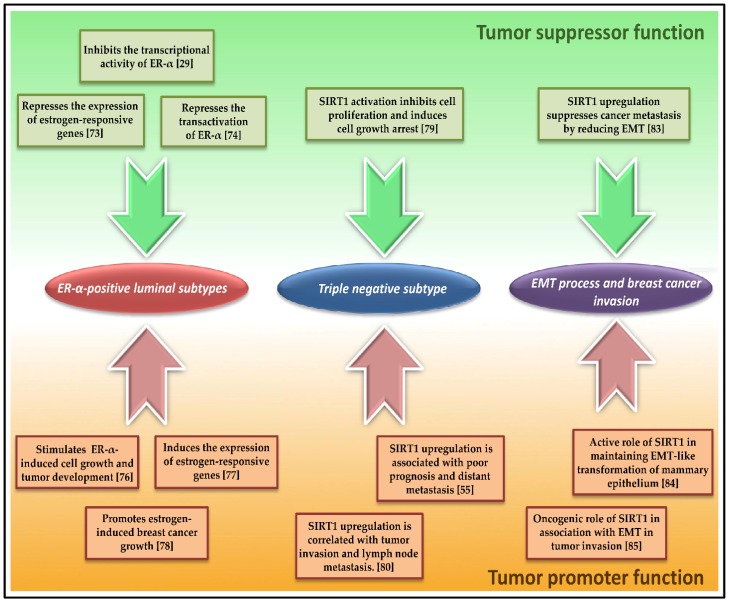
Breast cancer (BC) is the most common type of cancer in women worldwide; it is a multifactorial genetic disease. Acetylation and deacetylation are major post-translational protein modifications that regulate gene expression and the activity of a myriad of oncoproteins. Aberrant deacetylase activity can promote or suppress tumorigenesis and cancer metastasis in different types of human cancers, including breast cancer. Sirtuin-1 (SIRT1) is a class-III histone deacetylase (HDAC) that deacetylates both histone and non-histone targets. The often-described 'regulator of regulators' is deeply implicated in apoptosis, gene regulation, genome maintenance, DNA repair, aging, and cancer development. However, despite the accumulated studies over the past decade, the role of SIRT1 in human breast cancer remains a subject of debate and controversy. The ambiguity surrounding the implications of SIRT1 in breast tumorigenesis stems from the discrepancy between studies, which have shown both tumor-suppressive and promoting functions of SIRT1. Furthermore, studies have shown that SIRT1 deficiency promotes or suppresses tumors in breast cancer, making it an attractive therapeutic target in cancer treatment. This review provides a comprehensive examination of the various implications of SIRT1 in breast cancer development and metastasis. We will also discuss the mechanisms underlying the conflicting roles of SIRT1, as well as its selective modulators, in breast carcinogenesis.
乳腺癌(BC)是全球女性中最常见的癌症类型;它是一种多因素遗传疾病。乙酰化和去乙酰化是主要的翻译后蛋白质修饰,可调节基因表达以及众多癌蛋白的活性。异常的脱乙酰酶活性可促进或抑制包括乳腺癌在内的不同类型人类癌症中的肿瘤发生和癌症转移。沉默调节蛋白1(SIRT1)是一种III类组蛋白脱乙酰酶(HDAC),可使组蛋白和非组蛋白靶标去乙酰化。这种常被称为“调节因子的调节因子”的蛋白与细胞凋亡、基因调控、基因组维持、DNA修复、衰老和癌症发展密切相关。然而,尽管在过去十年中积累了大量研究,但SIRT1在人类乳腺癌中的作用仍然是一个存在争议和争论的话题。围绕SIRT1在乳腺肿瘤发生中的影响的模糊性源于研究之间的差异,这些研究既显示了SIRT1的肿瘤抑制功能,也显示了其促进功能。此外,研究表明,SIRT1缺乏在乳腺癌中可促进或抑制肿瘤,这使其成为癌症治疗中一个有吸引力的治疗靶点。本综述全面审视了SIRT1在乳腺癌发展和转移中的各种影响。我们还将讨论SIRT1在乳腺癌发生中相互矛盾作用的潜在机制及其选择性调节剂。