Quiles-Carrillo Luis, Montanes Nestor, Pineiro Fede, Jorda-Vilaplana Amparo, Torres-Giner Sergio
Technological Institute of Materials (ITM), Universitat Politècnica de València (UPV), Plaza Ferrándiz y Carbonell 1, 03801 Alcoy, Spain.
Novel Materials and Nanotechnology Group, Institute of Agrochemistry and Food Technology (IATA), Spanish National Research Council (CSIC), Calle Catedrático Agustín Escardino Benlloch 7, 46980 Paterna, Spain.
Materials (Basel). 2018 Oct 30;11(11):2138. doi: 10.3390/ma11112138.
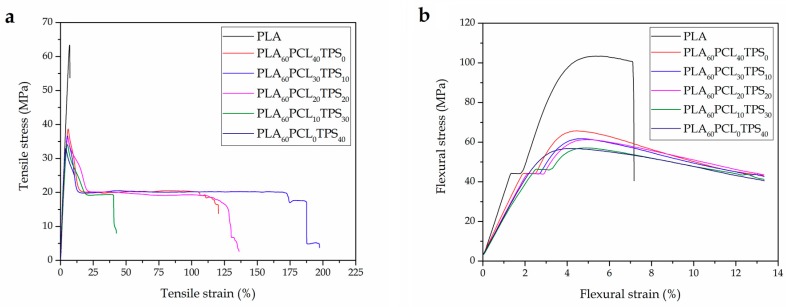
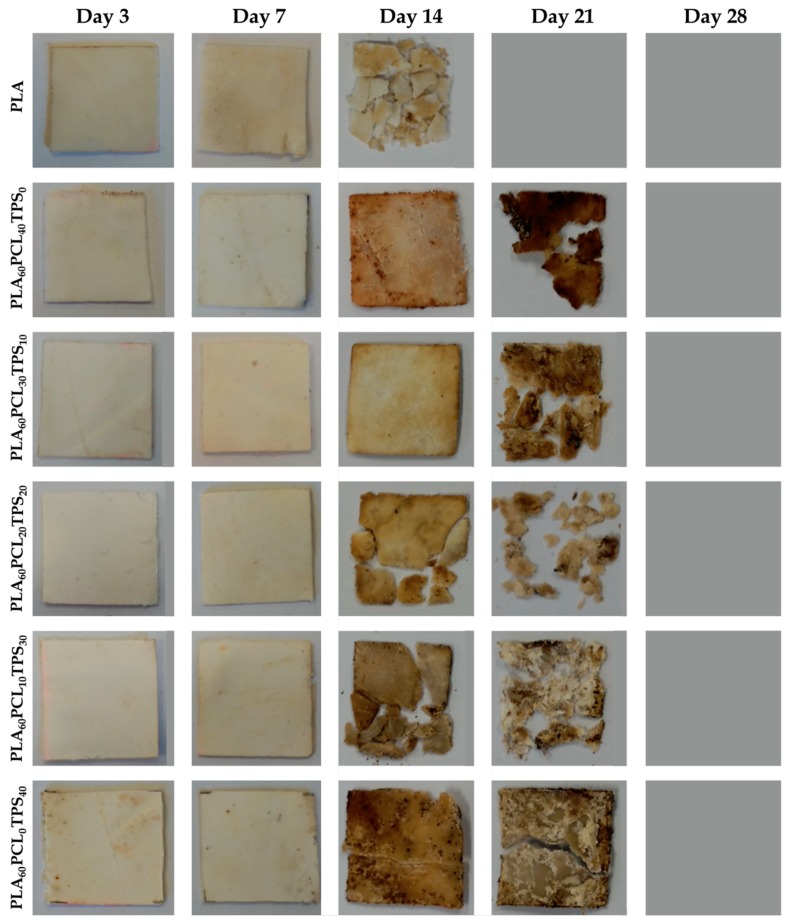
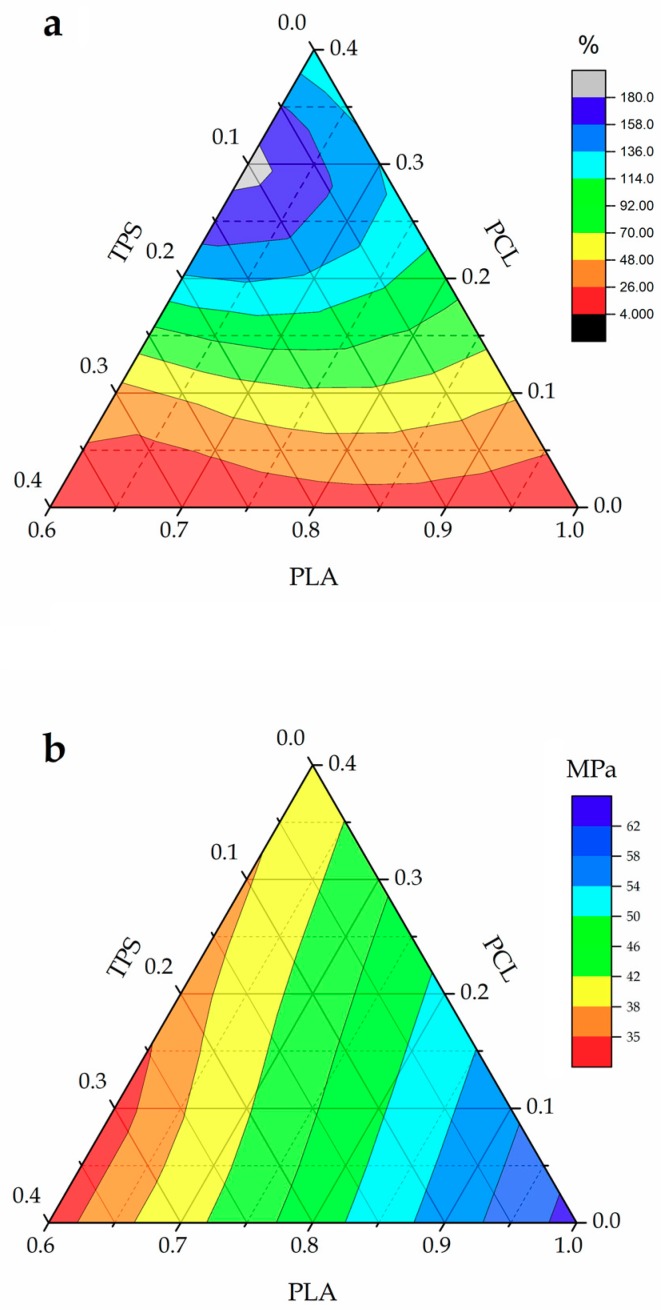
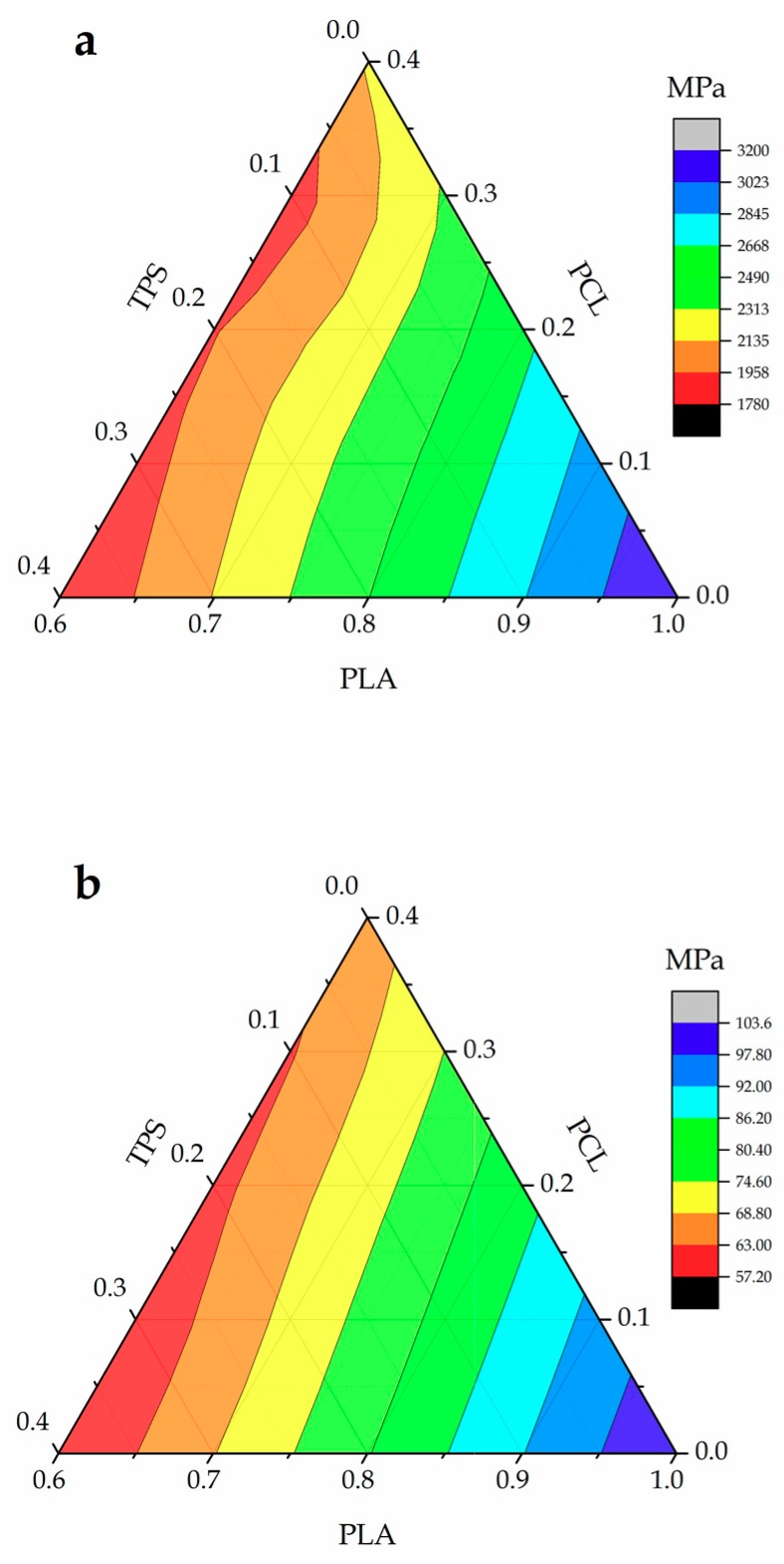
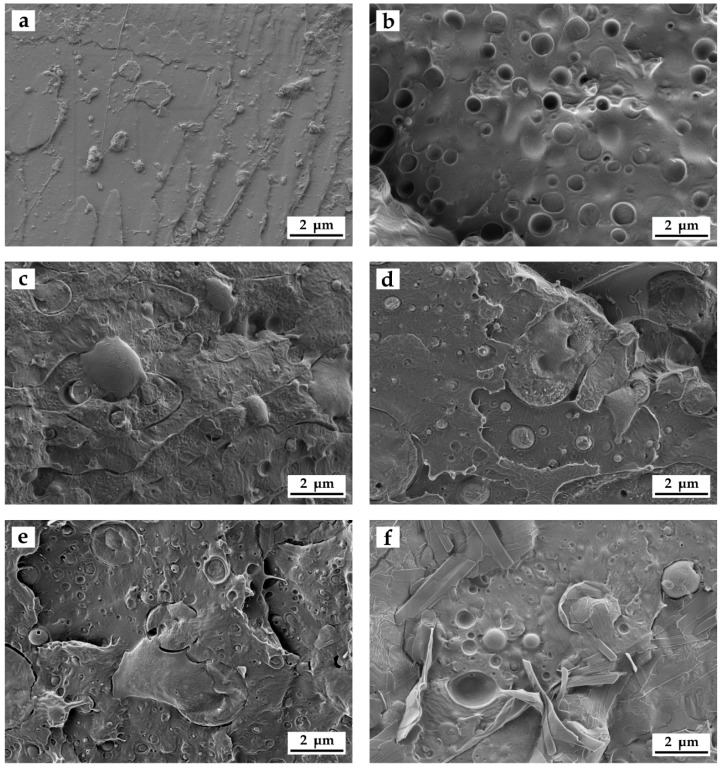
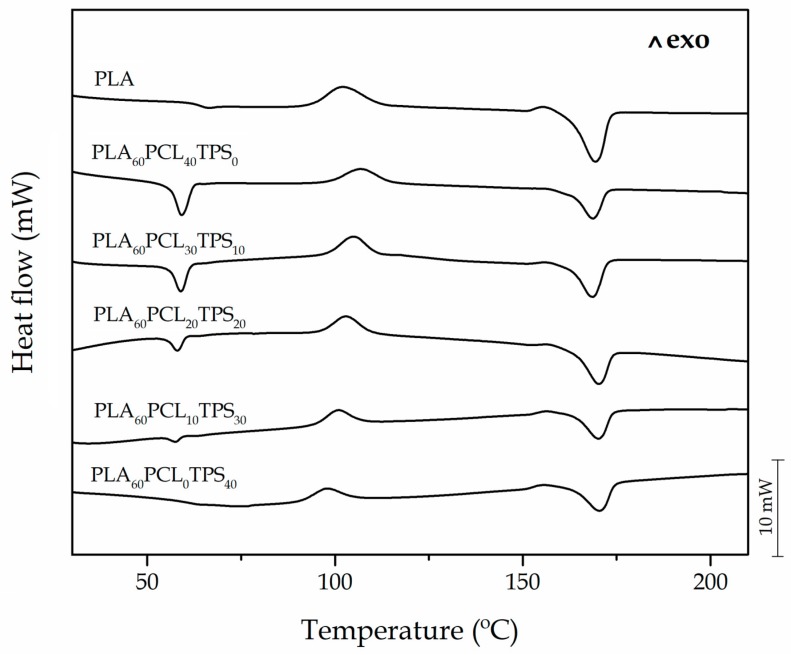
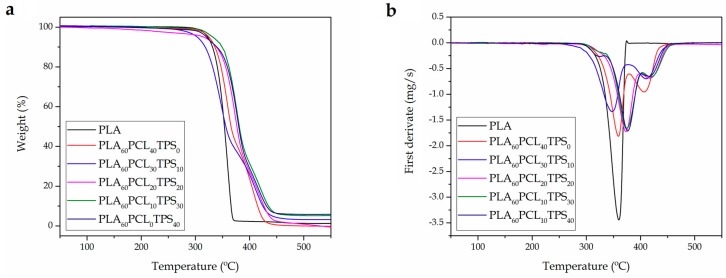
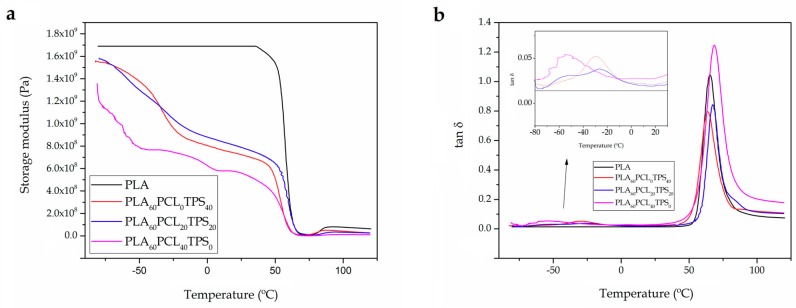
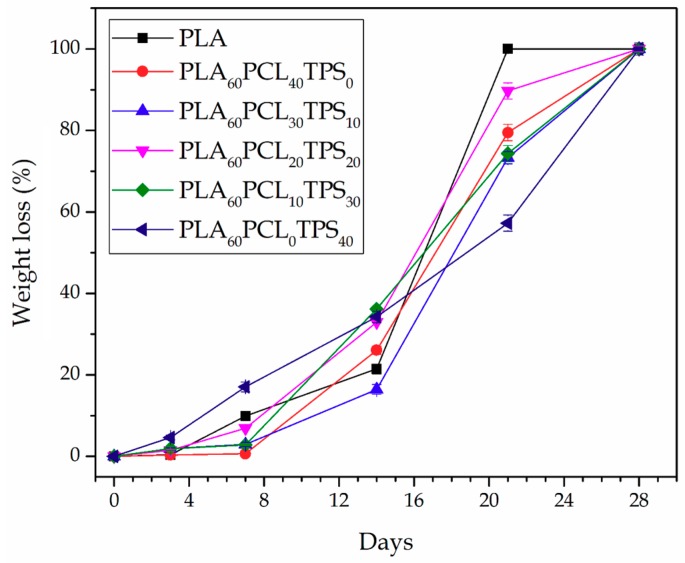
The present study describes the preparation and characterization of binary and ternary blends based on polylactide (PLA) with poly(ε-caprolactone) (PCL) and thermoplastic starch (TPS) to develop fully compostable plastics with improved ductility and toughness. To this end, PLA was first melt-mixed in a co-rotating twin-screw extruder with up to 40 wt % of different PCL and TPS combinations and then shaped into pieces by injection molding. The mechanical, thermal, and thermomechanical properties of the resultant binary and ternary blend pieces were analyzed and related to their composition. Although the biopolymer blends were immiscible, the addition of both PCL and TPS remarkably increased the flexibility and impact strength of PLA while it slightly reduced its mechanical strength. The most balanced mechanical performance was achieved for the ternary blend pieces that combined high PCL contents with low amounts of TPS, suggesting a main phase change from PLA/TPS (comparatively rigid) to PLA/PCL (comparatively flexible). The PLA-based blends presented an "island-and-sea" morphology in which the TPS phase contributed to the fine dispersion of PCL as micro-sized spherical domains that acted as a rubber-like phase with the capacity to improve toughness. In addition, the here-prepared ternary blend pieces presented slightly higher thermal stability and lower thermomechanical stiffness than the neat PLA pieces. Finally, all biopolymer pieces fully disintegrated in a controlled compost soil after 28 days. Therefore, the inherently low ductility and toughness of PLA can be successfully improved by melt blending with PCL and TPS, resulting in compostable plastic materials with a great potential in, for instance, rigid packaging applications.
本研究描述了基于聚乳酸(PLA)与聚(ε-己内酯)(PCL)和热塑性淀粉(TPS)的二元和三元共混物的制备与表征,以开发具有改善的延展性和韧性的完全可堆肥塑料。为此,首先将PLA在同向旋转双螺杆挤出机中与高达40 wt%的不同PCL和TPS组合进行熔融共混,然后通过注塑成型制成片材。分析了所得二元和三元共混片材的机械、热和热机械性能,并将其与它们的组成相关联。尽管生物聚合物共混物不相容,但PCL和TPS的添加均显著提高了PLA的柔韧性和冲击强度,同时略微降低了其机械强度。对于将高PCL含量与少量TPS相结合的三元共混片材,实现了最平衡的机械性能,这表明主要发生了从PLA/TPS(相对刚性)到PLA/PCL(相对柔性)的相转变。基于PLA的共混物呈现出“海岛”形态,其中TPS相有助于PCL作为微米级球形域的精细分散,这些球形域充当具有改善韧性能力的橡胶状相。此外,此处制备的三元共混片材比纯PLA片材具有略高的热稳定性和较低的热机械刚度。最后,所有生物聚合物片材在28天后在受控的堆肥土壤中完全分解。因此,通过与PCL和TPS熔融共混,可以成功改善PLA固有的低延展性和韧性,从而得到在例如刚性包装应用中具有巨大潜力的可堆肥塑料材料。