French National Cancer Institute, 92100 Boulogne-Billancourt, France.
Int J Mol Sci. 2018 Nov 1;19(11):3425. doi: 10.3390/ijms19113425.
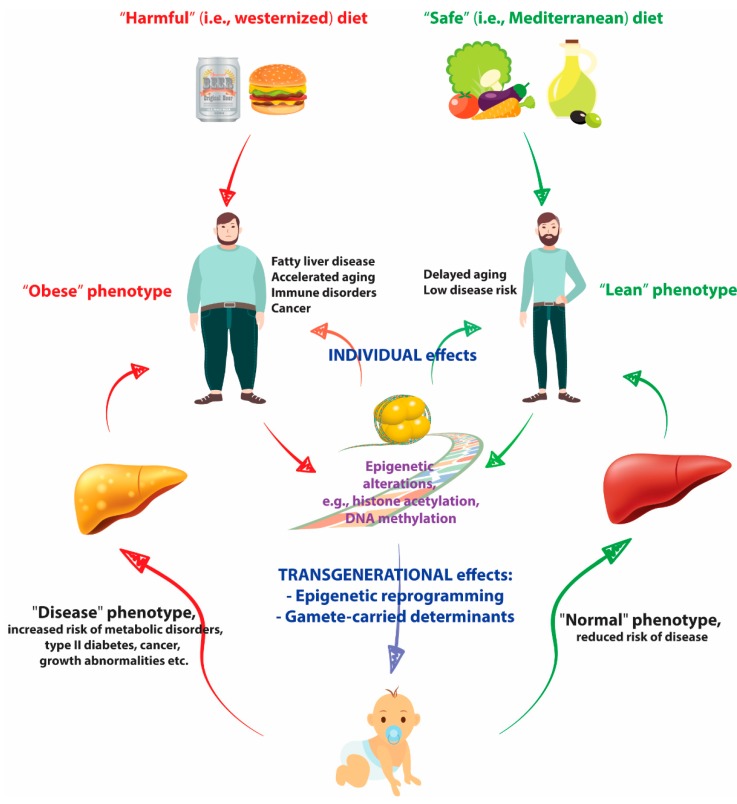
Environmental epigenetics describes how environmental factors affect cellular epigenetics and, hence, human health. Epigenetic marks alter the spatial conformation of chromatin to regulate gene expression. Environmental factors with epigenetic effects include behaviors, nutrition, and chemicals and industrial pollutants. Epigenetic mechanisms are also implicated during development in utero and at the cellular level, so environmental exposures may harm the fetus by impairing the epigenome of the developing organism to modify disease risk later in life. By contrast, bioactive food components may trigger protective epigenetic modifications throughout life, with early life nutrition being particularly important. Beyond their genetics, the overall health status of an individual may be regarded as an integration of many environmental signals starting at gestation and acting through epigenetic modifications. This review explores how the environment affects the epigenome in health and disease, with a particular focus on cancer. Understanding the molecular effects of behavior, nutrients, and pollutants might be relevant for developing preventative strategies and personalized heath programs. Furthermore, by restoring cellular differentiation, epigenetic drugs could represent a potential strategy for the treatment of many diseases including cancer.
环境表观遗传学描述了环境因素如何影响细胞表观遗传学,从而影响人类健康。表观遗传标记改变染色质的空间构象,以调节基因表达。具有表观遗传效应的环境因素包括行为、营养以及化学物质和工业污染物。在子宫内和细胞水平的发育过程中,表观遗传机制也与之相关,因此环境暴露可能通过损害发育中生物体的表观基因组来损害胎儿,从而改变其日后的疾病风险。相比之下,生物活性食物成分可能会在整个生命周期中引发保护性的表观遗传修饰,而生命早期的营养尤为重要。除了遗传因素外,个体的整体健康状况可以被视为从妊娠开始并通过表观遗传修饰起作用的许多环境信号的综合。这篇综述探讨了环境如何在健康和疾病中影响表观基因组,特别是癌症。了解行为、营养和污染物的分子效应可能对制定预防策略和个性化健康计划具有重要意义。此外,通过恢复细胞分化,表观遗传药物可能成为治疗许多疾病(包括癌症)的一种潜在策略。