Department of Food Science, University of Wisconsin-Madison, Madison, Wisconsin, USA.
Department of Surgery, University of Wisconsin-Madison, Madison, Wisconsin, USA.
Appl Environ Microbiol. 2019 May 2;85(10). doi: 10.1128/AEM.01661-18. Print 2019 May 15.
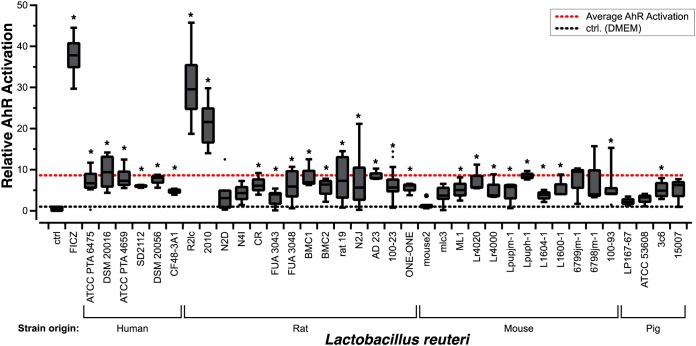
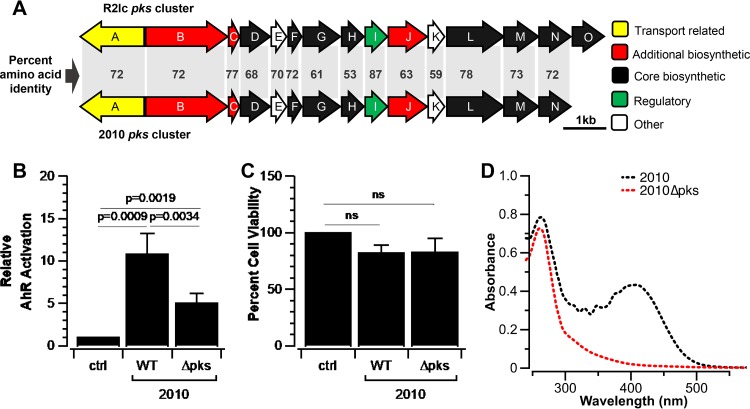
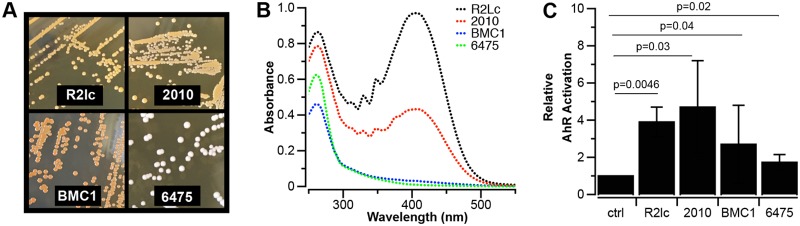
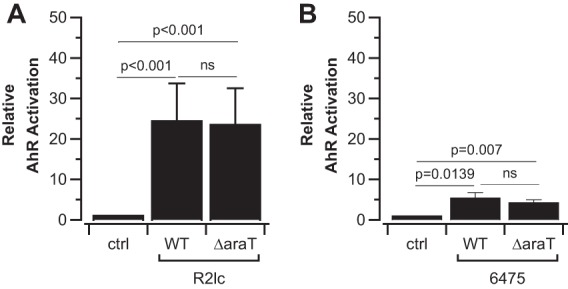
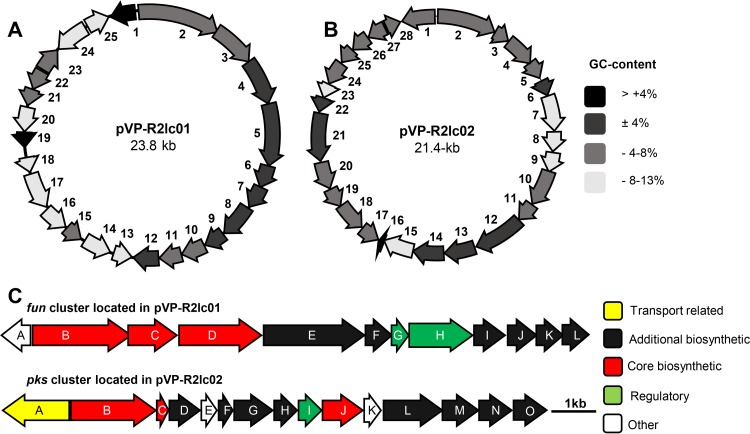
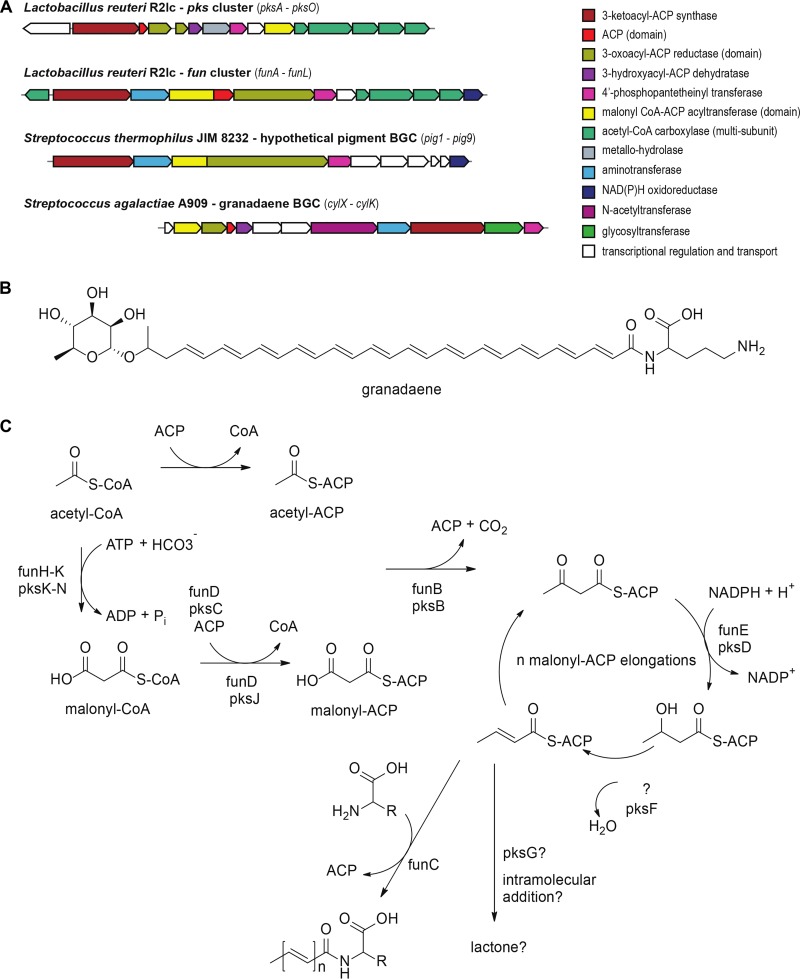
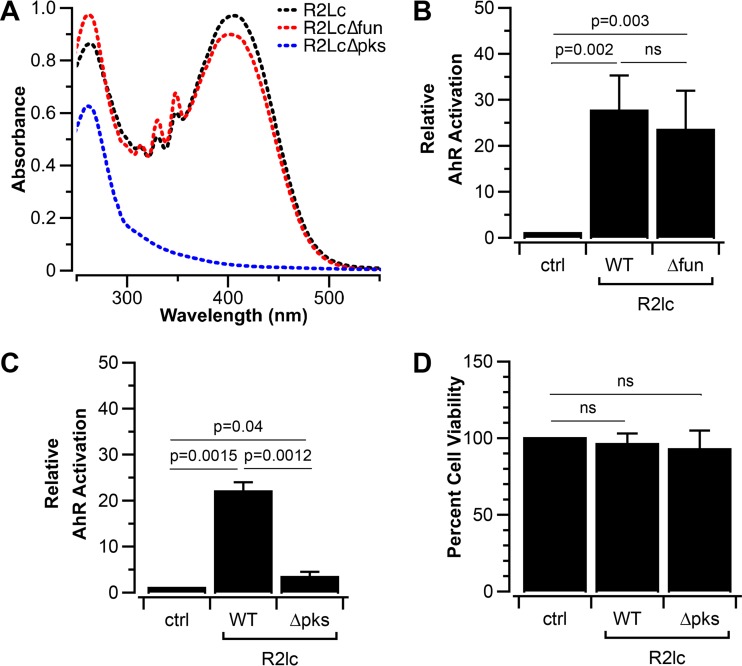
A mechanistic understanding of microbe-host interactions is critical to developing therapeutic strategies for targeted modulation of the host immune system. Different members of the gut symbiont species modulate host health by, for example, reduction of intestinal inflammation. Previously, it was shown that activates the aryl hydrocarbon receptor (AhR), a ligand-activated transcription factor that plays an important role in the mucosal immune system, by the production of tryptophan catabolites. Here, we identified a novel pathway by which activates AhR, which is independent of tryptophan metabolism. We screened a library of 36 strains and determined that R2lc and 2010, strains with a pigmented phenotype, are potent AhR activators. By whole-genome sequencing and comparative genomics, we identified genes unique to R2lc and 2010. Our analyses demonstrated that R2lc harbors two genetically distinct polyketide synthase (PKS) clusters, functionally unknown () and , each carried by a multicopy plasmid. Inactivation of , but not , abolished the ability of R2lc to activate AhR. 2010 has a gene cluster homologous to the cluster in R2lc with an identical gene organization, which is also responsible for AhR activation. In conclusion, we identified a novel PKS pathway in R2lc and 2010 that is responsible for AhR activation. Temporary changes in the composition of the microbiota, for example, by oral administration of probiotics, can modulate the host immune system. However, the underlying mechanisms by which probiotics interact with the host are often unknown. Here, we show that R2lc and 2010 harbor an orthologous PKS gene cluster that activates the aryl hydrocarbon receptor (AhR). AhR is a ligand-activated transcription factor that plays a key role in a variety of diseases, including amelioration of intestinal inflammation. Understanding the mechanism by which a bacterium modulates the immune system is critical for applying rational selection strategies for probiotic supplementation. Finally, heterologous and/or optimized expression of PKS is a logical next step toward the development of next-generation probiotics to prevent and treat disease.
微生物-宿主相互作用的机制理解对于开发靶向调节宿主免疫系统的治疗策略至关重要。肠道共生物种的不同成员通过例如减少肠道炎症来调节宿主健康。先前已经表明,通过产生色氨酸分解产物来激活芳烃受体(AhR),这是一种配体激活的转录因子,在粘膜免疫系统中起着重要作用。在这里,我们确定了一种通过该途径激活 AhR 的新途径,该途径与色氨酸代谢无关。我们筛选了 36 株的文库,并确定了具有色素表型的 R2lc 和 2010 是有效的 AhR 激活剂。通过全基因组测序和比较基因组学,我们确定了 R2lc 和 2010 特有的基因。我们的分析表明,R2lc 拥有两个在遗传上不同的聚酮合酶(PKS)簇,功能未知()和,每个都由多个质粒携带。失活,但不是,消除了 R2lc 激活 AhR 的能力。2010 具有与 R2lc 中相同基因组织的基因簇同源,也负责 AhR 激活。总之,我们确定了 R2lc 和 2010 中一种新的 PKS 途径,该途径负责 AhR 激活。例如,通过口服益生菌,微生物群组成的暂时变化可以调节宿主免疫系统。但是,益生菌与宿主相互作用的潜在机制通常是未知的。在这里,我们表明 R2lc 和 2010 拥有一个同源的 PKS 基因簇,该基因簇可激活芳烃受体(AhR)。AhR 是一种配体激活的转录因子,在多种疾病中起着关键作用,包括改善肠道炎症。了解细菌调节免疫系统的机制对于应用理性选择策略进行益生菌补充至关重要。最后,异源和/或优化的 PKS 表达是开发下一代益生菌以预防和治疗疾病的合乎逻辑的下一步。