Department of Biochemistry and Molecular Biology, and Molecular Medicine and Cancer Research Center, Chongqing Medical University, Chongqing, 400016, P.R. China.
State Key Laboratory of Biotherapy and Cancer Center, West China Hospital, and West China School of Basic Medical Sciences & Forensic Medicine, Sichuan University, and Collaborative Innovation Center for Biotherapy, Chengdu, 610041, P.R. China.
Cell Death Dis. 2018 Nov 2;9(11):1117. doi: 10.1038/s41419-018-1151-3.
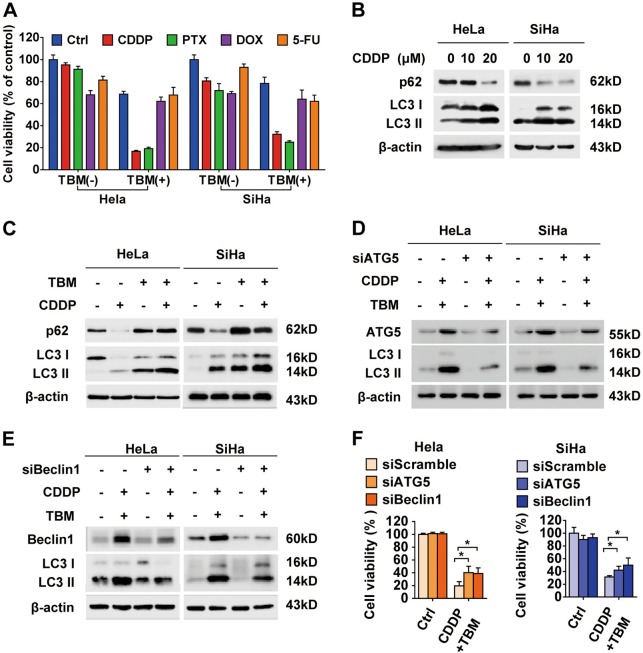
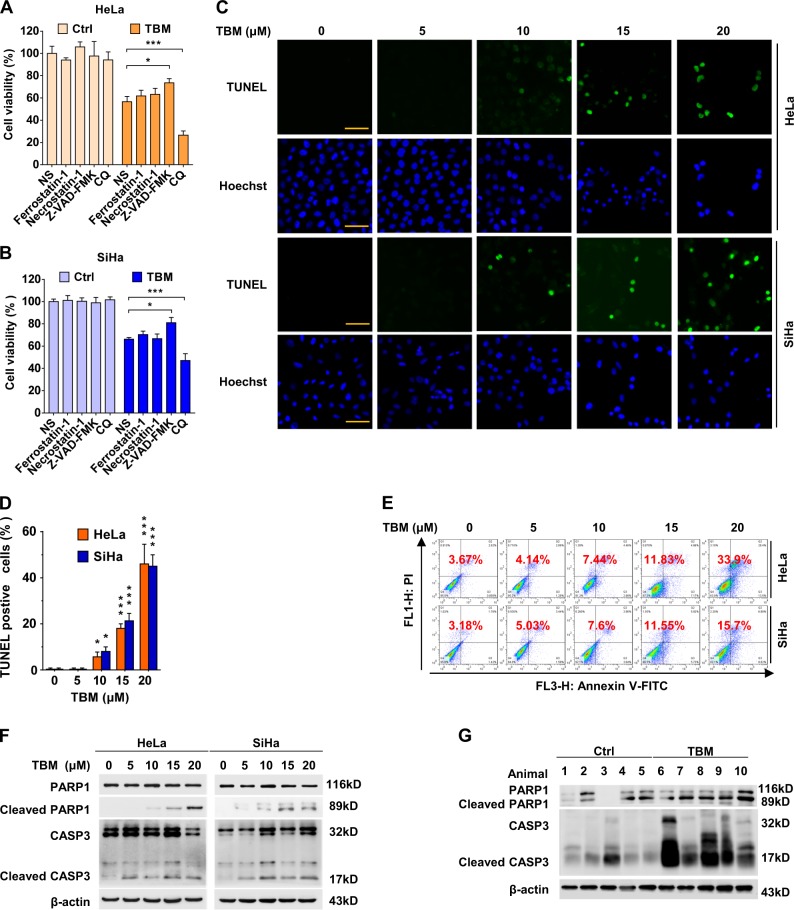
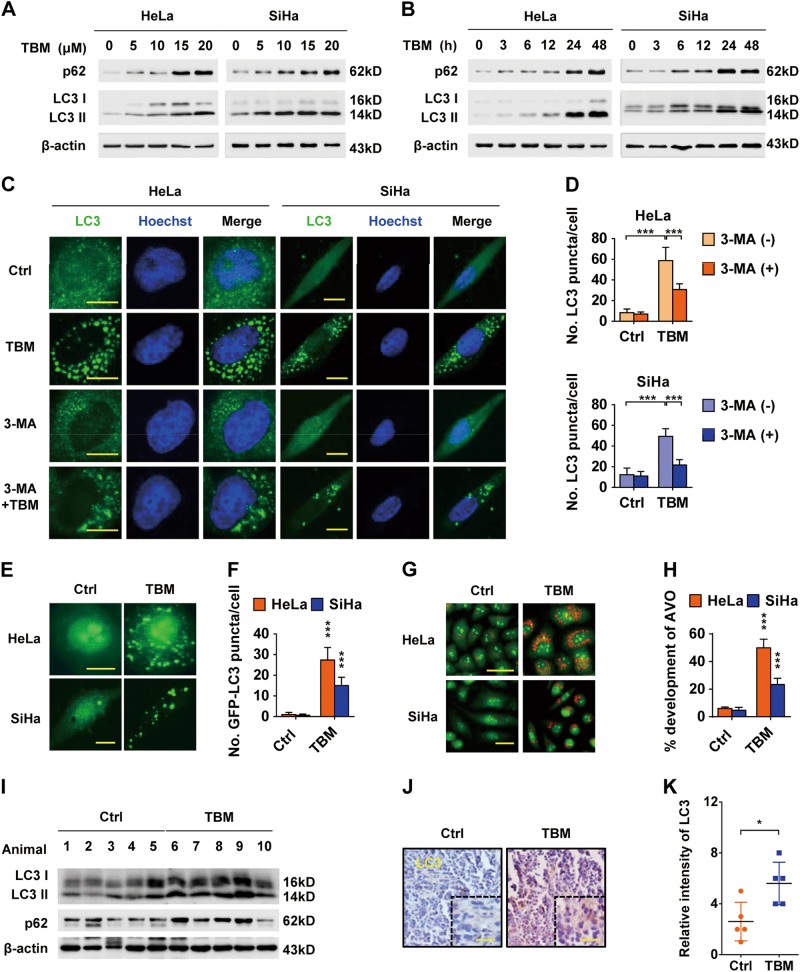
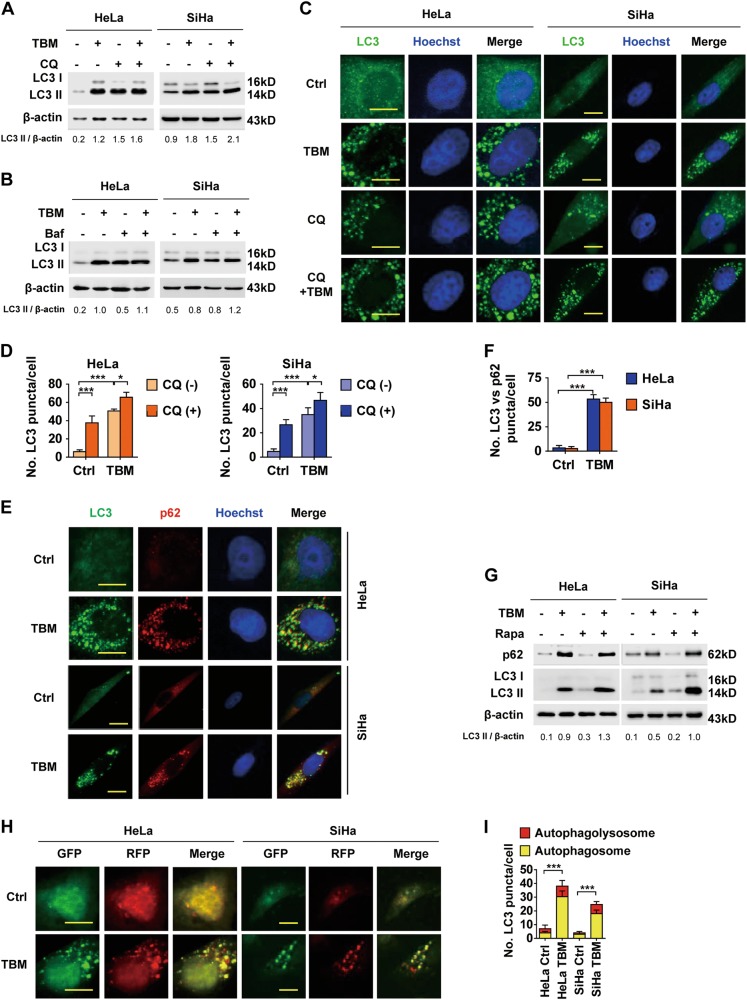
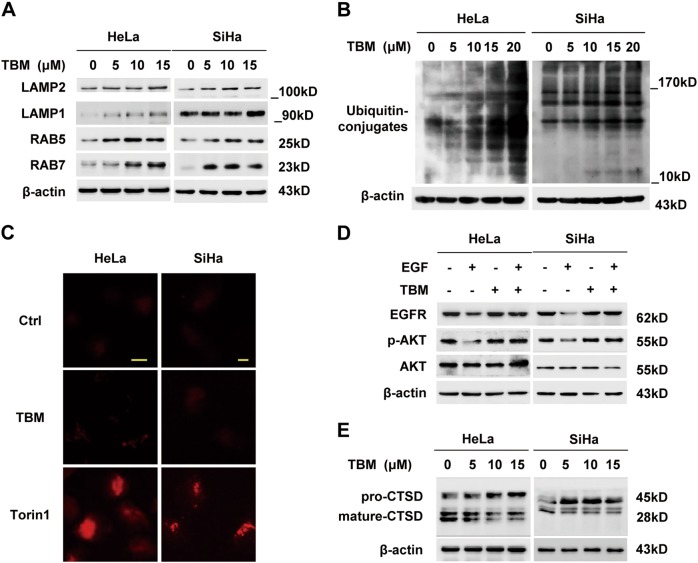
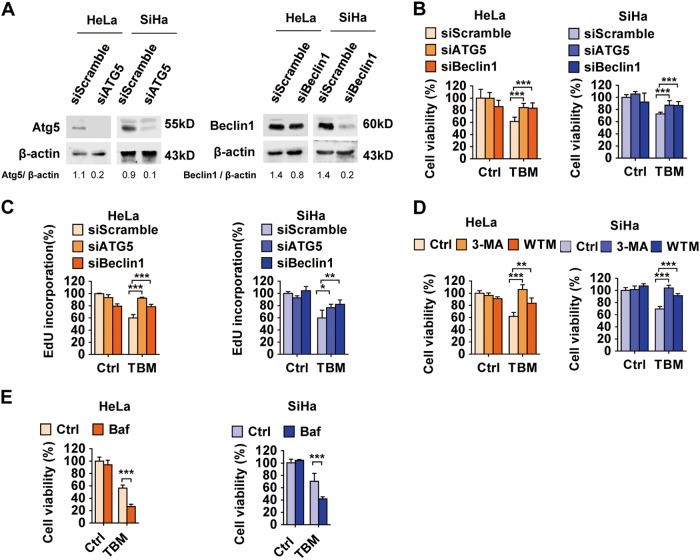
Cervical cancer is one of the most aggressive human cancers with poor prognosis due to constant chemoresistance and repeated relapse. Tubeimoside I (TBM) has been identified as a potent antitumor agent that inhibits cancer cell proliferation by triggering apoptosis and inducing cell cycle arrest. Nevertheless, the detailed mechanism remains unclear and needs to be further elucidated, especially in cervical cancer. In this study, we found that TBM could induce proliferation inhibition and cell death in cervical cancer cells both in vitro and in vivo. Further results demonstrated that treatment with TBM could induce autophagosome accumulation, which was important to TBM against cervical cancer cells. Mechanism studies showed that TBM increased autophagosome by two pathways: First, TBM could initiate autophagy by activating AMPK that would lead to stabilization of the Beclin1-Vps34 complex via dissociating Bcl-2 from Beclin1; Second, TBM could impair lysosomal cathepsin activity and block autophagic flux, leading to accumulation of impaired autophagolysosomes. In line with this, inhibition of autophagy initiation attenuated TBM-induced cell death, whereas autophagic flux inhibition could exacerbated the cytotoxic activity of TBM in cervical cancer cells. Strikingly, as a novel lethal impaired autophagolysosome inducer, TBM might enhance the therapeutic effects of chemotherapeutic drugs towards cervical cancer, such as cisplatin and paclitaxel. Together, our study provides new insights into the molecular mechanisms of TBM in the antitumor therapy, and establishes potential applications of TBM for cervical cancer treatment in clinic.
宫颈癌是最具侵袭性的人类癌症之一,由于持续的化疗耐药性和反复复发,预后较差。Tubeimoside I(TBM)已被鉴定为一种有效的抗肿瘤药物,通过触发细胞凋亡和诱导细胞周期停滞来抑制癌细胞增殖。然而,其详细的作用机制仍不清楚,需要进一步阐明,特别是在宫颈癌中。在本研究中,我们发现 TBM 可以在体外和体内诱导宫颈癌细胞的增殖抑制和细胞死亡。进一步的结果表明,TBM 处理可以诱导自噬体的积累,这对 TBM 对抗宫颈癌细胞很重要。机制研究表明,TBM 通过两种途径增加自噬体:首先,TBM 可以通过激活 AMPK 来引发自噬,这将导致通过从 Beclin1 解离 Bcl-2 来稳定 Beclin1-Vps34 复合物;其次,TBM 可以损害溶酶体组织蛋白酶的活性并阻断自噬流,导致受损的自噬溶酶体积累。与此一致,自噬起始的抑制减弱了 TBM 诱导的细胞死亡,而自噬流的抑制可以加剧 TBM 在宫颈癌细胞中的细胞毒性活性。引人注目的是,作为一种新型的致命性受损自噬溶酶体诱导剂,TBM 可能增强化疗药物如顺铂和紫杉醇对宫颈癌的治疗效果。总之,我们的研究为 TBM 在抗肿瘤治疗中的分子机制提供了新的见解,并为 TBM 在宫颈癌治疗中的临床应用奠定了基础。