Department of Critical Care Medicine, Rizhao People's Hospital, Rizhao, Shandong, 276800, China.
Stroke Center, Rizhao Central Hospital, Rizhao, Shandong, 276800, China.
Biosci Rep. 2019 Jan 8;39(1). doi: 10.1042/BSR20181215. Print 2019 Jan 31.
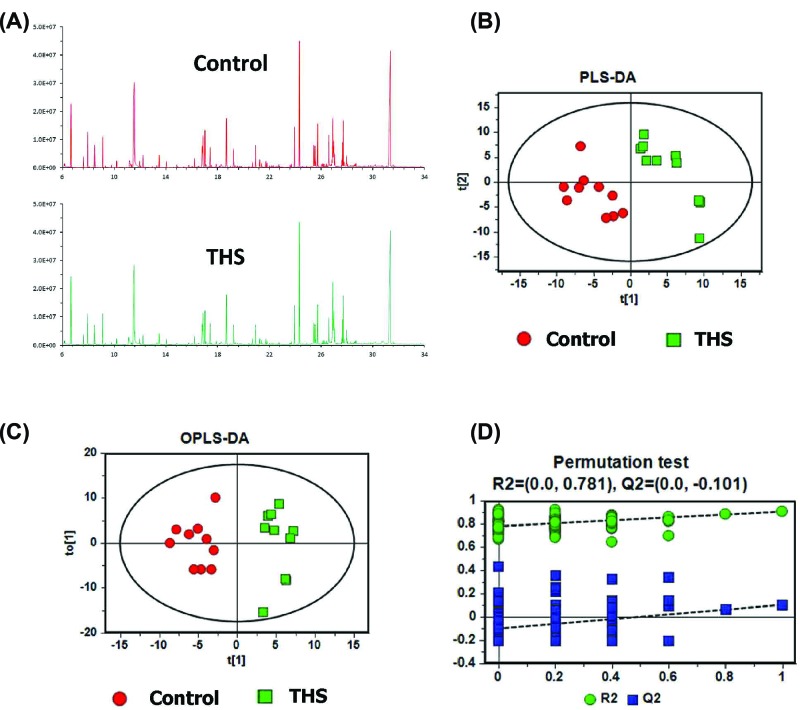
Intestinal barrier dysfunction has been implicated in the development of multiorgan dysfunction syndrome caused by the trauma-hemorrhagic shock (THS). However, the mechanisms underlying THS-induced gut barrier injury are still poorly understood. In the present study, we used the metabolomics analysis to test the hypothesis that altered metabolites might be related to the development of THS-induced barrier dysfunction in the large intestine. Under the induction of THS, gut barrier failure was characterized by injury of permeability and mucus layer, which were companied by the decreased expression of zonula occludens-1 in the colon and increased levels of inflammatory factors including tumor necrosis factor-α, interferon-γ, interleukin (IL)-6, and IL-1β in the serum. A total of 16 differential metabolites were identified in colonic tissues from THS-treated rats compared with control rats. These altered metabolites included dihydroxy acetone phosphate, ribose-5-phosphate, fructose, glyceric acid, succinic acid, and adenosine, which are critical intermediates or end products that are involved in pentose phosphate pathway, glycolysis, and tricarboxylic acid cycle as well as mitochondrial adenosine triphosphate biosynthesis. These findings may offer important insight into the metabolic alterations in THS-treated gut injury, which will be helpful for developing effective metabolites-based strategies to prevent THS-induced gut barrier dysfunction.
肠屏障功能障碍与创伤-失血性休克(THS)引起的多器官功能障碍综合征的发展有关。然而,THS 诱导的肠道屏障损伤的机制仍知之甚少。在本研究中,我们使用代谢组学分析来检验以下假设,即改变的代谢物可能与 THS 诱导的大肠屏障功能障碍的发展有关。在 THS 的诱导下,肠道屏障衰竭的特征是通透性和黏液层损伤,同时结肠中紧密连接蛋白-1 的表达减少,血清中炎症因子包括肿瘤坏死因子-α、干扰素-γ、白细胞介素(IL)-6 和 IL-1β 的水平升高。与对照组大鼠相比,THS 处理大鼠的结肠组织中鉴定出 16 种差异代谢物。这些改变的代谢物包括二羟丙酮磷酸、核糖-5-磷酸、果糖、甘油酸、琥珀酸和腺苷,它们是涉及磷酸戊糖途径、糖酵解和三羧酸循环以及线粒体腺苷三磷酸生物合成的关键中间产物或终产物。这些发现可能为 THS 治疗的肠道损伤中的代谢变化提供重要的见解,这将有助于开发基于有效代谢物的策略来预防 THS 诱导的肠道屏障功能障碍。