Wahl S Aljoscha, Bernal Martinez Cristina, Zhao Zheng, van Gulik Walter M, Jansen Mickel L A
Department of Biotechnology, Delft University of Technology, Van der Maasweg 9, 2629 HZ, Delft, The Netherlands.
Applikon Biotechnology B.V., Heertjeslaan 2, 2629 JG, Delft, The Netherlands.
Microb Cell Fact. 2017 May 23;16(1):90. doi: 10.1186/s12934-017-0702-0.
The metabolic engineering of Saccharomyces cerevisiae for the production of succinic acid has progressed dramatically, and a series of high-producing hosts are available. At low cultivation pH and high titers, the product transport can become bidirectional, i.e. the acid is reentering the cell and is again exported or even catabolized. Here, a quantitative approach for the identification of product recycling fluxes is developed.
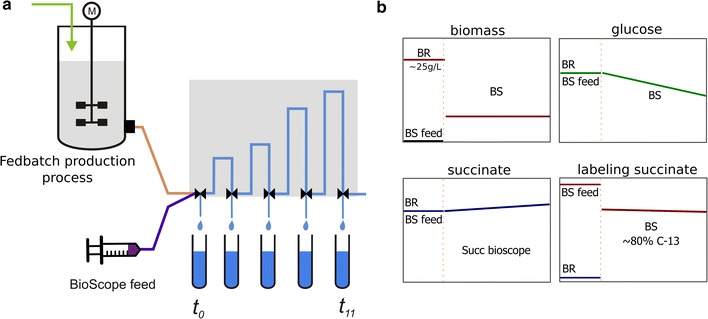
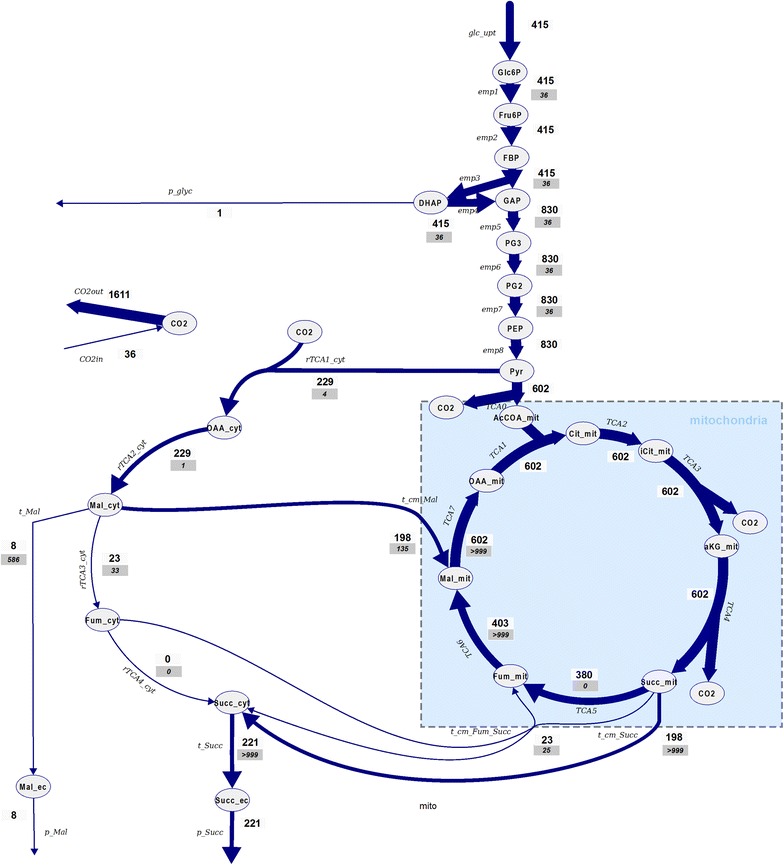
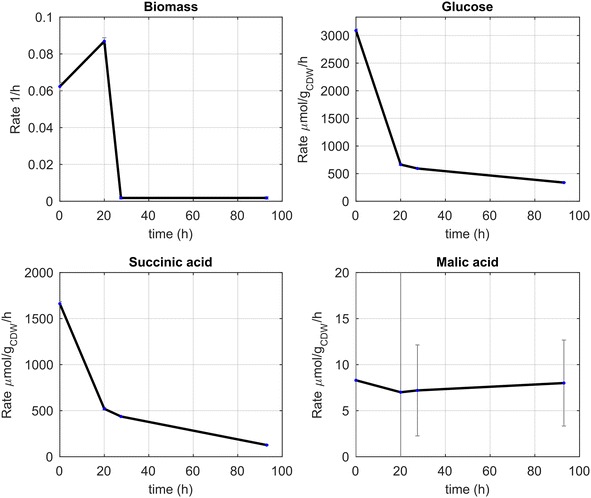
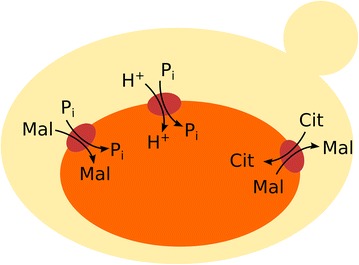
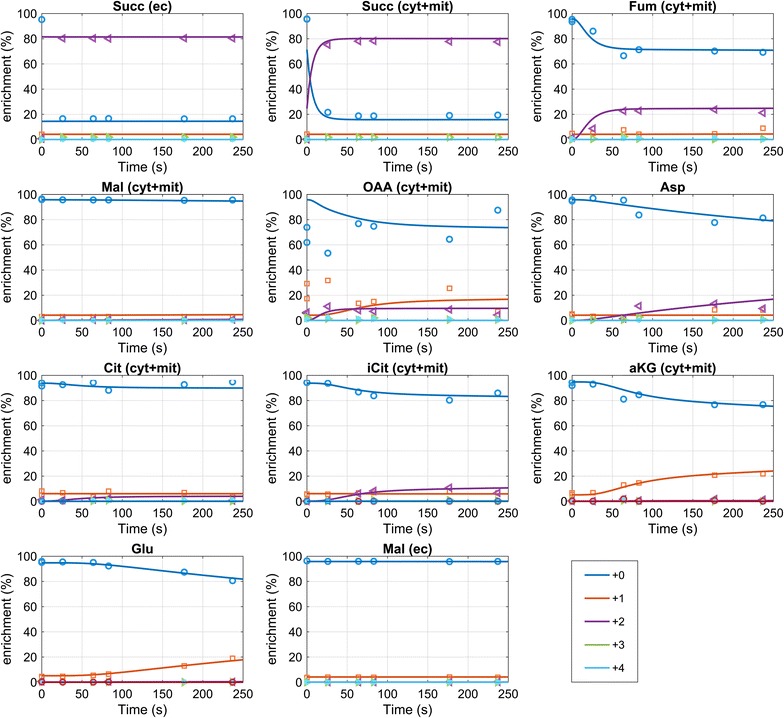
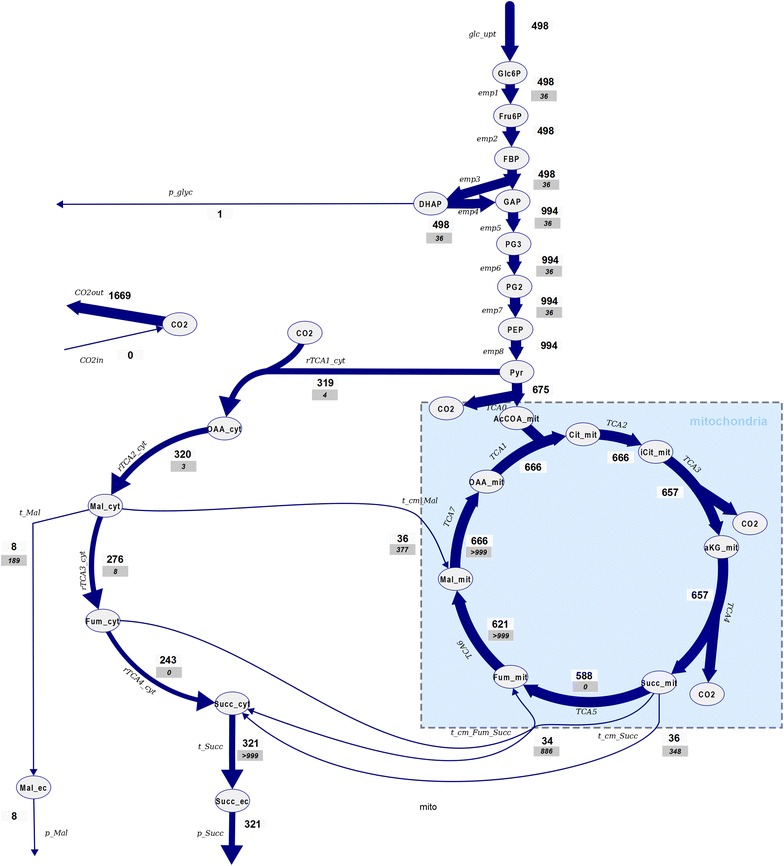
The metabolic flux distributions at two time-points of the fermentation process were analyzed. C labeled succinic acid was added to the extracellular space and intracellular enrichments were measured and subsequently used for the estimation of metabolic fluxes. The labeling was introduced by a labeling switch experiment, leading to an immediate labeling of about 85% of the acid while keeping the total acid concentration constant. Within 100 s significant labeling enrichment of the TCA cycle intermediates fumarate, iso-citrate and α-ketoglutarate was observed, while no labeling was detected for malate and citrate. These findings suggest that succinic acid is rapidly exchanged over the cellular membrane and enters the oxidative TCA cycle. Remarkably, in the oxidative direction malate C enrichment was not detected, indicating that there is no flux going through this metabolite pool. Using flux modeling and thermodynamic assumptions on compartmentation it was concluded that malate must be predominantly cytosolic while fumarate and iso-citrate were more dominant in the mitochondria.
Adding labeled product without changing the extracellular environment allowed to quantify intracellular metabolic fluxes under high producing conditions and identify product degradation cycles. In the specific case of succinic acid production, compartmentation was found to play a major role, i.e. the presence of metabolic activity in two different cellular compartments lead to intracellular product degradation reducing the yield. We also observed that the flux from glucose to succinic acid branches at two points in metabolism: (1) At the level of pyruvate, and (2) at cytosolic malate which was not expected.
酿酒酵母用于生产琥珀酸的代谢工程已取得显著进展,并且有一系列高产宿主可用。在低培养pH值和高滴度下,产物运输可能会变为双向,即酸重新进入细胞并再次输出甚至被分解代谢。在此,开发了一种用于鉴定产物循环通量的定量方法。
分析了发酵过程两个时间点的代谢通量分布。将C标记的琥珀酸添加到细胞外空间,测量细胞内富集情况,并随后用于估计代谢通量。通过标记切换实验引入标记,在保持总酸浓度恒定的同时,使约85%的酸立即被标记。在100秒内,观察到三羧酸循环中间体富马酸、异柠檬酸和α-酮戊二酸有显著的标记富集,而苹果酸和柠檬酸未检测到标记。这些发现表明琥珀酸通过细胞膜快速交换并进入氧化三羧酸循环。值得注意的是,在氧化方向未检测到苹果酸C富集,表明没有通量通过该代谢物池。利用通量建模和关于区室化的热力学假设得出结论,苹果酸必须主要存在于细胞质中,而富马酸和异柠檬酸在线粒体中更占主导。
在不改变细胞外环境的情况下添加标记产物,能够在高产条件下量化细胞内代谢通量并鉴定产物降解循环。在琥珀酸生产的具体情况下,发现区室化起主要作用,即在两个不同细胞区室中存在代谢活性导致细胞内产物降解,从而降低产量。我们还观察到从葡萄糖到琥珀酸的通量在代谢的两个点分支:(1)在丙酮酸水平,以及(2)在细胞质苹果酸水平,这是出乎意料的。