Viršilas Ernestas, Čerkauskienė Rimantė, Masalskienė Jūratė, Rudaitis Šarūnas, Dobilienė Diana, Jankauskienė Augustina
Institute of Clinical Medicine, Vilnius University, LT-08406 Vilnius, Lithuania.
Department of Pediatrics, Medical Academy, Lithuanian University of Health Sciences, LT-50161 Kaunas, Lithuania.
Medicina (Kaunas). 2018 Nov 2;54(5):78. doi: 10.3390/medicina54050078.
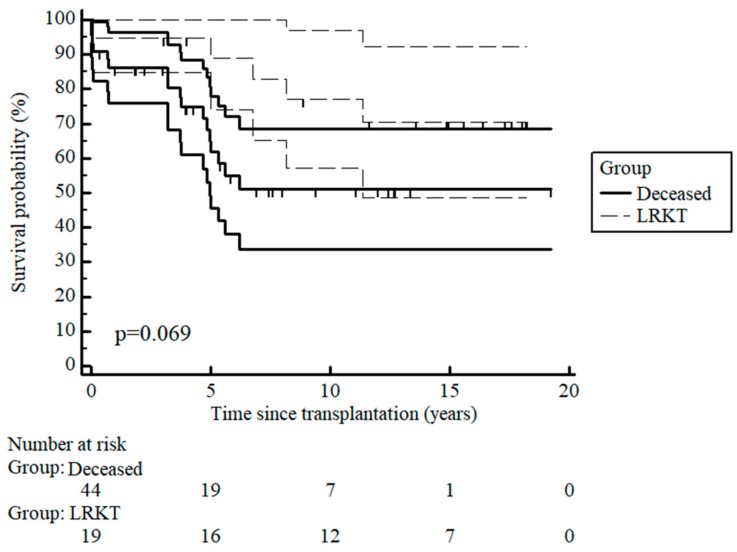
Pediatric renal replacement therapy (RRT) in Lithuania resumed in 1994 after a 12-year pause in renal transplantation. Management of end stage renal disease (ESRD) has changed, and outcomes have improved over decades. Our aim was to evaluate the dynamics of RRT in Lithuania in the period 1994⁻2015, describe its distinctive features, and compare our results with other countries. Data between 1994 and 2015 were collected from patients under the age of 18 years with ESRD receiving RRT. The data included: Hemodialysis (HD), peritoneal dialysis (PD), transplantation incidence and prevalence, transplant waiting time, dialysis modalities before transplantation, causes of ESRD and gender distribution in transplanted patients, and patient and graft survival. RRT incidence and prevalence maintained an increase up until 2009. Sixty-four transplantations were performed. Juvenile nephronophthisis (25.9%) was the primary cause of ESRD in transplanted children. The transplant waiting time median was 8.0 months. The male to female ratio post-transplantation was 1.02. Patient survival after transplantation at 10 years was 90.0%, while graft survival for living (related) was 77.0% and 51.1% for deceased. Twelve patients died while on RRT. RRT numbers are increasing in Lithuania. HD is the primary treatment of choice before transplantation, with continued low numbers of preemptive transplantation. Patient survival post-transplantation is favorable, though graft survival is less satisfactory.
立陶宛的儿科肾脏替代疗法(RRT)在肾脏移植中断12年后于1994年恢复。终末期肾病(ESRD)的管理方式已经改变,几十年来治疗结果有所改善。我们的目的是评估1994年至2015年期间立陶宛RRT的动态变化,描述其独特特征,并将我们的结果与其他国家进行比较。收集了1994年至2015年期间18岁以下接受RRT治疗的ESRD患者的数据。数据包括:血液透析(HD)、腹膜透析(PD)、移植发生率和患病率、移植等待时间、移植前的透析方式、ESRD的病因以及移植患者的性别分布,以及患者和移植物的存活率。直到2009年,RRT的发病率和患病率一直呈上升趋势。共进行了64例移植手术。青少年肾单位肾痨(25.9%)是移植儿童ESRD的主要病因。移植等待时间中位数为8.0个月。移植后男女比例为1.02。移植后10年的患者存活率为90.0%,活体(亲属)移植物存活率为77.0%,死者供体移植物存活率为51.1%。12例患者在接受RRT治疗期间死亡。立陶宛的RRT数量正在增加。HD是移植前的主要治疗选择,抢先移植的数量持续较低。移植后患者存活率良好,尽管移植物存活率不太令人满意。