UNESCO Section of Health and Education, Paris, France.
WHO Department of Reproductive Health and Research / Human Reproduction Programme, Geneva, Switzerland.
Reprod Health. 2018 Nov 6;15(1):185. doi: 10.1186/s12978-018-0629-x.
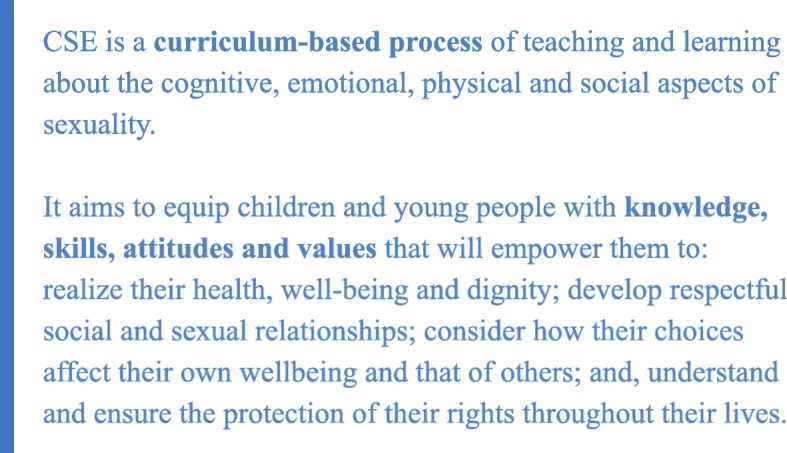
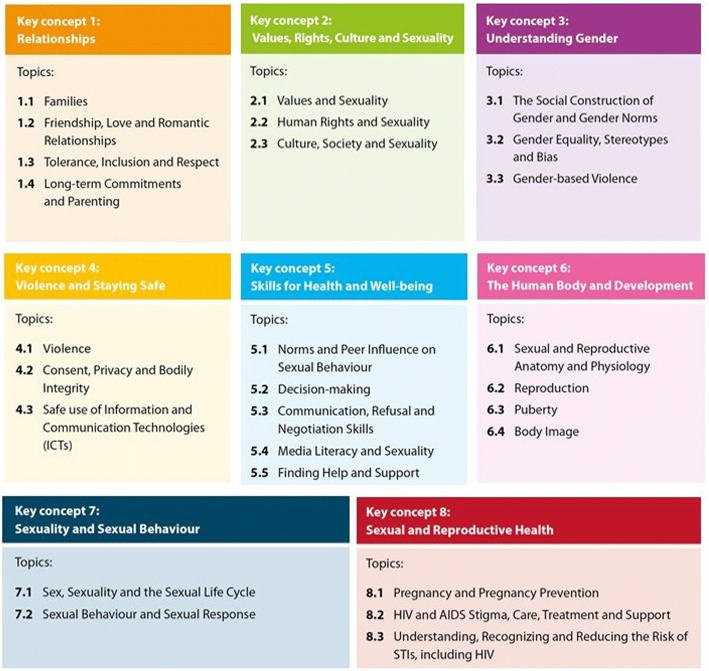
In January 2018, UNESCO, together with UNAIDS, UNFPA, UNICEF, UN Women, and the WHO, completed the substantial technical and political process of updating the International Technical Guidance on Sexuality Education, thereby unifying a UN position on rationale, evidence, and guidance on designing and delivering comprehensive sexuality education (CSE). The revised Guidance builds on the original Guidance, with improvements and updates based on new evidence and good practice documented from across the globe. User-surveys and structured consultations with representatives from a wide range of fields and interest-groups informed and guided the revision process. The revised Guidance presents one, commonly agreed definition of CSE; enhances and expands its key concepts, topics and learning objectives; places a strengthened focus on gender and human rights; provides guidance on building support and planning the implementation of CSE programmes; and reflects the contribution of CSE to the realization of multiple Sustainable Development Goals (SDGs). With its unified voice, progressive position, and attention to key implementation challenges, the revised Guidance is a responsive, timely, and critically needed tool to advance towards a tipping point for the large-scale application of quality CSE.
2018 年 1 月,联合国教科文组织与艾滋病规划署、联合国人口基金、联合国儿童基金会、联合国妇女署和世界卫生组织共同完成了更新《国际性教育技术指导纲要》的实质性技术和政治进程,从而统一了联合国在设计和提供全面性教育方面的基本原理、证据和指导意见。修订后的指导纲要以原指导纲要为基础,根据全球范围内记录的新证据和良好做法进行了改进和更新。用户调查和对来自广泛领域和利益群体的代表进行的结构化磋商为修订过程提供了信息和指导。修订后的指导纲要提出了一个普遍认同的全面性教育定义;增强和扩展了其关键概念、主题和学习目标;更加注重性别和平等;提供了制定支持和规划全面性教育方案的指导;并反映了全面性教育对实现多个可持续发展目标的贡献。该指导纲要以其统一的声音、进步的立场和对关键实施挑战的关注,是一个及时响应、急需的工具,有助于朝着大规模应用优质全面性教育的转折点迈进。