Department of Epidemiology and Global Health, Umeå University, 901 87, Umeå, Sweden.
School of Public Health, Department of Health Promotion and Policy Management, University of Zambia, Ridgeway Campus, P. O. Box 50110, Lusaka, Zambia.
Reprod Health. 2022 Sep 29;19(1):196. doi: 10.1186/s12978-022-01504-9.
Comprehensive sexuality education (CSE) plays a critical role in promoting youth and adolescent's sexual and reproductive health and wellbeing. However, little is known about the enablers and barriers affecting the integration of CSE into educational programmes. The aim of this review is to explore positive and negative factors influencing the integration of CSE into national curricula and educational systems in low- and middle-income countries.
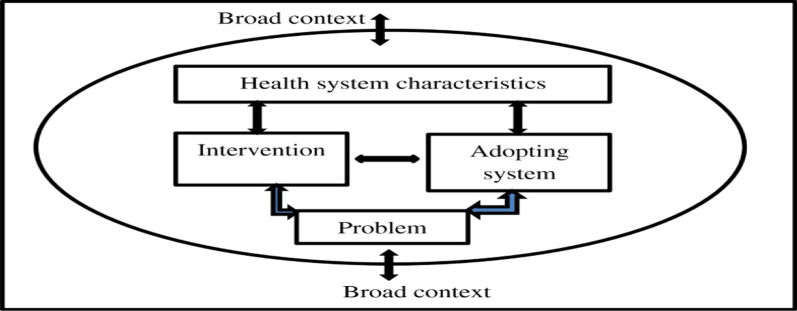
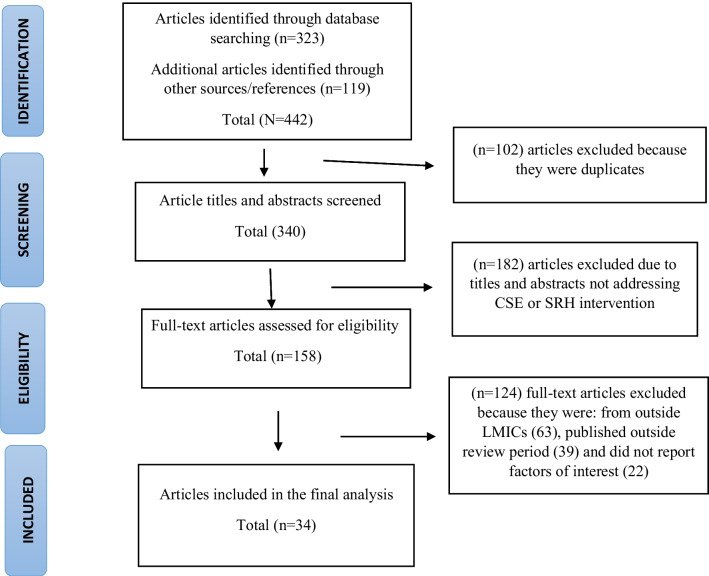
We conducted a systematic literature review (January 2010 to August 2022). The results accord with the Preferred Reporting Items for Systematic Reviews and Meta-analysis standards for systematic reviews. Data were retrieved from the PubMed, Cochrane, Google Scholar, and Web of Hinari databases. The search yielded 442 publications, of which 34 met the inclusion criteria for full-text screening. The review is guided by an established conceptual framework that incorporates the integration of health innovations into health systems. Data were analysed using a thematic synthesis approach.
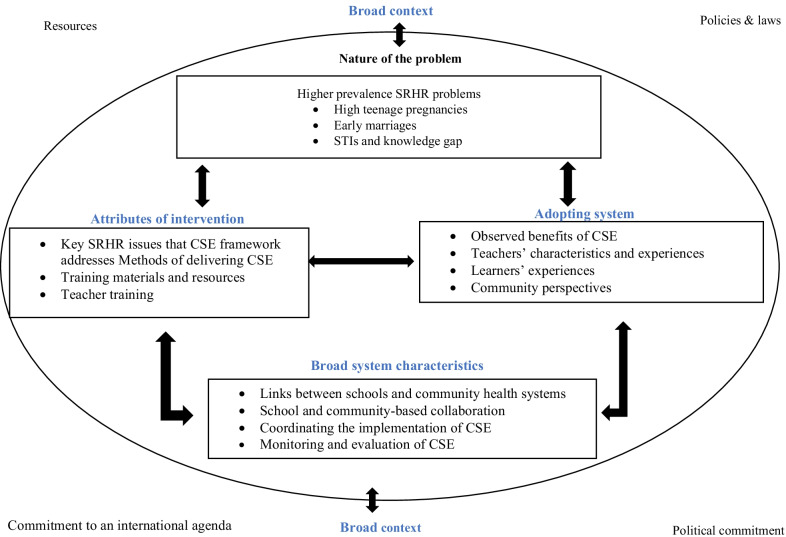
The magnitude of the problem is evidenced by sexual and reproductive health challenges such as high teenage pregnancies, early marriages, and sexually transmitted infections. Awareness of these challenges can facilitate the development of interventions and the implementation and integration of CSE. Reported aspects of the interventions include core CSE content, delivery methods, training materials and resources, and various teacher-training factors. Reasons for adoption include perceived benefits of CSE, experiences and characteristics of both teachers and learners, and religious, social and cultural factors. Broad system characteristics include strengthening links between schools and health facilities, school and community-based collaboration, coordination of CSE implementation, and the monitoring and evaluation of CSE. Ultimately, the availability of resources, national policies and laws, international agendas, and political commitment will impact upon the extent and level of integration.
Social, economic, cultural, political, legal, and financial contextual factors influence the implementation and integration of CSE into national curricula and educational systems. Stakeholder collaboration and involvement in the design and appropriateness of interventions is critical.
全面性教育(CSE)在促进青年和青少年的性健康和生殖健康及福祉方面发挥着至关重要的作用。然而,对于影响 CSE 融入教育计划的促进因素和障碍因素知之甚少。本综述的目的是探讨影响中低收入国家将 CSE 纳入国家课程和教育系统的积极和消极因素。
我们进行了系统的文献综述(2010 年 1 月至 2022 年 8 月)。研究结果符合系统综述的首选报告项目和荟萃分析标准。数据来自 PubMed、Cochrane、Google Scholar 和 Hinari 数据库。搜索结果产生了 442 篇出版物,其中 34 篇符合全文筛选标准。该综述以将健康创新融入卫生系统的既定概念框架为指导。使用主题合成方法分析数据。
青少年怀孕率高、早婚和性传播感染等性健康和生殖健康挑战表明了问题的严重性。对这些挑战的认识可以促进干预措施的制定以及 CSE 的实施和融入。报告的干预措施方面包括核心 CSE 内容、教学方法、培训材料和资源以及各种教师培训因素。采用的原因包括 CSE 的预期好处、教师和学习者的经验和特点以及宗教、社会和文化因素。广泛的系统特征包括加强学校和卫生机构之间的联系、学校和社区合作、CSE 实施的协调以及 CSE 的监测和评估。最终,资源的可获得性、国家政策和法律、国际议程以及政治承诺将影响融入的程度和水平。
社会、经济、文化、政治、法律和财政背景因素影响着 CSE 纳入国家课程和教育系统的实施和融入。利益相关者的合作和参与对于干预措施的设计和适当性至关重要。