Laboratory of Neuroplasticity and Neuroproteomics, Katholieke Universiteit Leuven, Naamsestraat 59, Box 2467, B-3000, Leuven, Belgium.
Department of Pharmaceutical Chemistry, Drug Analysis and Drug Information, Center for Neurosciences (C4N), Vrije Universiteit Brussel, Laarbeeklaan 103, 1090, Brussels, Belgium.
Mol Brain. 2018 Nov 6;11(1):65. doi: 10.1186/s13041-018-0404-5.
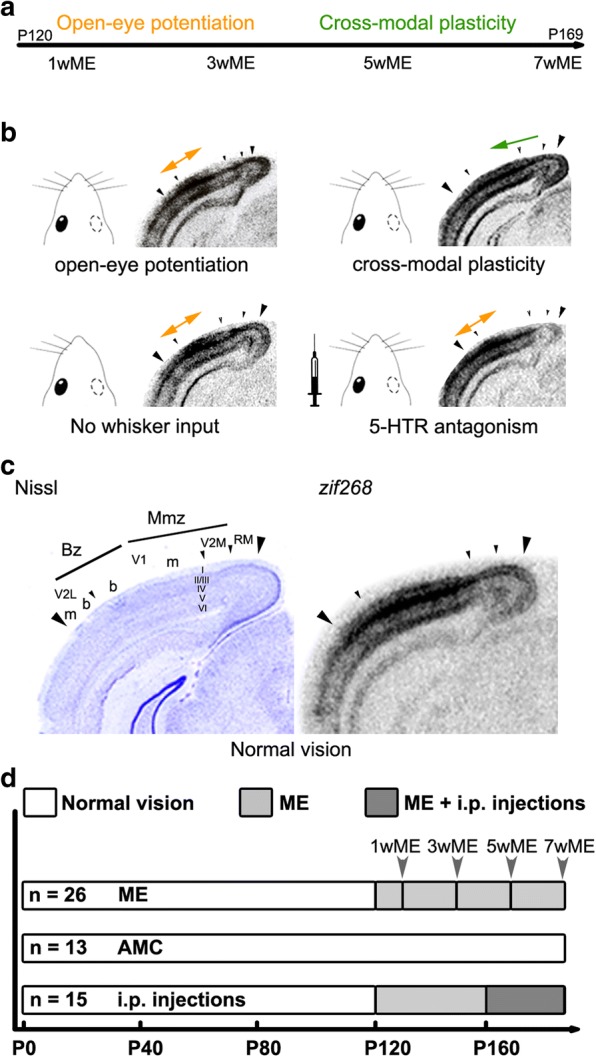
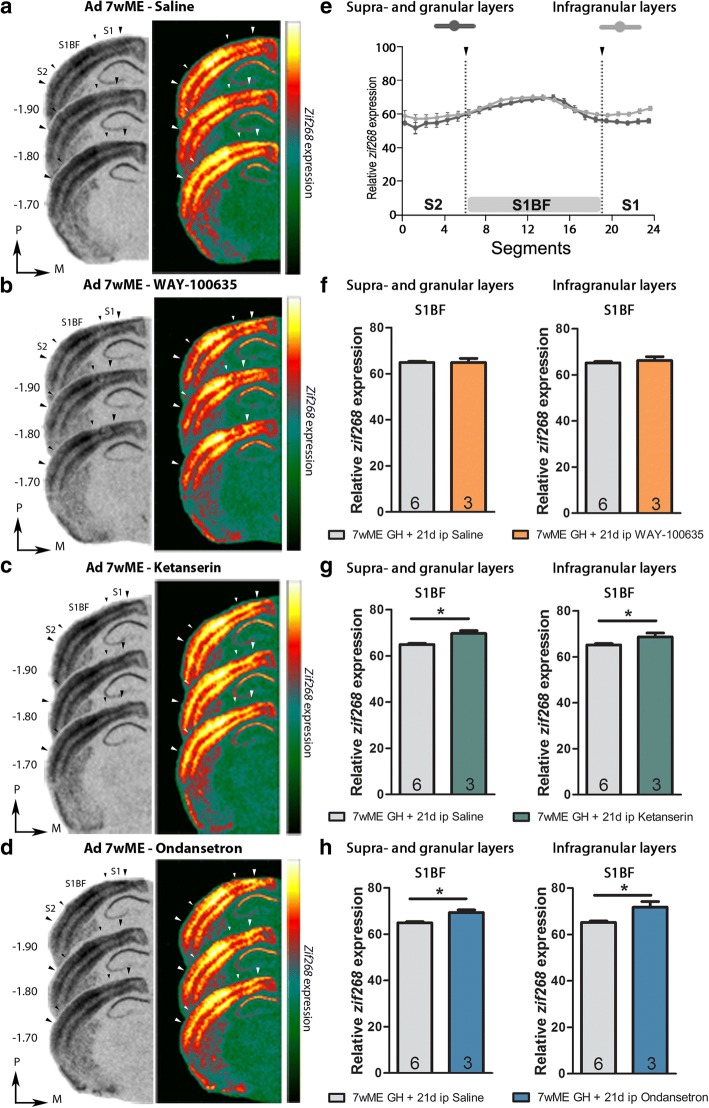
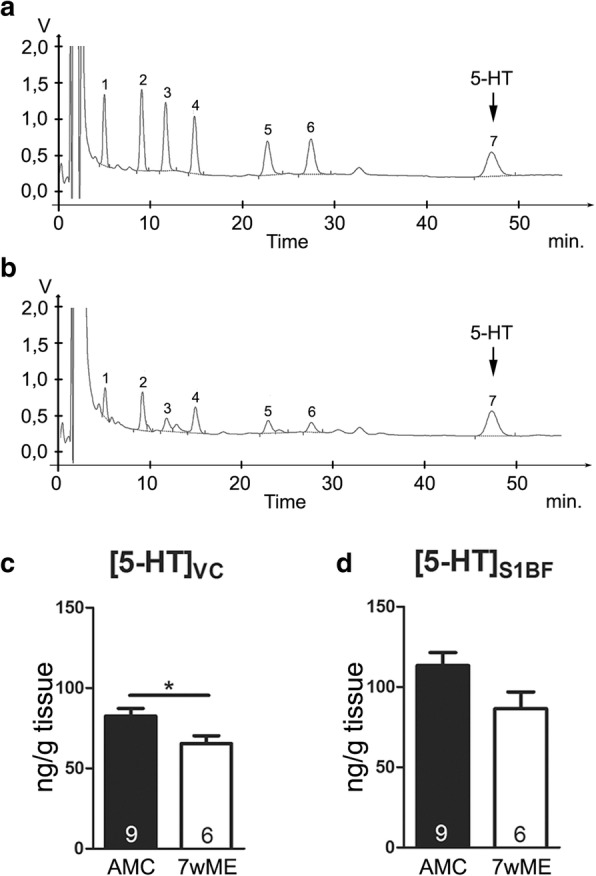
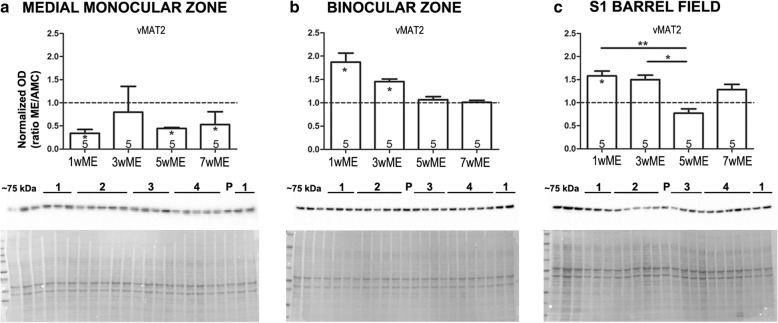
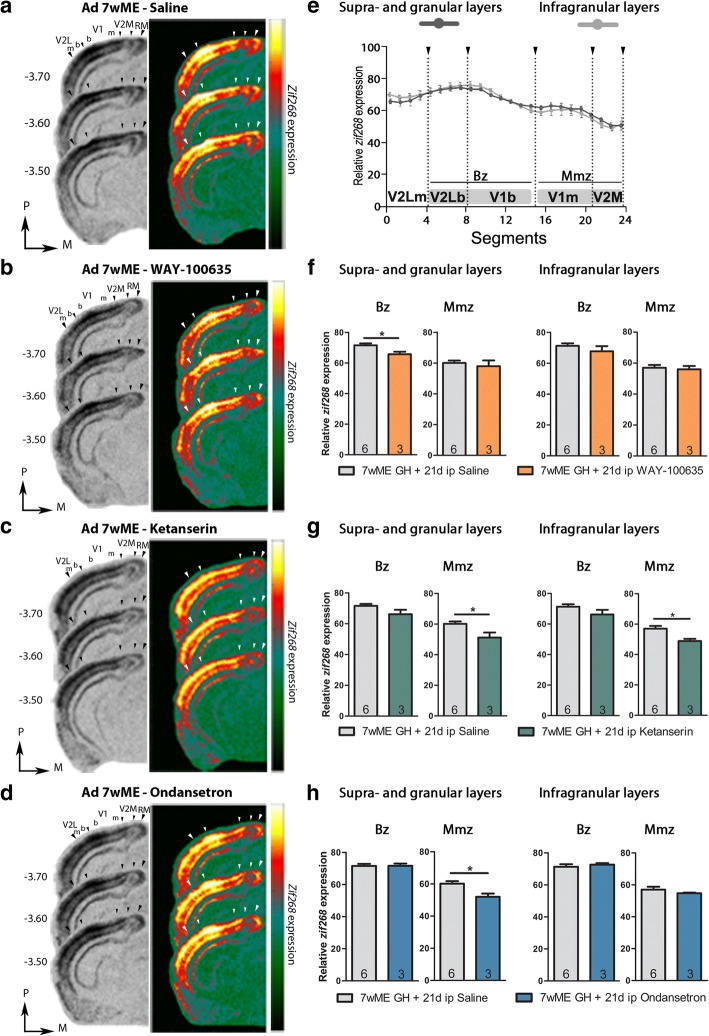
Visual cortical areas show enhanced tactile responses in blind individuals, resulting in improved behavioral performance. Induction of unilateral vision loss in adult mice, by monocular enucleation (ME), is a validated model for such cross-modal brain plasticity. A delayed whisker-driven take-over of the medial monocular zone of the visual cortex is preceded by so-called unimodal plasticity, involving the potentiation of the spared-eye inputs in the binocular cortical territory. Full reactivation of the sensory-deprived contralateral visual cortex is accomplished by 7 weeks post-injury. Serotonin (5-HT) is known to modulate sensory information processing and integration, but its impact on cortical reorganization after sensory loss, remains largely unexplored. To address this issue, we assessed the involvement of 5-HT in ME-induced cross-modal plasticity and the 5-HT receptor (5-HTR) subtype used. We first focused on establishing the impact of ME on the total 5-HT concentration measured in the visual cortex and in the somatosensory barrel field. Next, the changes in expression as a function of post-ME recovery time of the monoamine transporter 2 (vMAT2), which loads 5-HT into presynaptic vesicles, and of the 5-HTR and 5-HTR were assessed, in order to link these temporal expression profiles to the different types of cortical plasticity induced by ME. In order to accurately pinpoint which 5-HTR exactly mediates ME-induced cross-modal plasticity, we pharmacologically antagonized the 5-HTR, 5-HTR and 5-HTR subtypes. This study reveals brain region-specific alterations in total 5-HT concentration, time-dependent modulations in vMAT2, 5-HTR and 5-HTR protein expression and 5-HTR antagonist-specific effects on the post-ME plasticity phenomena. Together, our results confirm a role for 5-HTR in the early phase of binocular visual cortex plasticity and suggest an involvement of 5-HTR and 5-HTR but not 5-HTR during the late cross-modal recruitment of the medial monocular visual cortex. These insights contribute to the general understanding of 5-HT function in cortical plasticity and may encourage the search for improved rehabilitation strategies to compensate for sensory loss.
视皮层区域在盲人中显示出增强的触觉反应,从而提高了行为表现。通过单眼切除术(ME)诱导成年小鼠单侧视力丧失是这种跨模态大脑可塑性的验证模型。在所谓的单模态可塑性之前,存在一种延迟的胡须驱动对视觉皮层内侧单眼区的接管,涉及到在双眼皮质区域中增强保留眼的输入。受伤后 7 周,完全重新激活了感觉剥夺的对侧视觉皮层。已知 5-羟色胺(5-HT)调节感觉信息处理和整合,但它对感觉丧失后皮层重组的影响在很大程度上仍未得到探索。为了解决这个问题,我们评估了 5-HT 在 ME 诱导的跨模态可塑性中的作用及其 5-HT 受体(5-HTR)亚型的作用。我们首先专注于确定 ME 对视觉皮层和躯体感觉桶状区测量的总 5-HT 浓度的影响。接下来,评估了单胺转运体 2(vMAT2)的表达变化,vMAT2 将 5-HT 装入突触前囊泡,以及 5-HTR 和 5-HTR 的表达变化,以便将这些时间表达谱与 ME 诱导的不同类型的皮层可塑性联系起来。为了准确确定哪种 5-HTR 确切介导 ME 诱导的跨模态可塑性,我们用药物拮抗 5-HTR、5-HTR 和 5-HTR 亚型。这项研究揭示了脑区特异性的总 5-HT 浓度改变、vMAT2、5-HTR 和 5-HTR 蛋白表达的时间依赖性调节以及 5-HTR 拮抗剂对 ME 后可塑性现象的特异性影响。总之,我们的结果证实了 5-HTR 在双眼视觉皮层可塑性的早期阶段的作用,并表明在 medial monocular 视觉皮层的晚期跨模态招募过程中涉及 5-HTR 和 5-HTR,但不涉及 5-HTR。这些见解有助于全面理解 5-HT 在皮层可塑性中的功能,并可能鼓励寻找改善的康复策略来补偿感觉丧失。