Ko Hyun Myung, Jin Yeonsun, Park Hyun Ho, Lee Jong Hyuk, Jung Seung Hyo, Choi So Young, Lee Sung Hoon, Shin Chan Young
Department of Life Science, College of Science and Technology, Woosuk University, Jincheon 27841, Korea.
Department of Pharmacology, College of Pharmacy, Chung-Ang University, Seoul 06974, Korea.
Korean J Physiol Pharmacol. 2018 Nov;22(6):679-688. doi: 10.4196/kjpp.2018.22.6.679. Epub 2018 Oct 25.
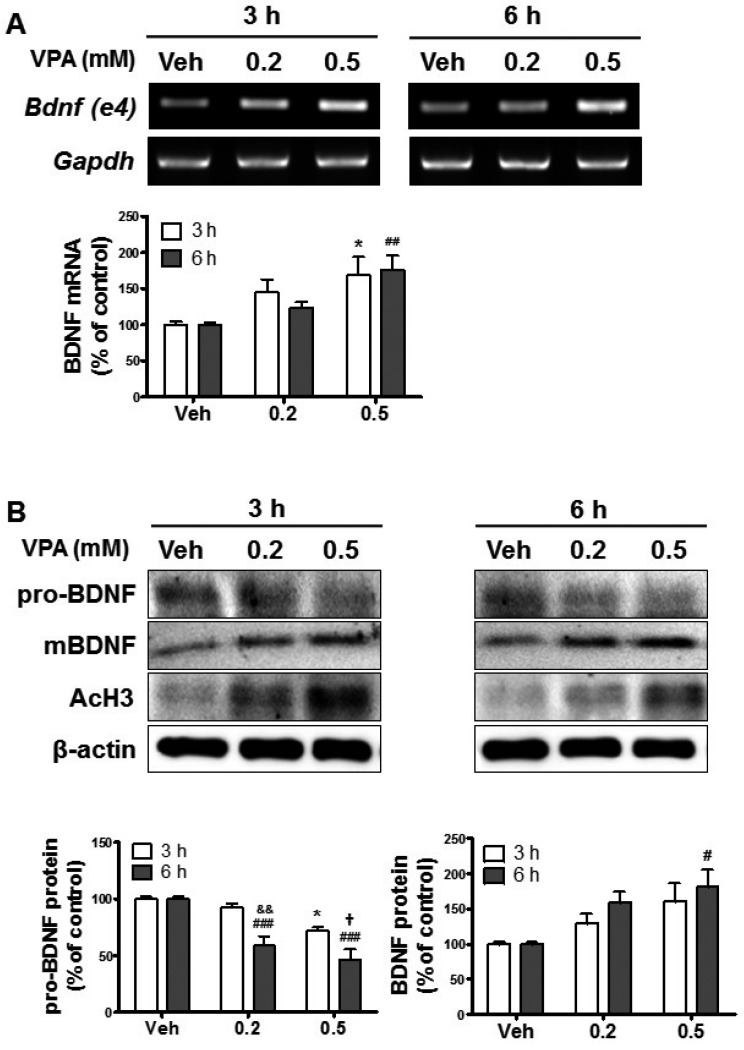
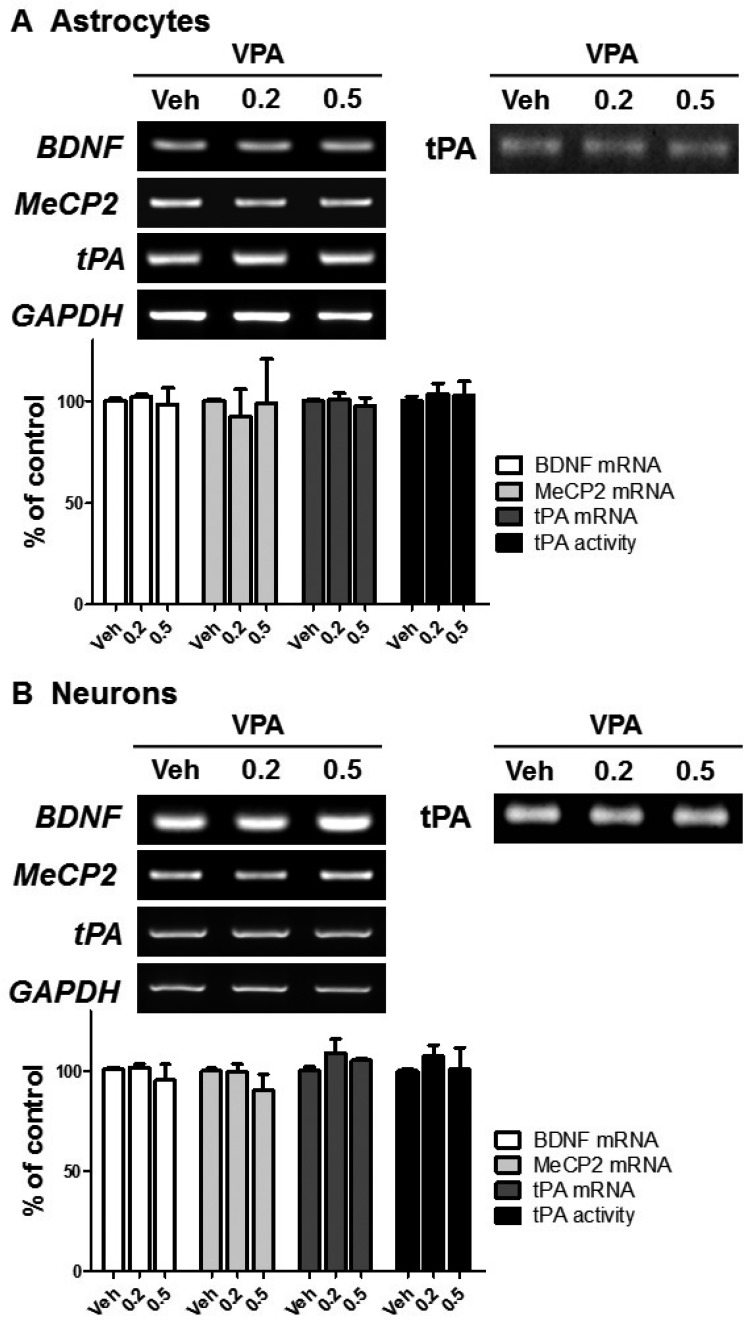
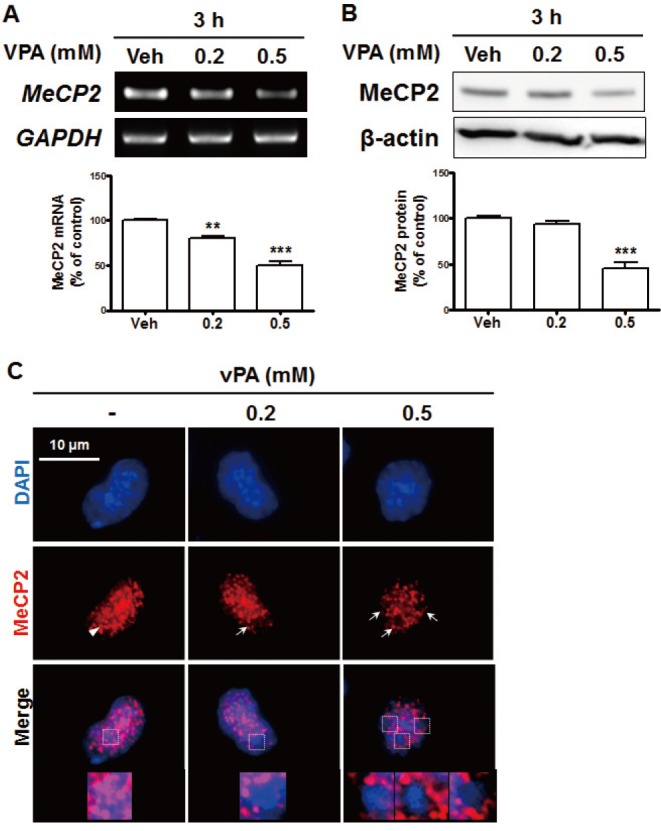
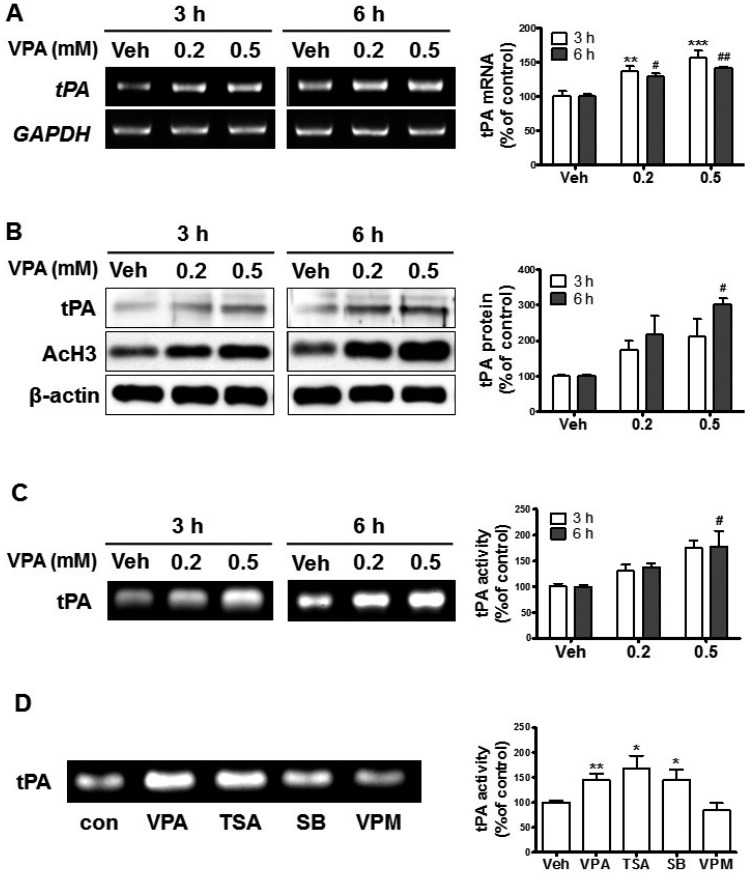
Autism spectrum disorders (ASDs) are neurodevelopmental disorders that share behavioral features, the results of numerous studies have suggested that the underlying causes of ASDs are multifactorial. Behavioral and/or neurobiological analyses of ASDs have been performed extensively using a valid model of prenatal exposure to valproic acid (VPA). Abnormal synapse formation resulting from altered neurite outgrowth in neural progenitor cells (NPCs) during embryonic brain development has been observed in both the VPA model and ASD subjects. Although several mechanisms have been suggested, the actual mechanism underlying enhanced neurite outgrowth remains unclear. In this study, we found that VPA enhanced the expression of brain-derived neurotrophic factor (BDNF), particularly mature BDNF (mBDNF), through dual mechanisms. VPA increased the mRNA and protein expression of BDNF by suppressing the nuclear expression of methyl-CpG-binding protein 2 (MeCP2), which is a transcriptional repressor of BDNF. In addition, VPA promoted the expression and activity of the tissue plasminogen activator (tPA), which induces BDNF maturation through proteolytic cleavage. Trichostatin A and sodium butyrate also enhanced tPA activity, but tPA activity was not induced by valpromide, which is a VPA analog that does not induce histone acetylation, indicating that histone acetylation activity was required for tPA regulation. VPA-mediated regulation of BDNF, MeCP2, and tPA was not observed in astrocytes or neurons. Therefore, these results suggested that VPA-induced mBDNF upregulation was associated with the dysregulation of MeCP2 and tPA in developing cortical NPCs.
自闭症谱系障碍(ASD)是一类具有共同行为特征的神经发育障碍,大量研究结果表明,ASD的潜在病因是多因素的。利用产前暴露于丙戊酸(VPA)的有效模型,已经对ASD进行了广泛的行为和/或神经生物学分析。在VPA模型和ASD患者中均观察到,胚胎脑发育期间神经祖细胞(NPC)中神经突生长改变导致突触形成异常。尽管已经提出了几种机制,但神经突过度生长的实际机制仍不清楚。在本研究中,我们发现VPA通过双重机制增强了脑源性神经营养因子(BDNF)的表达,尤其是成熟BDNF(mBDNF)。VPA通过抑制甲基化CpG结合蛋白2(MeCP2)的核表达来增加BDNF的mRNA和蛋白表达,MeCP2是BDNF的转录抑制因子。此外,VPA促进组织纤溶酶原激活物(tPA)的表达和活性,tPA通过蛋白水解切割诱导BDNF成熟。曲古抑菌素A和丁酸钠也增强了tPA活性,但丙戊酰胺未诱导tPA活性,丙戊酰胺是一种不诱导组蛋白乙酰化的VPA类似物,表明组蛋白乙酰化活性是tPA调节所必需的。在星形胶质细胞或神经元中未观察到VPA介导的对BDNF、MeCP2和tPA的调节。因此,这些结果表明,VPA诱导的mBDNF上调与发育中的皮质NPC中MeCP2和tPA的失调有关。