Allied Health Sciences, University of North Carolina at Chapel Hill, Carrboro, North Carolina.
School of Education, University of North Carolina at Chapel Hill, Chapel Hill, North Carolina.
Autism Res. 2018 Sep;11(9):1264-1275. doi: 10.1002/aur.1997. Epub 2018 Sep 11.
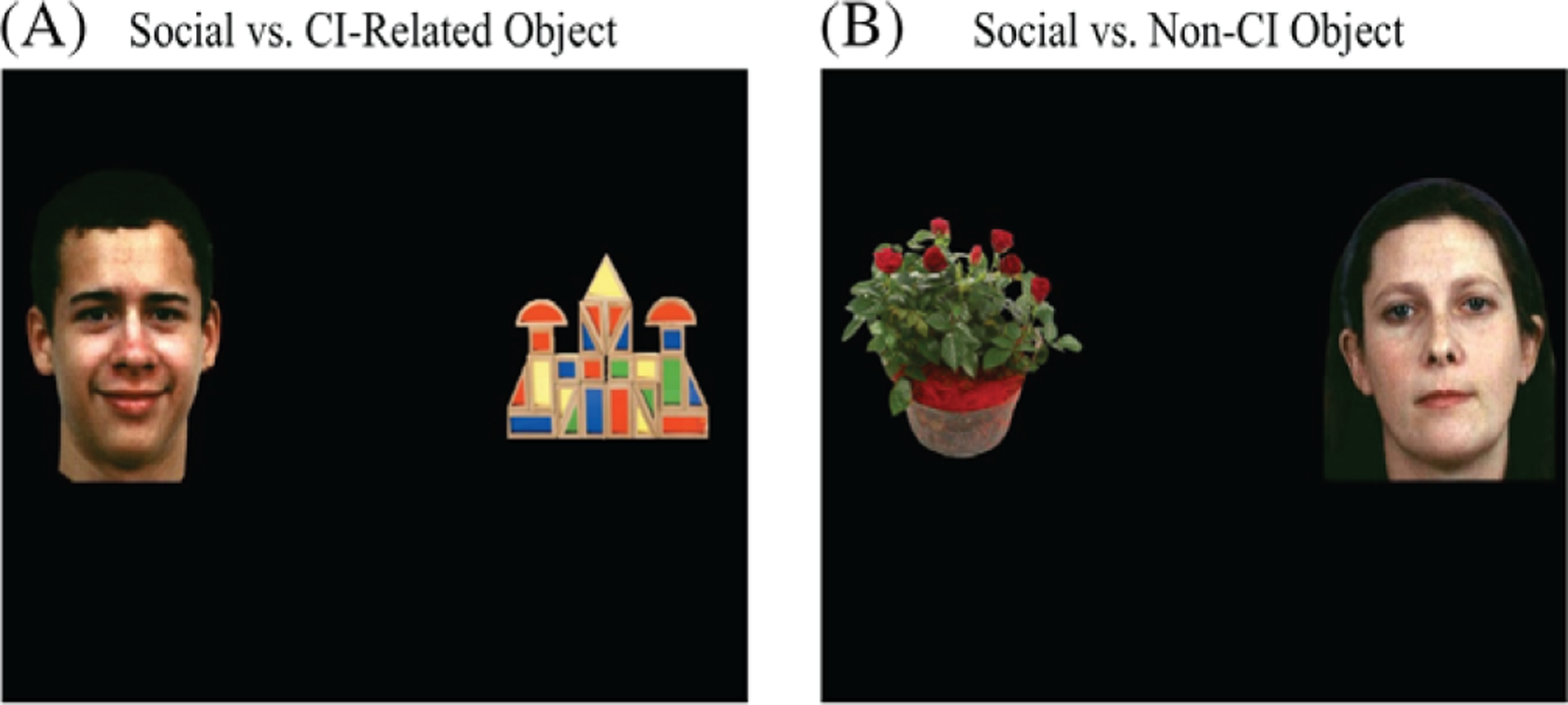
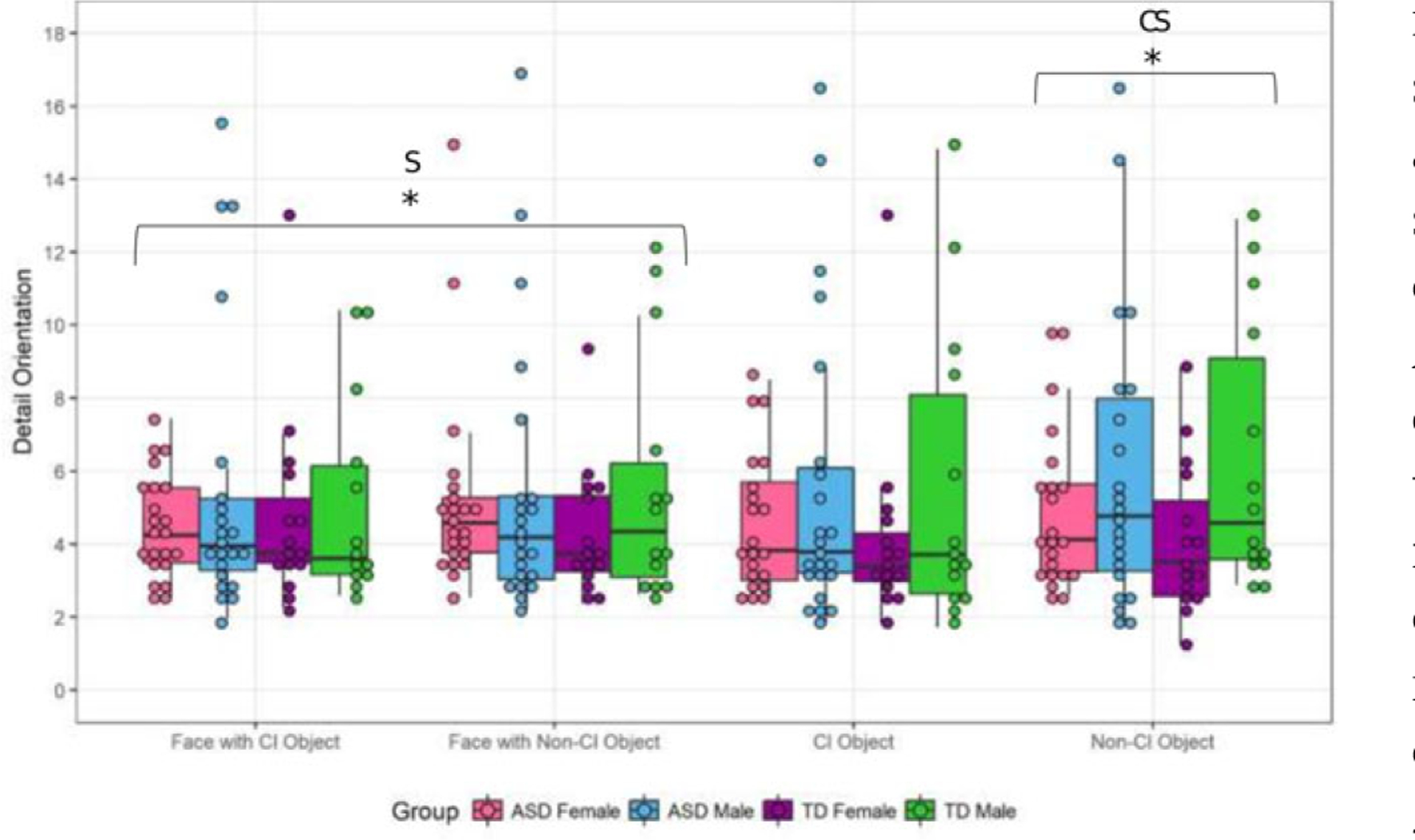
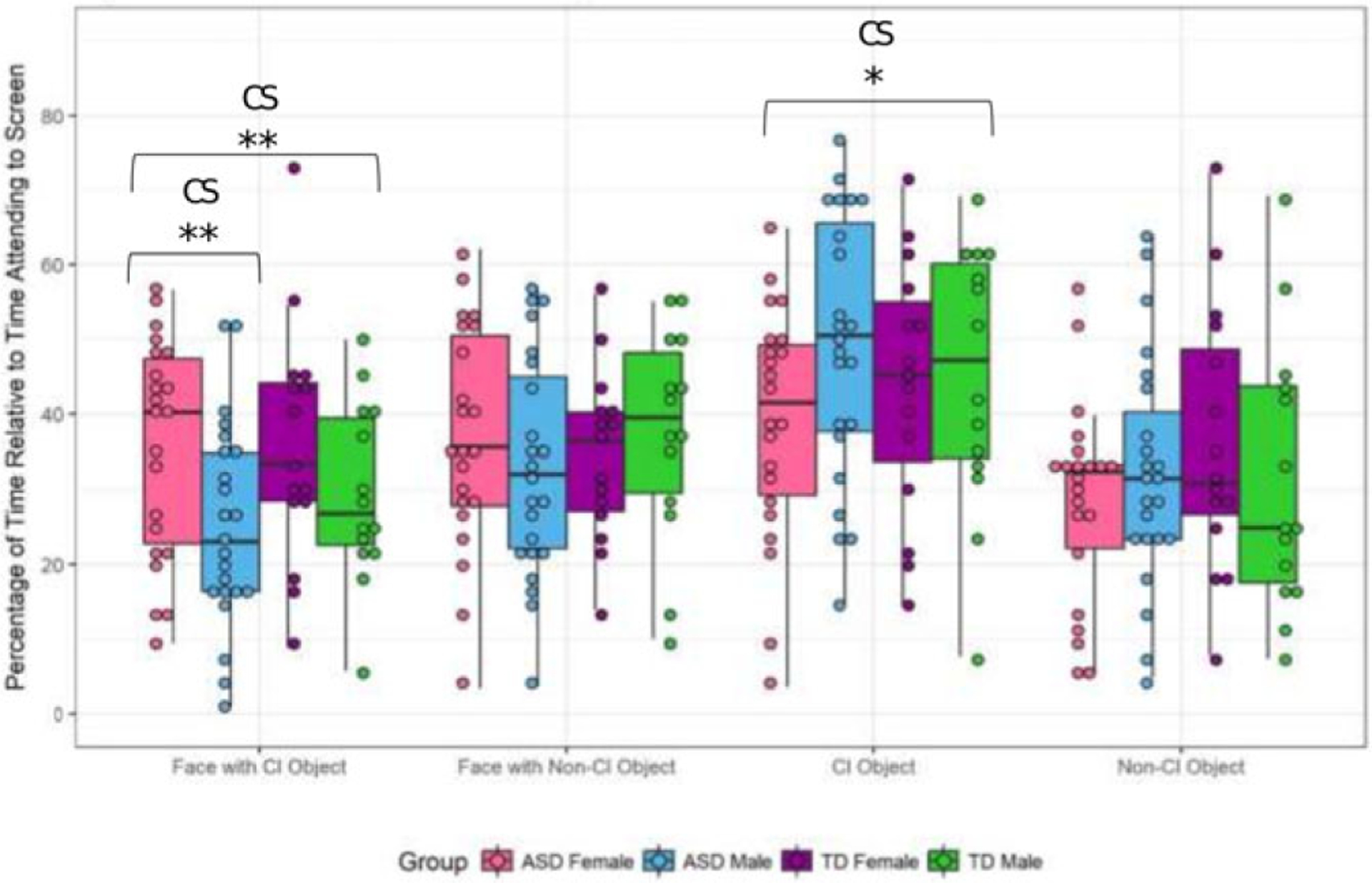
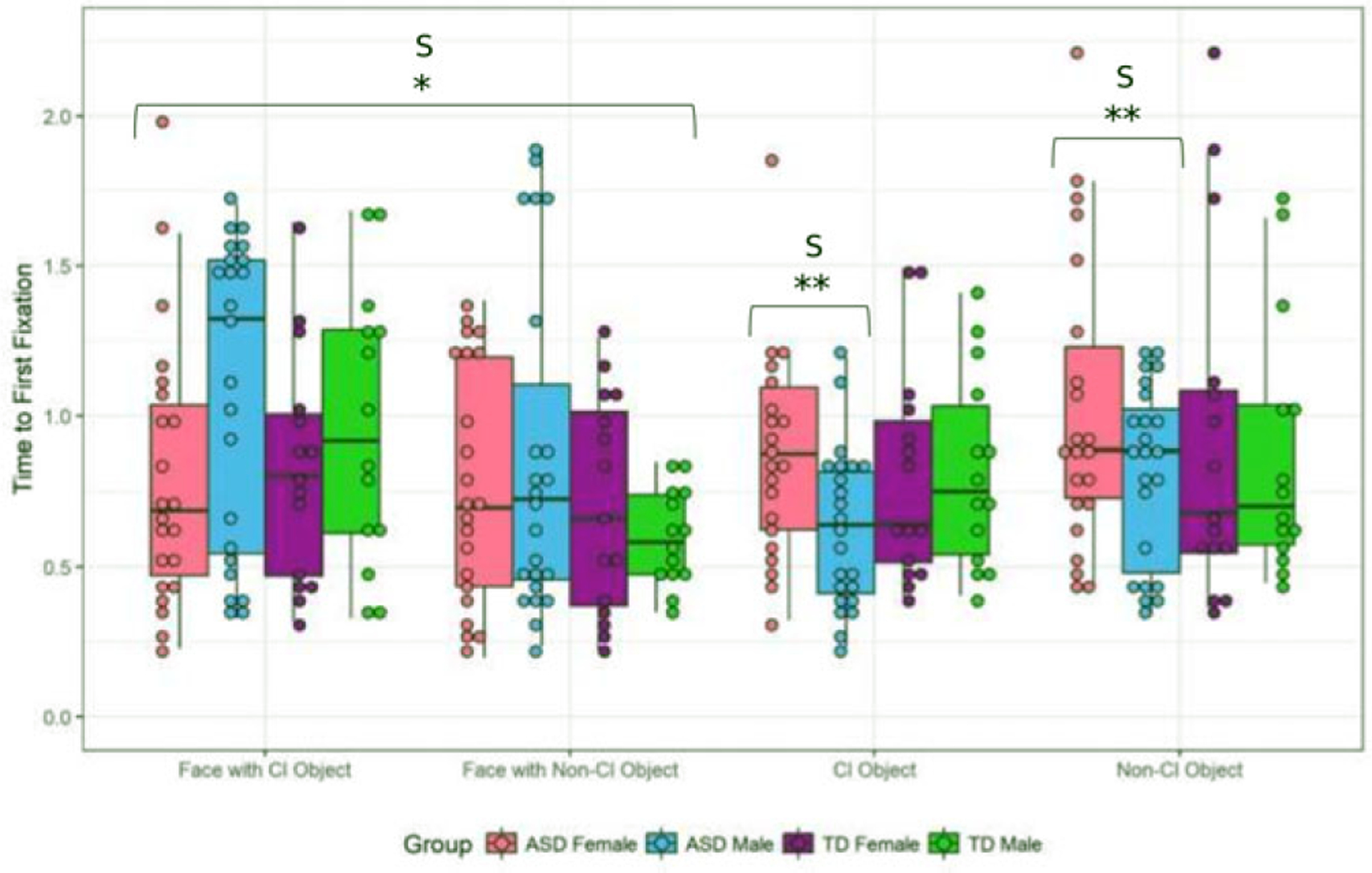
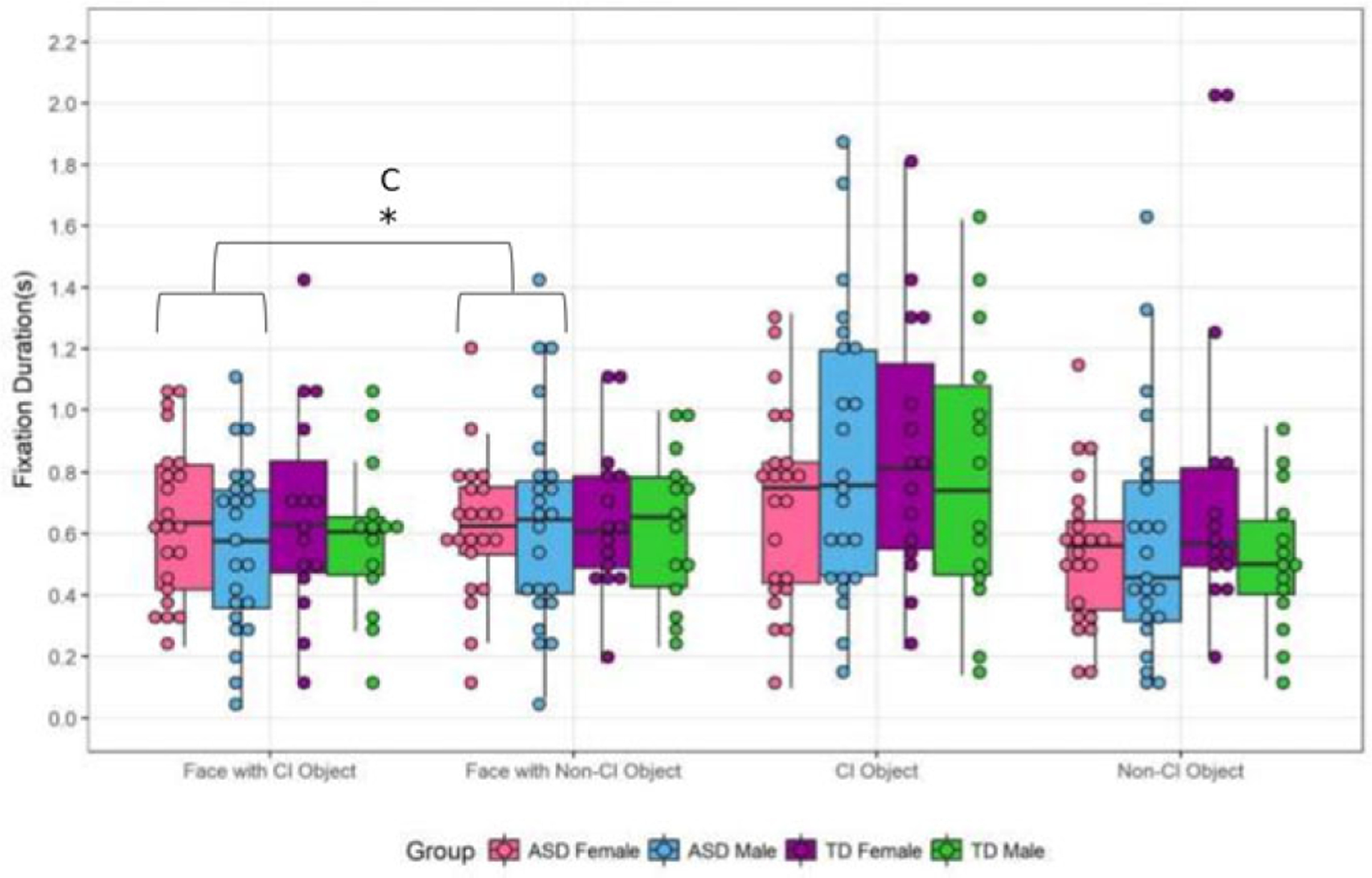
Although reduced social attention and increased nonsocial attention have been reported in individuals with autism spectrum disorder (ASD), the studies have relied on predominantly male samples and have been underpowered to examine sex differences. These processes may differ for females with ASD, who have been shown to be dissimilar to males in social motivation and nonsocial features, including circumscribed interests (CI). The goal of this study was to compare social and nonsocial visual attention between males and females with ASD on a validated eye-tracking paradigm. Eighty-five school-aged (6-10 years) males and females with and without ASD completed a paired preference task of face and object stimuli (half of which related to common CI). After covarying for chronological and mental age, the presence of concurrently presented CI images reduced prioritization and attention to faces for males more than females, replicating previous findings. ASD females maintained comparable attention patterns to typically developing females, suggesting that previous findings of reduced social attention and increased attention to CI-related objects in autism may be specific to males. These findings are also inconsistent with the "extreme male brain" theory of autism. The more normative orienting and attention to social stimuli for females with ASD may indicate distinct phenotypic characteristics relative to males and possibly serve as a protective effect. Autism Res 2018, 11: 1264-1275. © 2018 International Society for Autism Research, Wiley Periodicals, Inc. LAY SUMMARY: As autism is more commonly diagnosed in males, less is known about females with autism. Two areas of interest include the interests held by individuals with autism and how socially motivated they are. We used eye tracking as a way to understand these two areas. Our data reveal that elementary school-aged females (6-10 years) with autism attended to faces comparatively to females without autism, suggesting that (1) they were more socially motivated than males with autism and (2) the images of common interests were less motivating to them.
虽然自闭症谱系障碍(ASD)患者的社交注意力减少和非社交注意力增加已被报道,但这些研究主要依赖于男性样本,并且没有足够的力量来检查性别差异。这些过程可能因 ASD 女性而异,她们在社交动机和非社交特征(包括受限兴趣[CI])方面与男性不同。本研究的目的是在经过验证的眼动追踪范式上比较 ASD 男性和女性的社交和非社交视觉注意力。85 名学龄(6-10 岁)男女 ASD 患者和非 ASD 患者完成了面孔和物体刺激的配对偏好任务(其中一半与常见 CI 相关)。在协方差年龄和心理年龄后,同时呈现的 CI 图像减少了男性对面孔的优先排序和注意力,而不是女性,这与之前的发现一致。ASD 女性保持与典型发育女性相似的注意力模式,这表明自闭症中先前发现的社交注意力减少和对与 CI 相关物体的注意力增加可能是男性特有的。这些发现也与自闭症的“极端男性大脑”理论不一致。ASD 女性对社交刺激的定向和注意力更为正常,这可能表明她们相对于男性具有独特的表型特征,并可能起到保护作用。自闭症研究 2018, 11: 1264-1275. © 2018 自闭症国际研究协会,威利期刊,公司。
由于自闭症在男性中更常被诊断出来,因此对自闭症女性的了解较少。两个感兴趣的领域包括自闭症患者的兴趣和他们的社交动机。我们使用眼动追踪来了解这两个领域。我们的数据显示,患有自闭症的小学年龄(6-10 岁)女性与没有自闭症的女性相比,对人脸的注意力相对较高,这表明(1)她们比自闭症男性更有社交动机,(2)常见兴趣的图像对她们的激励作用较小。