Computational Biology Department, School of Computer Science, Carnegie Mellon University, Pittsburgh, Pennsylvania, United States of America.
Department of Pharmaceutical Sciences and Computational Chemical Genomics Screening Center, School of Pharmacy, University of Pittsburgh, Pittsburgh, Pennsylvania, United States of America.
PLoS One. 2018 Nov 7;13(11):e0207027. doi: 10.1371/journal.pone.0207027. eCollection 2018.
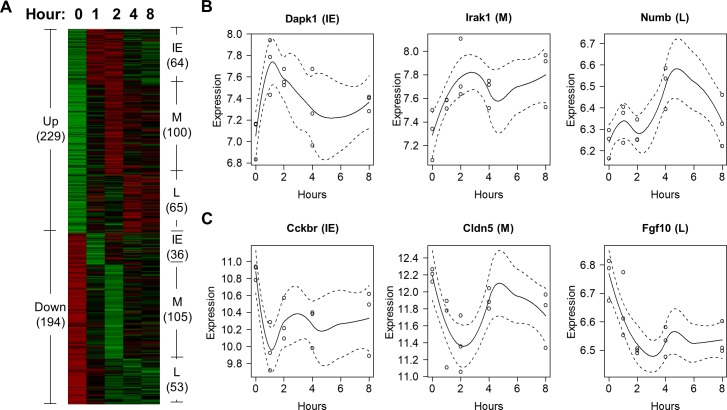
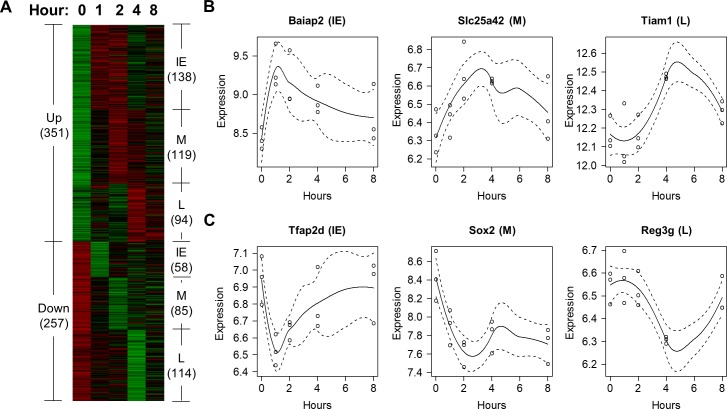
Opioids are widely used for treating different types of pains, but overuse and abuse of prescription opioids have led to opioid epidemic in the United States. Besides analgesic effects, chronic use of opioid can also cause tolerance, dependence, and even addiction. Effective treatment of opioid addiction remains a big challenge today. Studies on addictive effects of opioids focus on striatum, a main component in the brain responsible for drug dependence and addiction. Some transcription regulators have been associated with opioid addiction, but relationship between analgesic effects of opioids and dependence behaviors mediated by them at the molecular level has not been thoroughly investigated. In this paper, we developed a new computational strategy that identifies novel targets and potential therapeutic molecular compounds for opioid dependence and addiction. We employed several statistical and machine learning techniques and identified differentially expressed genes over time which were associated with dependence-related behaviors after exposure to either morphine or heroin, as well as potential transcription regulators that regulate these genes, using time course gene expression data from mouse striatum. Moreover, our findings revealed that some of these dependence-associated genes and transcription regulators are known to play key roles in opioid-mediated analgesia and tolerance, suggesting that an intricate relationship between opioid-induce pain-related pathways and dependence may develop at an early stage during opioid exposure. Finally, we determined small compounds that can potentially target the dependence-associated genes and transcription regulators. These compounds may facilitate development of effective therapy for opioid dependence and addiction. We also built a database (http://daportals.org) for all opioid-induced dependence-associated genes and transcription regulators that we discovered, as well as the small compounds that target those genes and transcription regulators.
阿片类药物被广泛用于治疗各种类型的疼痛,但阿片类药物的过度使用和滥用导致了美国的阿片类药物泛滥。除了镇痛作用外,慢性使用阿片类药物还会导致耐受、依赖,甚至成瘾。有效治疗阿片类药物成瘾仍然是当今的一大挑战。阿片类药物成瘾作用的研究集中在纹状体,纹状体是大脑中负责药物依赖和成瘾的主要组成部分。一些转录调节剂与阿片类药物成瘾有关,但它们在分子水平上介导阿片类药物的镇痛作用和依赖行为之间的关系尚未得到彻底研究。在本文中,我们开发了一种新的计算策略,用于识别新型靶点和潜在的治疗性分子化合物,用于阿片类药物依赖和成瘾。我们采用了几种统计和机器学习技术,根据暴露于吗啡或海洛因后与依赖相关行为相关的时间依赖性基因表达数据,识别出与依赖相关的行为相关的时间依赖性基因,并确定潜在的转录调节剂。此外,我们的研究结果表明,其中一些与依赖相关的基因和转录调节剂已知在阿片类药物介导的镇痛和耐受中发挥关键作用,这表明在阿片类药物暴露的早期阶段,阿片类药物诱导的疼痛相关途径与依赖之间可能存在复杂的关系。最后,我们确定了可能针对依赖相关基因和转录调节剂的小分子化合物。这些化合物可能有助于开发有效的阿片类药物依赖和成瘾治疗方法。我们还构建了一个数据库(http://daportals.org),用于存储我们发现的所有与阿片类药物诱导的依赖相关的基因和转录调节剂,以及针对这些基因和转录调节剂的小分子化合物。