Shin Jae Il, Lee Keum Hwa, Lee I Re, Oh Ji Hyun, Kim Dong Wook, Shin Jae Won, Eo Tae Seong, Kronbichler Andreas, Eisenhut Michael, van der Vliet Hans J
Department of Pediatrics, Yonsei University College of Medicine, Yonsei-ro 50, Seodaemun-gu, C.P.O. Box 8044, Seoul 03722, Korea.
Department of Pediatric Nephrology, Severance Children's Hospital, Seoul 03722, Korea.
J Clin Med. 2018 Nov 6;7(11):418. doi: 10.3390/jcm7110418.
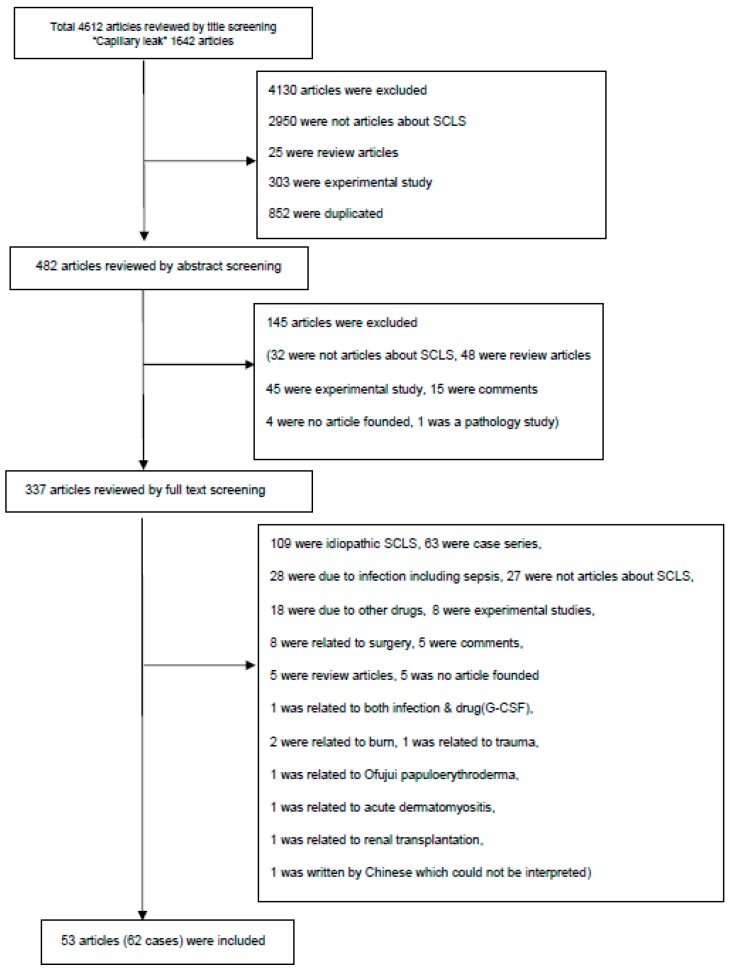
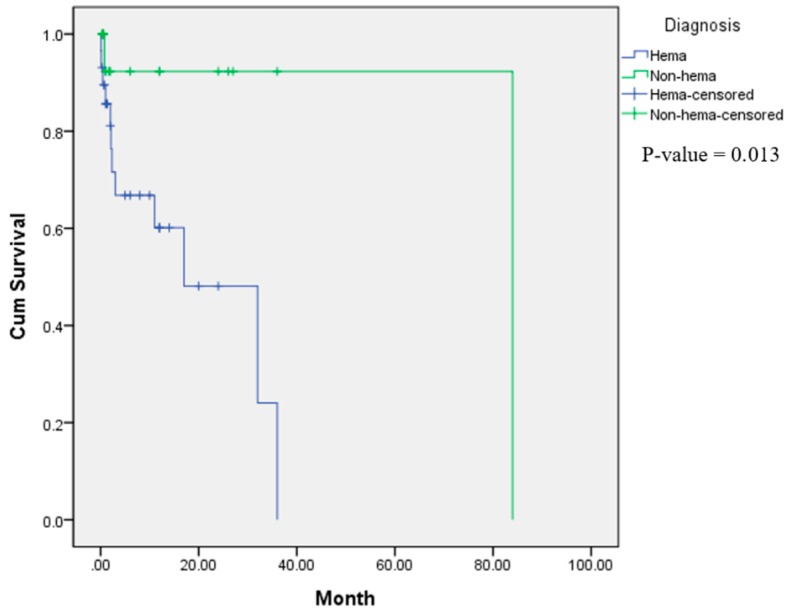
Systemic capillary leak syndrome (SCLS) is a rare disease characterized by shock caused by capillary hyperpermeability. The disease can occur in cancer patients and effective therapeutic strategies have not been established yet. The aim of the study was to analyze the clinical and laboratory data, treatment modalities, and mortality rate of patients and to identify contributing factors leading to mortality of SCLS in cancer. We searched MEDLINE (inception to July 2018) and of 4612 articles, we identified 62 case reports on SCLS associated with cancer or cancer-related drugs in a total of 53 articles. SCLS was associated with cancer itself in 43.6%, with anti-cancer agents in 51.6% and bone marrow transplantation (BMT) in 4.8%. Among anti-cancer agents, granulocyte-colony stimulating factor (G-CSF) was the most frequently associated drug (14.6%), followed by interleukin (IL)-2 (11.4%). The most common associated malignancies were hematologic (61.3%) with non-Hodgkin lymphoma (22.7%) and multiple myeloma (12.9%) being the leading causes. Common symptoms and signs included dyspnea (27.4%), edema (67.7%), hypotension (32.2%), pleural effusion (29.0%), ascites (22.7%), oliguria (22.7%), and weight gain (21.0%). Patients with SCLS were treated with steroids (59.7%), volume replacement (33.8%), diuretics (24.2%), inotropes (9.6%), methylxanthines (12.8%), β2 agonists (4.8%), while intravenous immunoglobulins (IVIG) were administered in 2 patients (3.2%) only. Among sixteen deaths during follow-up, four were directly attributed to SCLS. Hematologic malignancies were associated with an increased risk for mortality (hazard ratio (HR) 8.820, 95% confidence interval (CI) 1.126⁻69.063, = 0.038). Taken together, SCLS can be one important adverse event in cancer patients and careful monitoring of fluid volume is required in the management of SCLS.
系统性毛细血管渗漏综合征(SCLS)是一种罕见疾病,其特征为毛细血管通透性增加导致休克。该疾病可发生于癌症患者中,目前尚未确立有效的治疗策略。本研究旨在分析患者的临床和实验室数据、治疗方式及死亡率,并确定导致癌症患者发生SCLS死亡的相关因素。我们检索了MEDLINE(从创刊至2018年7月),在4612篇文章中,我们在总共53篇文章中确定了62例与癌症或癌症相关药物有关的SCLS病例报告。SCLS与癌症本身相关的占43.6%,与抗癌药物相关的占51.6%,与骨髓移植(BMT)相关的占4.8%。在抗癌药物中,粒细胞集落刺激因子(G-CSF)是最常相关的药物(14.6%),其次是白细胞介素(IL)-2(11.4%)。最常见的相关恶性肿瘤是血液系统疾病(61.3%),其中非霍奇金淋巴瘤(22.7%)和多发性骨髓瘤(12.9%)是主要原因。常见症状和体征包括呼吸困难(27.4%)、水肿(67.7%)、低血压(32.2%)、胸腔积液(29.0%)、腹水(22.7%)、少尿(22.7%)和体重增加(21.0%)。SCLS患者接受了类固醇治疗(59.7%)、容量补充(33.8%)、利尿剂治疗(24.2%)、血管活性药物治疗(9.6%)、甲基黄嘌呤治疗(12.8%)、β2激动剂治疗(4.8%),而仅2例患者(3.2%)接受了静脉注射免疫球蛋白(IVIG)治疗。在随访期间的16例死亡病例中,4例直接归因于SCLS。血液系统恶性肿瘤与死亡风险增加相关(风险比(HR)8.820,95%置信区间(CI)1.126⁻69.063,P = 0.038)。综上所述,SCLS可能是癌症患者中的一种重要不良事件,在SCLS的管理中需要仔细监测液体容量。