Department of System Cybernetics, Institute of Engineering, Hiroshima University, 1-4-1 Kagamiyama, Higashi-Hiroshima, Hiroshima 739-8527, Japan.
Department of Rehabilitation, Faculty of Health Sciences, Hiroshima Cosmopolitan University, Hiroshima 731-3166, Japan.
Sensors (Basel). 2018 Nov 7;18(11):3810. doi: 10.3390/s18113810.
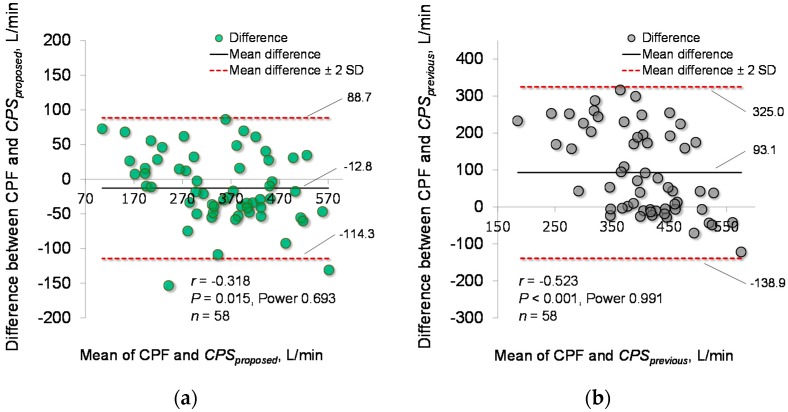
Although cough peak flow (CPF) is an important measurement for evaluating the risk of cough dysfunction, some patients cannot use conventional measurement instruments, such as spirometers, because of the configurational burden of the instruments. Therefore, we previously developed a cough strength estimation method using cough sounds based on a simple acoustic and aerodynamic model. However, the previous model did not consider age or have a user interface for practical application. This study clarifies the cough strength prediction accuracy using an improved model in young and elderly participants. Additionally, a user interface for mobile devices was developed to record cough sounds and estimate cough strength using the proposed method. We then performed experiments on 33 young participants (21.3 ± 0.4 years) and 25 elderly participants (80.4 ± 6.1 years) to test the effect of age on the CPF estimation accuracy. The percentage error between the measured and estimated CPFs was approximately 6.19%. In addition, among the elderly participants, the current model improved the estimation accuracy of the previous model by a percentage error of approximately 6.5% ( < 0.001). Furthermore, Bland-Altman analysis demonstrated no systematic error between the measured and estimated CPFs. These results suggest that the developed device can be applied for daily CPF measurements in clinical practice.
虽然咳嗽峰流速(CPF)是评估咳嗽功能障碍风险的重要测量指标,但由于仪器的结构负担,一些患者无法使用传统的测量仪器,如肺活量计。因此,我们之前开发了一种基于简单声学和空气动力学模型的咳嗽强度估计方法,该方法利用咳嗽声音。然而,之前的模型没有考虑年龄,也没有用于实际应用的用户界面。本研究通过在年轻和老年参与者中使用改进的模型来明确咳嗽强度的预测准确性。此外,为移动设备开发了一个用户界面,用于记录咳嗽声音并使用提出的方法估计咳嗽强度。然后,我们对 33 名年轻参与者(21.3 ± 0.4 岁)和 25 名老年参与者(80.4 ± 6.1 岁)进行了实验,以测试年龄对 CPF 估计准确性的影响。实测和估计 CPF 之间的百分比误差约为 6.19%。此外,在老年参与者中,当前模型将先前模型的估计准确性提高了约 6.5%(<0.001)。此外,Bland-Altman 分析表明,实测和估计 CPF 之间没有系统误差。这些结果表明,开发的设备可用于临床实践中的日常 CPF 测量。