Liu Donglai, Zhang Xinyuan, Zhou Haiwei, Lin Xiaojing, Shi Dawei, Shen Shu, Tian Yabin, Du Bo, Zhang Henghui, Wang Haibo, Wang Youchun, Zhang Chuntao
Division II of In Vitro Diagnostics for Infectious Diseases, Institute for In Vitro Diagnostics Control, National Institutes for Food and Drug Control, Beijing, China.
GeneCast Precision Medicine Technology Institute, Beijing, China.
J Cancer. 2018 Oct 1;9(20):3812-3823. doi: 10.7150/jca.26816. eCollection 2018.
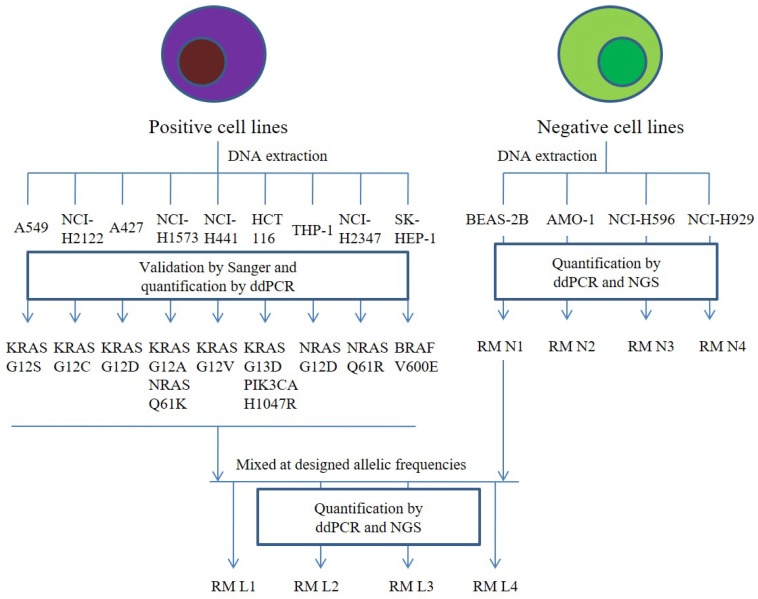
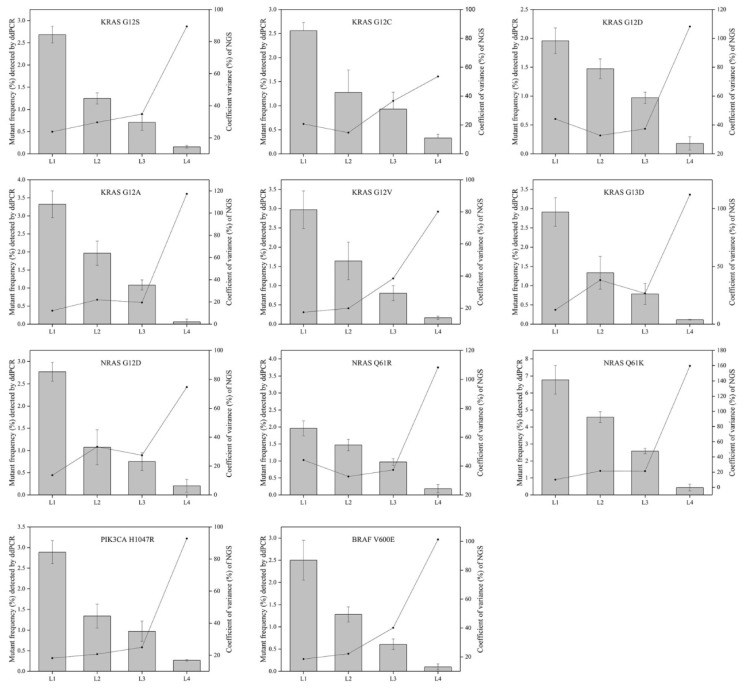
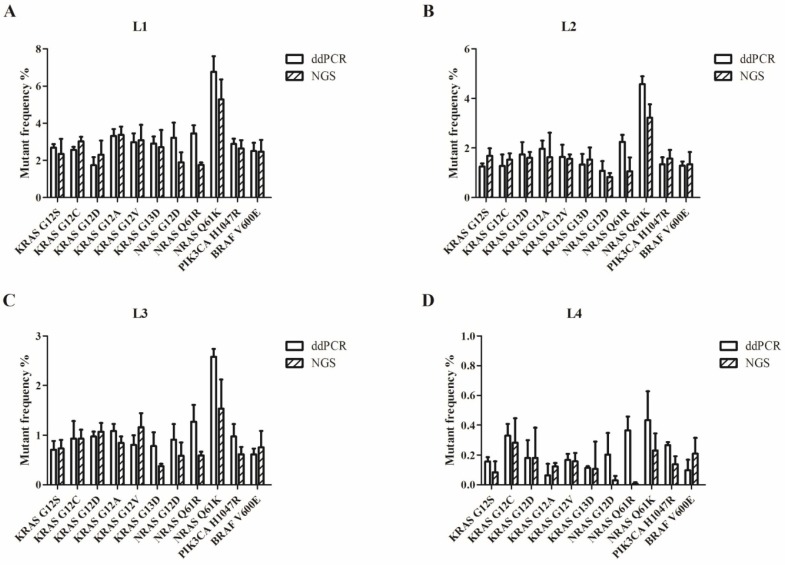
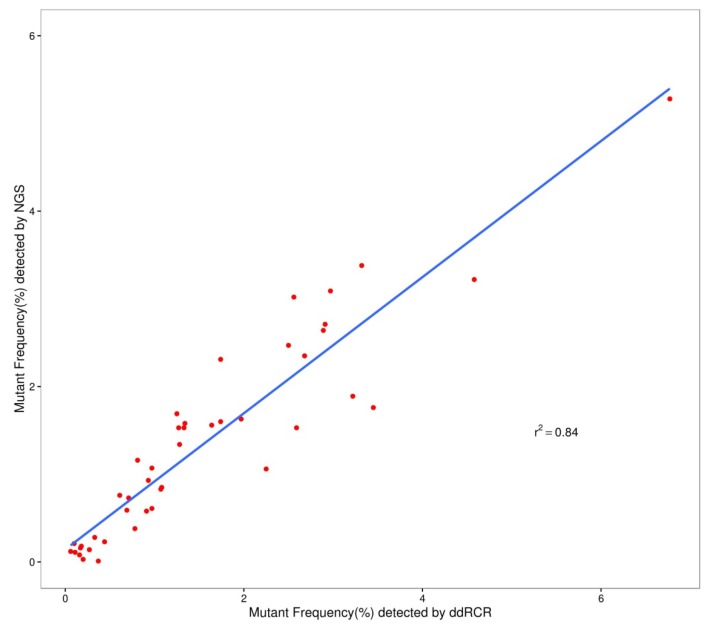
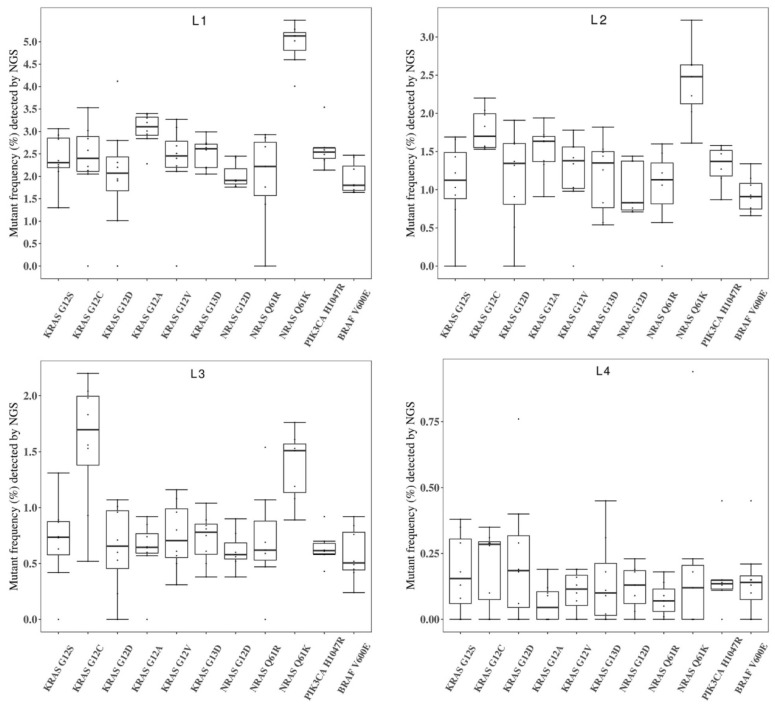
Liquid biopsies based on next-generation sequencing (NGS) assays are confronted with more opportunities and challenges. Widespread clinical implementation of NGS-based cancer diagnostic tests (IVDs) highlighted the urgency to establish reference materials (RMs) which could provide full control of the process from nucleic acid extraction to test report generation. Quality control based on cell-free DNA (cfDNA) RMs is especially important for liquid biopsies. Here, we used genomic DNA from thirteen cell lines to establish four negative cfDNA RMs (N1-N4) and four multiplex cfDNA RMs (L1-L4) at serial allelic frequencies ranging from approximately 2% to 0.1%. All the cfDNA RMs were quantified and validated via both droplet digital polymerase chain reaction (ddPCR) and NGS. These RMs were distributed to eight domestic manufacturers to collaboratively evaluate the performance of several domestic NGS-based cancer IVDs covering four major NGS platforms (NextSeq, HiSeq, Ion Proton, and BGISEQ). Each multiplex RM has eleven colorectal cancer-related mutations, including six mutations (G12S, G12C, G12D, G12A, G12V, and G13D), three mutations (G12D, Q61R, and Q61K), one mutation (H1047R), and one mutation (V600E). Each mutation in the cfDNA RMs was quantified and validated via both ddPCR and NGS, showing the good relevance of mutant allelic frequency. These RMs were distributed to eight domestic manufacturers for collaborative evaluation. All eight manufacturers provided similar results by domestic NGS-based cancer IVDs, except for manufacturer #5. The coefficient of variation (CV) was increased with decreasing mutant allelic frequency, and poor repetition occurred when the allelic frequency was lower than 0.5%. These results indicated that these cfDNA RMs would be pivotal for NGS-based cancer IVDs, especially for liquid biopsies of colorectal cancer-related mutations and would guide the further development of RMs covering more onco-related mutations.
基于下一代测序(NGS)分析的液体活检面临着更多的机遇和挑战。基于NGS的癌症诊断测试(IVD)在临床上的广泛应用凸显了建立参考物质(RM)的紧迫性,这些参考物质能够全面控制从核酸提取到测试报告生成的整个过程。基于游离DNA(cfDNA)参考物质的质量控制对于液体活检尤为重要。在此,我们使用来自13种细胞系的基因组DNA,建立了4种阴性cfDNA参考物质(N1 - N4)和4种多重cfDNA参考物质(L1 - L4),其等位基因频率范围约为2%至0.1%。所有cfDNA参考物质均通过液滴数字聚合酶链反应(ddPCR)和NGS进行定量和验证。这些参考物质被分发给8家国内制造商,以协同评估几种基于NGS的癌症IVD的性能,这些IVD涵盖四个主要的NGS平台(NextSeq、HiSeq、Ion Proton和BGISEQ)。每个多重参考物质有11个与结直肠癌相关的突变,包括6个KRAS突变(G12S、G12C、G12D、G12A、G12V和G13D)、3个NRAS突变(G12D、Q61R和Q61K)、1个BRAF突变(H1047R)和1个BRAF突变(V600E)。cfDNA参考物质中的每个突变均通过ddPCR和NGS进行定量和验证,显示出突变等位基因频率的良好相关性。这些参考物质被分发给8家国内制造商进行协同评估。除了制造商#5外,所有8家制造商通过基于国内NGS的癌症IVD提供了相似的结果。变异系数(CV)随着突变等位基因频率的降低而增加,当等位基因频率低于0.5%时出现重复性较差的情况。这些结果表明,这些cfDNA参考物质对于基于NGS的癌症IVD至关重要,特别是对于结直肠癌相关突变的液体活检,并将指导涵盖更多肿瘤相关突变的参考物质的进一步开发。