University of Rzeszow, Faculty of Medicine, Institute of Physiotherapy, Rzeszów, Poland.
Rehabilitation Center REHAMED-CENTER, Tajęcina, Poland.
Biomed Res Int. 2018 Oct 14;2018:9459014. doi: 10.1155/2018/9459014. eCollection 2018.
In recent years a significant increase in the percentage of children with postural problems has been observed. It is necessary to focus on preventing the phenomenon and on analysis of existing postural defects.
The aim of this work was to assess the potential relationship between body mass composition and body posture in school-age children.
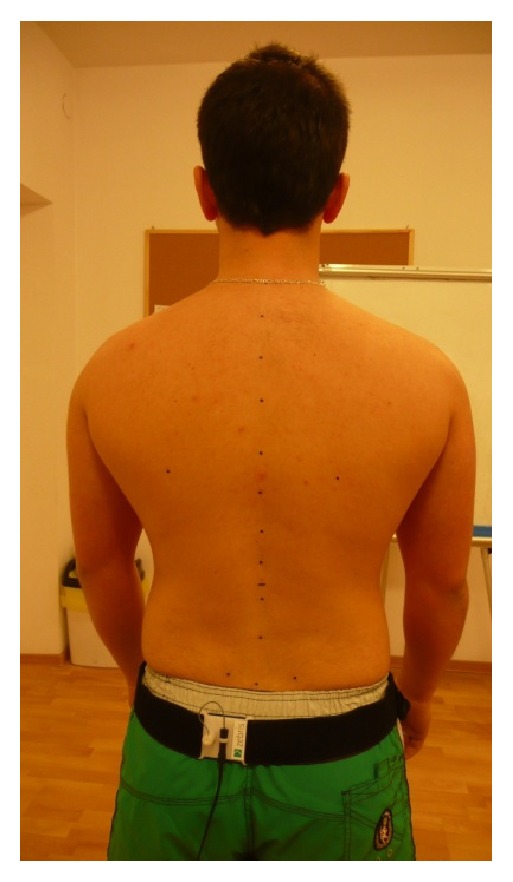
464 school-age children ranging from 6 to 16 years (234 boys and 230 girls) were qualified for the study. Body mass composition was assessed using the analyzer Tanita MC 780 MA. Assessment of body posture was performed using Zebris system. All the results were analyzed with statistical methods. The accepted level of significance was p<0.05.
Analyses of the disparities between the girls and the boys showed statistically significant differences in all of the body mass components and in obliquity of the pelvis/shoulder. The boys were characterized by higher contents of muscle tissue (<0.001), bone tissue (<0.001), fatless tissue (<0.001), and body water (<0.001) as well as a greater obliquity angle (=0.018). The girls, on the other hand, were found with higher content of fatty tissue (<0.001). The children with lower content of muscle tissue (p=0.030), fatless tissue (p=0.030), water (p=0.030), and higher content of fatty tissue measured in kg (p=0.027) were characterized by greater pelvic obliquity.
The current study shows evidence that sex, as a strongly differentiating factor, determines body mass composition and the occurrence of suboptimal postures only in the pelvic area. Body mass composition differentiates body posture of the study group. The content of fatty tissue influences the occurrence of suboptimal postures in the scapula and pelvic area in the frontal plane. The content of muscle tissue is associated with faulty postures in the scapula and pelvic area in the frontal plane.
近年来,观察到患有姿势问题的儿童比例显著增加。有必要关注预防这一现象,并对现有的姿势缺陷进行分析。
本研究旨在评估儿童身体成分与姿势之间的潜在关系。
本研究共纳入 464 名年龄在 6 至 16 岁的儿童(男 234 名,女 230 名)。使用 Tanita MC 780 MA 分析仪评估身体成分。使用 Zebris 系统评估姿势。所有结果均采用统计学方法进行分析。接受的显著性水平为 p<0.05。
对男孩和女孩之间的差异进行分析,发现所有身体成分和骨盆/肩部倾斜度均存在统计学显著差异。男孩的肌肉组织含量较高(<0.001)、骨组织含量较高(<0.001)、无脂肪组织含量较高(<0.001)、身体水分含量较高(<0.001)以及骨盆倾斜角较大(=0.018)。另一方面,女孩的脂肪组织含量较高(<0.001)。肌肉组织含量较低(p=0.030)、无脂肪组织含量较低(p=0.030)、水分含量较低(p=0.030)和脂肪组织含量较高(p=0.027)的儿童,骨盆倾斜度更大。
本研究表明,性别作为一个强区分因素,仅在骨盆区域决定身体成分和不良姿势的发生。身体成分区分了研究组的姿势。脂肪组织含量影响肩胛骨和骨盆区域在额状面的不良姿势发生。肌肉组织含量与肩胛骨和骨盆区域在额状面的不良姿势有关。