Institut de Neurosciences Cognitives et Intégratives D'Aquitaine, CNRS UMR 5287, Université de Bordeaux, Bordeaux 33076, France.
Department of Anatomy, Faculty of Medicine, University of Helsinki, Helsinki Finland.
eNeuro. 2018 Oct 23;5(5). doi: 10.1523/ENEURO.0264-18.2018. eCollection 2018 Sep-Oct.
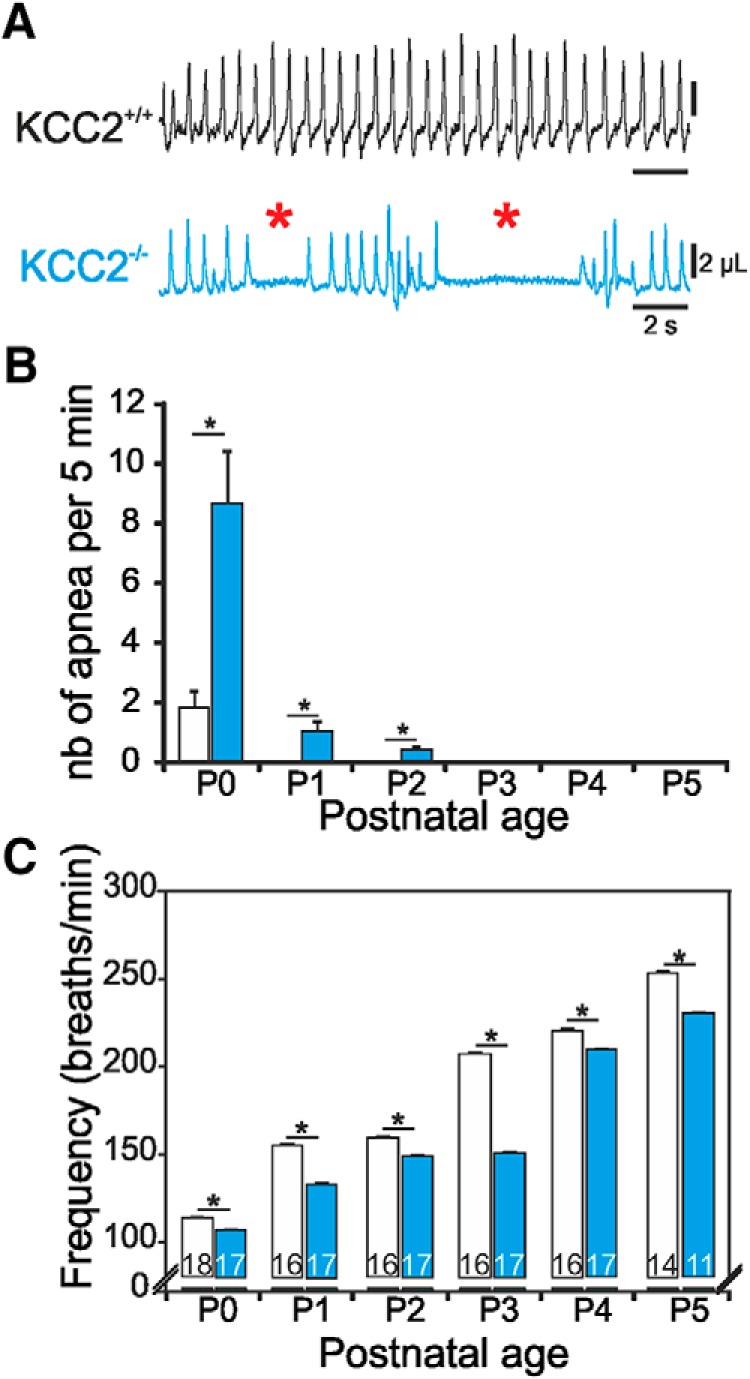
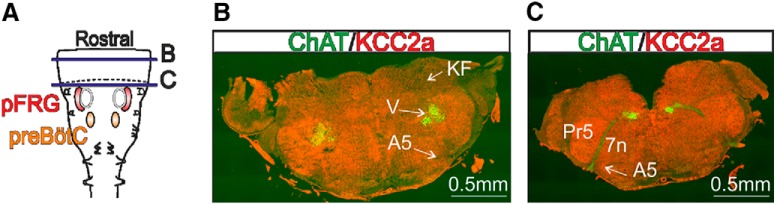
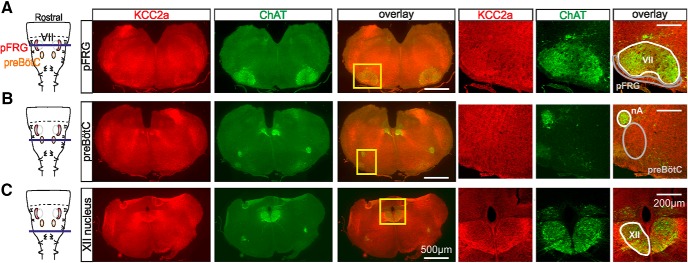
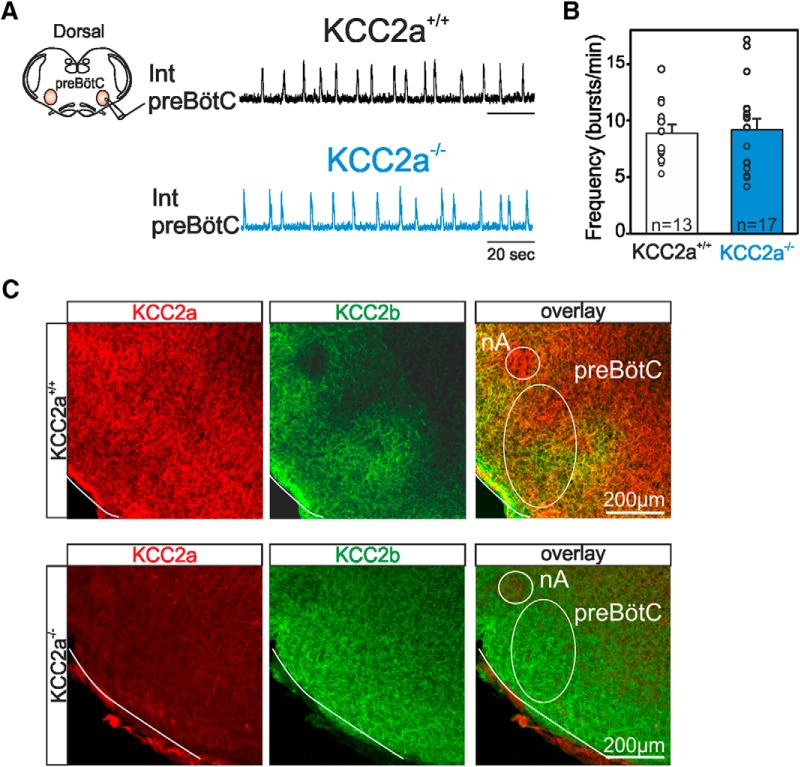
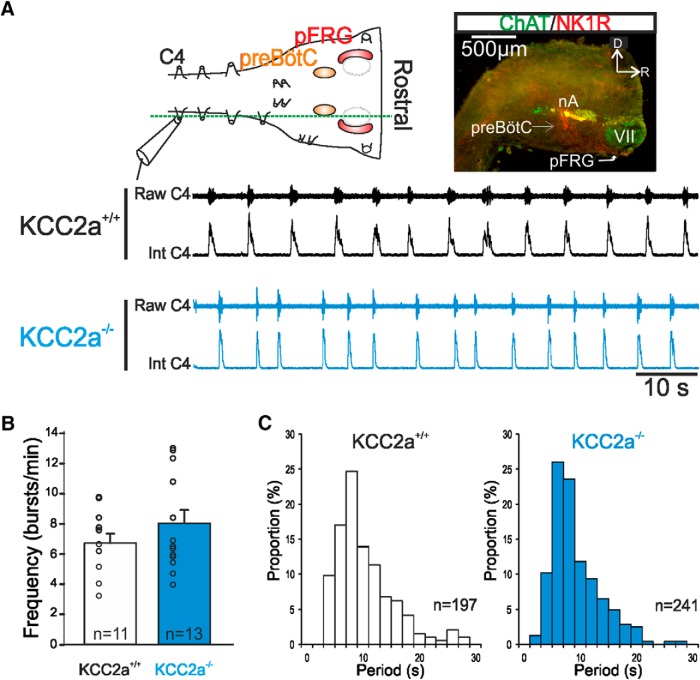
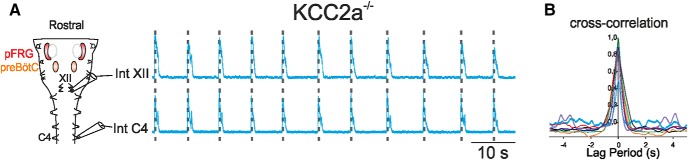
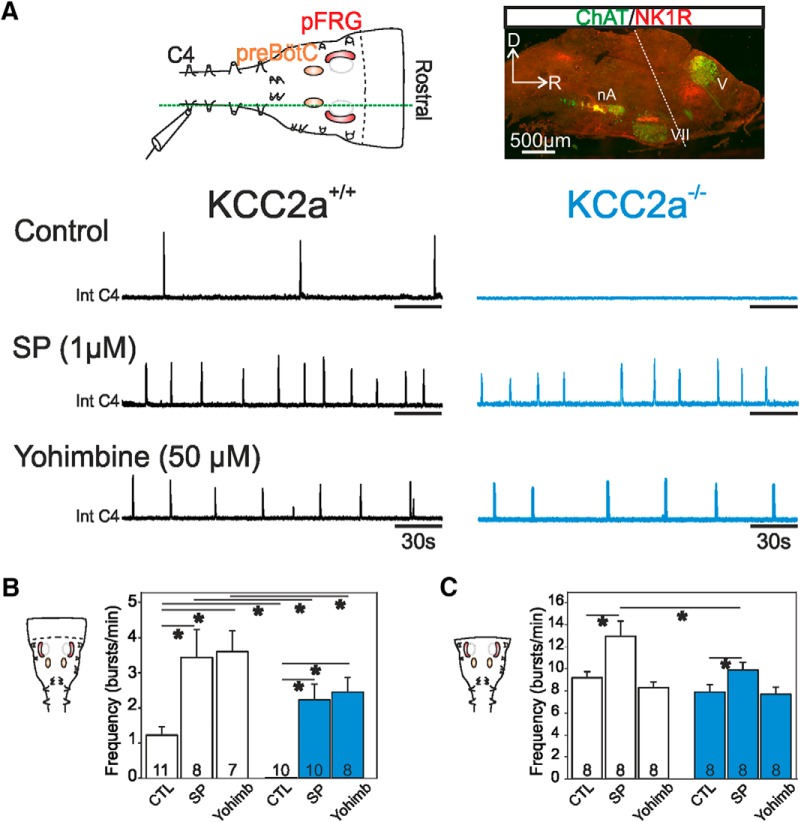
In central respiratory circuitry, synaptic excitation is responsible for synchronizing neuronal activity in the different respiratory rhythm phases, whereas chloride-mediated inhibition is important for shaping the respiratory pattern itself. The potassium chloride cotransporter KCC2, which serves to maintain low intraneuronal Cl concentration and thus render chloride-mediated synaptic signaling inhibitory, exists in two isoforms, KCC2a and KCC2b. KCC2 is essential for functional breathing motor control at birth, but the specific contribution of the KCC2a isoform remains unknown. Here, to address this issue, we investigated the respiratory phenotype of mice deficient for KCC2a. plethysmographic recordings revealed that KCC2a-deficient pups at P0 transiently express an abnormally low breathing rate and a high occurrence of apneas. Immunostainings confirmed that KCC2a is normally expressed in the brainstem neuronal groups involved in breathing (pre-Bötzinger complex, parafacial respiratory group, hypoglossus nucleus) and is absent in these regions in the KCC2a mutant. However, in variously reduced medullary preparations, spontaneous rhythmic respiratory activity is similar to that expressed in wild-type preparations, as is hypoglossal motor output, and no respiratory pauses are detected, suggesting that the rhythm-generating networks are not intrinsically affected in mutants at P0. In contrast, inhibitory neuromodulatory influences exerted by the pons on respiratory rhythmogenesis are stronger in the mutant, thereby explaining the breathing anomalies observed . Thus, our results indicate that the KCC2a isoform is important for establishing proper breathing behavior at the time of birth, but by acting at sites that are extrinsic to the central respiratory networks themselves.
在中枢呼吸回路中,突触兴奋负责同步不同呼吸节律相位的神经元活动,而氯离子介导的抑制对于塑造呼吸模式本身很重要。钾氯离子共转运蛋白 KCC2 负责维持细胞内低氯离子浓度,从而使氯离子介导的突触信号传递抑制,它有两种同工型,KCC2a 和 KCC2b。KCC2 对于出生时的功能性呼吸运动控制至关重要,但 KCC2a 同工型的具体贡献尚不清楚。在这里,为了解决这个问题,我们研究了 KCC2a 缺失小鼠的呼吸表型。 plethysmographic 记录显示,P0 时的 KCC2a 缺失幼鼠短暂表达异常低的呼吸频率和高呼吸暂停发生率。免疫染色证实,KCC2a 正常表达于参与呼吸的脑干神经元群(前 Bötzinger 复合体、副呼吸群、舌下神经核),而在 KCC2a 突变体中这些区域不存在 KCC2a。然而,在各种程度降低的延髓制备物中,自发性节律性呼吸活动与野生型制备物相似,舌下神经运动输出也相似,并且未检测到呼吸暂停,这表明节律生成网络在 P0 时的突变体中没有内在受到影响。相比之下,来自桥脑的抑制性神经调节影响对呼吸节律生成的作用在突变体中更强,从而解释了观察到的呼吸异常。因此,我们的结果表明,KCC2a 同工型对于出生时建立适当的呼吸行为很重要,但作用于中枢呼吸网络本身之外的部位。