Dasman Diabetes Institute, P.O. Box 1180, Dasman, 15462, Kuwait.
Radboud University Medical Center, Nijmegen, The Netherlands.
Sci Rep. 2018 Nov 8;8(1):16583. doi: 10.1038/s41598-018-34815-8.
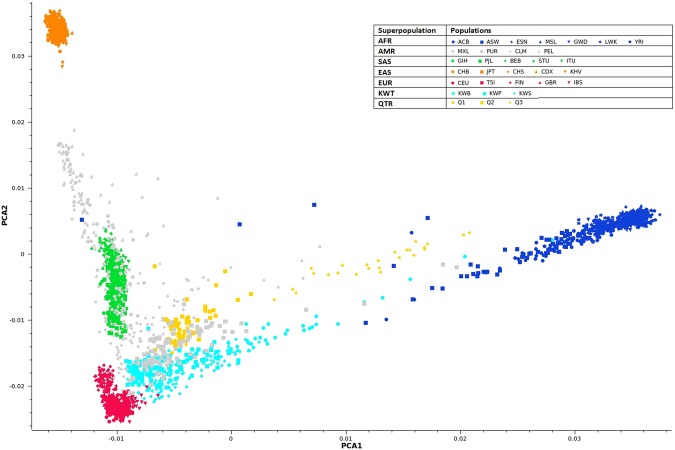
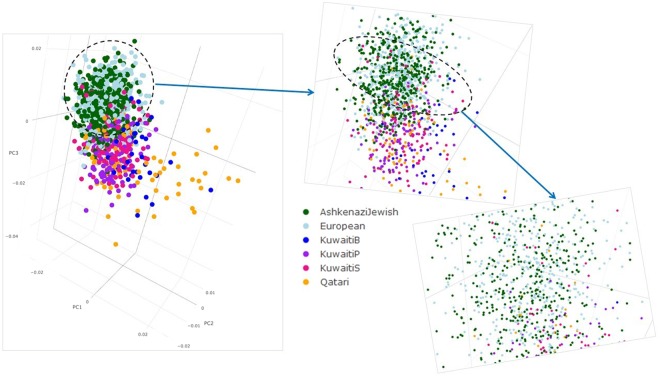
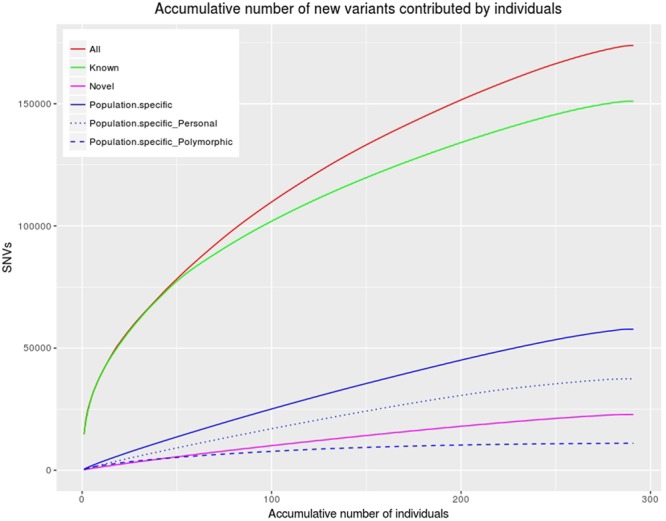
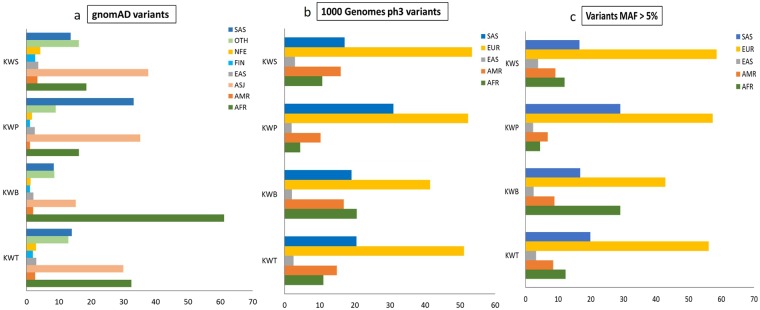
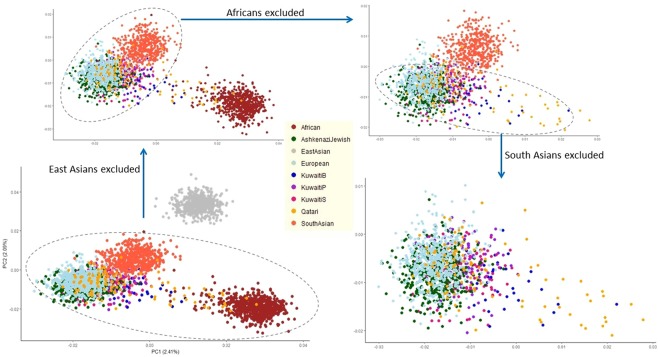
Consanguineous populations of the Arabian Peninsula have been underrepresented in global efforts that catalogue human exome variability. We sequenced 291 whole exomes of unrelated, healthy native Arab individuals from Kuwait to a median coverage of 45X and characterised 170,508 single-nucleotide variants (SNVs), of which 21.7% were 'personal'. Up to 12% of the SNVs were novel and 36% were population-specific. Half of the SNVs were rare and 54% were missense variants. The study complemented the Greater Middle East Variome by way of reporting many additional Arabian exome variants. The study corroborated Kuwaiti population genetic substructures previously derived using genome-wide genotype data and illustrated the genetic relatedness among Kuwaiti population subgroups, Middle Eastern, European and Ashkenazi Jewish populations. The study mapped 112 rare and frequent functional variants relating to pharmacogenomics and disorders (recessive and common) to the phenotypic characteristics of Arab population. Comparative allele frequency data and carrier distributions of known Arab mutations for 23 disorders seen among Arabs, of putative OMIM-listed causal mutations for 12 disorders observed among Arabs but not yet characterized for genetic basis in Arabs, and of 17 additional putative mutations for disorders characterized for genetic basis in Arab populations are presented for testing in future Arab studies.
阿拉伯半岛的血缘群体在全球范围内对人类外显子变异进行编目的工作中代表性不足。我们对来自科威特的 291 名无血缘关系的健康阿拉伯个体进行了全外显子组测序,平均覆盖度为 45X,并对 170,508 个单核苷酸变异(SNV)进行了特征描述,其中 21.7%为“个体特异性”。高达 12%的 SNV 是新的,36%是特定于人群的。一半的 SNV 是罕见的,54%是错义变异。该研究通过报告许多额外的阿拉伯外显子变异,补充了大中东变异组。该研究证实了科威特人口遗传亚结构先前是使用全基因组基因型数据得出的,并说明了科威特人口亚组、中东、欧洲和阿什肯纳兹犹太人群体之间的遗传关系。该研究还将 112 个与药物基因组学和疾病(隐性和常见)相关的罕见和常见功能变异映射到阿拉伯人群的表型特征上。针对在阿拉伯人中观察到的 23 种疾病的已知阿拉伯突变的罕见和常见等位基因频率数据和携带者分布,针对在阿拉伯人中观察到但尚未在阿拉伯人中确定遗传基础的 12 种疾病的假定 OMIM 列出的因果突变,以及针对在阿拉伯人群中确定遗传基础的 17 种额外疾病的假定突变,都提供了用于未来阿拉伯研究的检测。