Montresor Alessio, Toffali Lara, Rigo Antonella, Ferrarini Isacco, Vinante Fabrizio, Laudanna Carlo
Department of Medicine, Division of General Pathology, Laboratory of Cell Trafficking and Signal Transduction, University of Verona, Verona 37134, Italy.
The Center for Biomedical Computing (CBMC), University of Verona, Verona 37134, Italy.
Oncotarget. 2018 Oct 12;9(80):35123-35140. doi: 10.18632/oncotarget.26212.
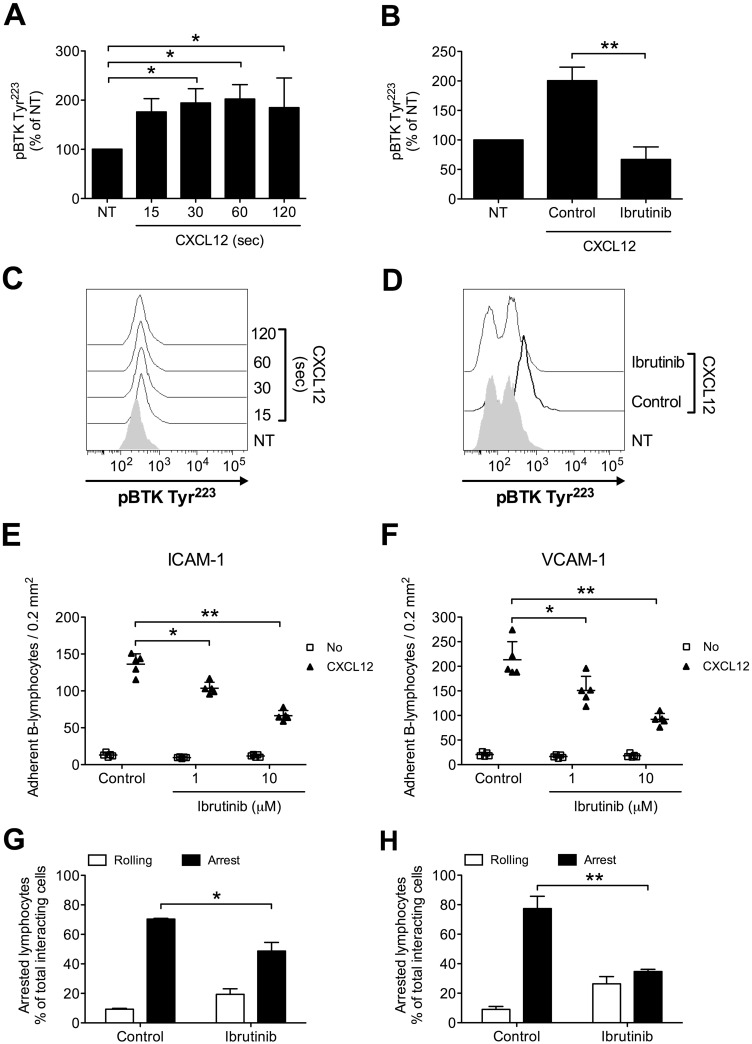
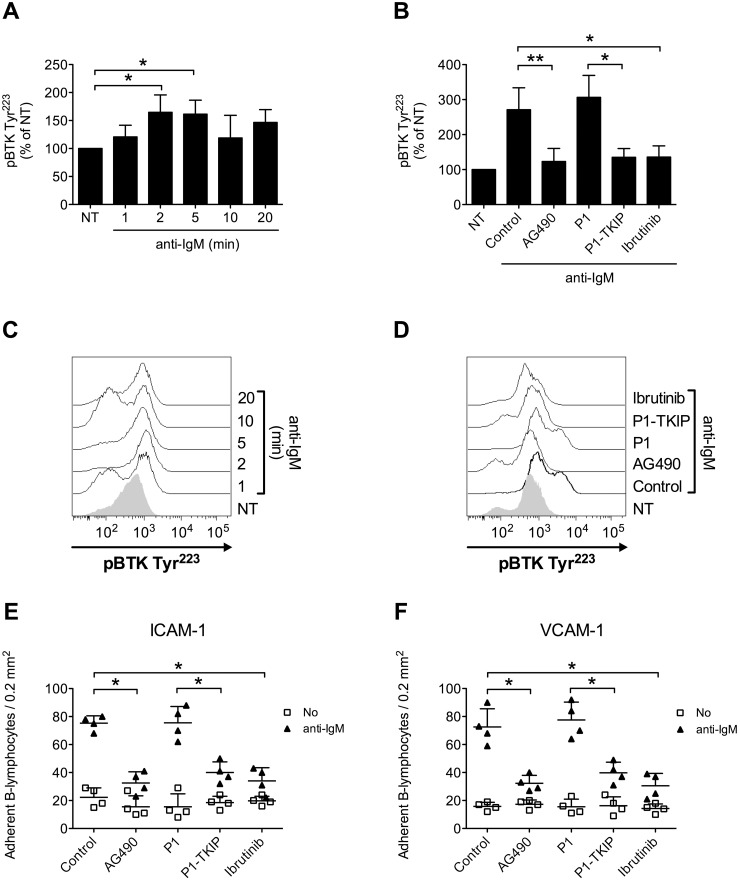
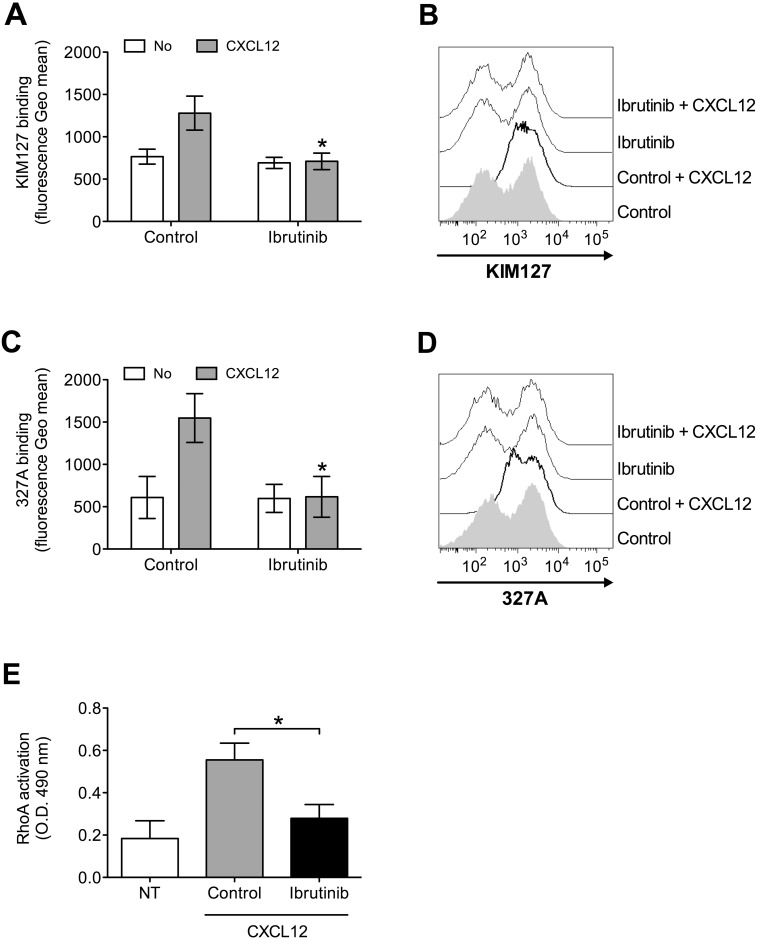
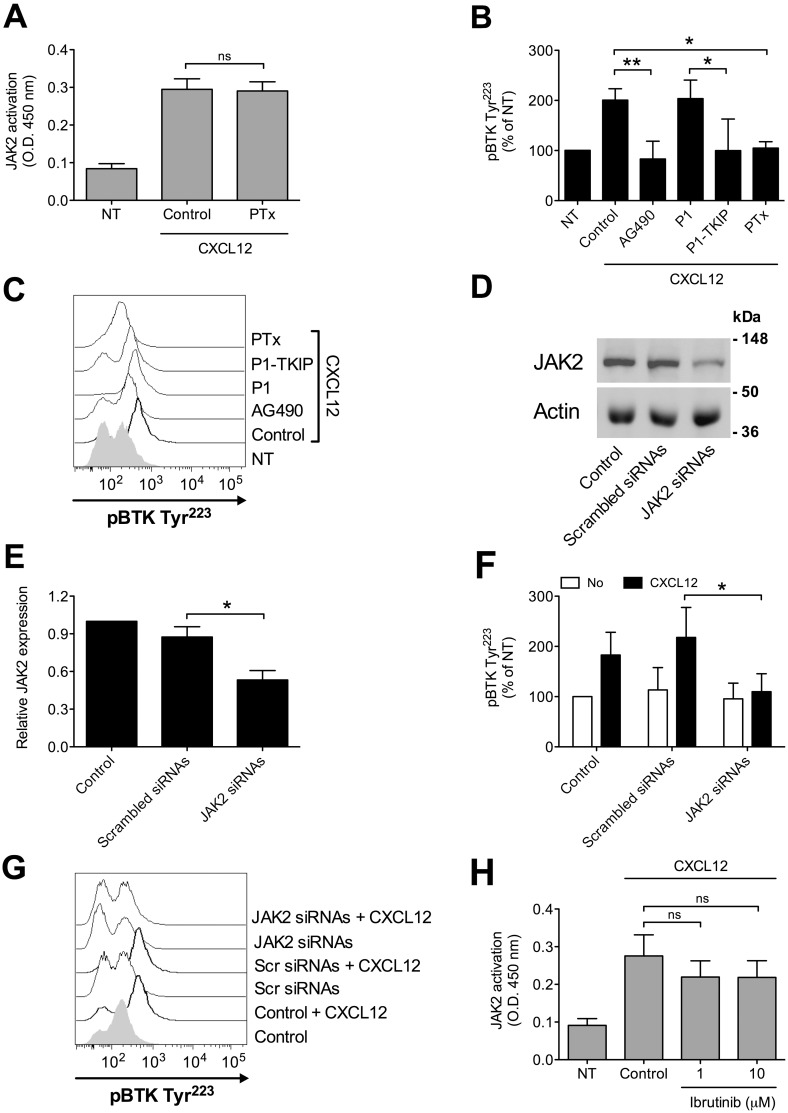
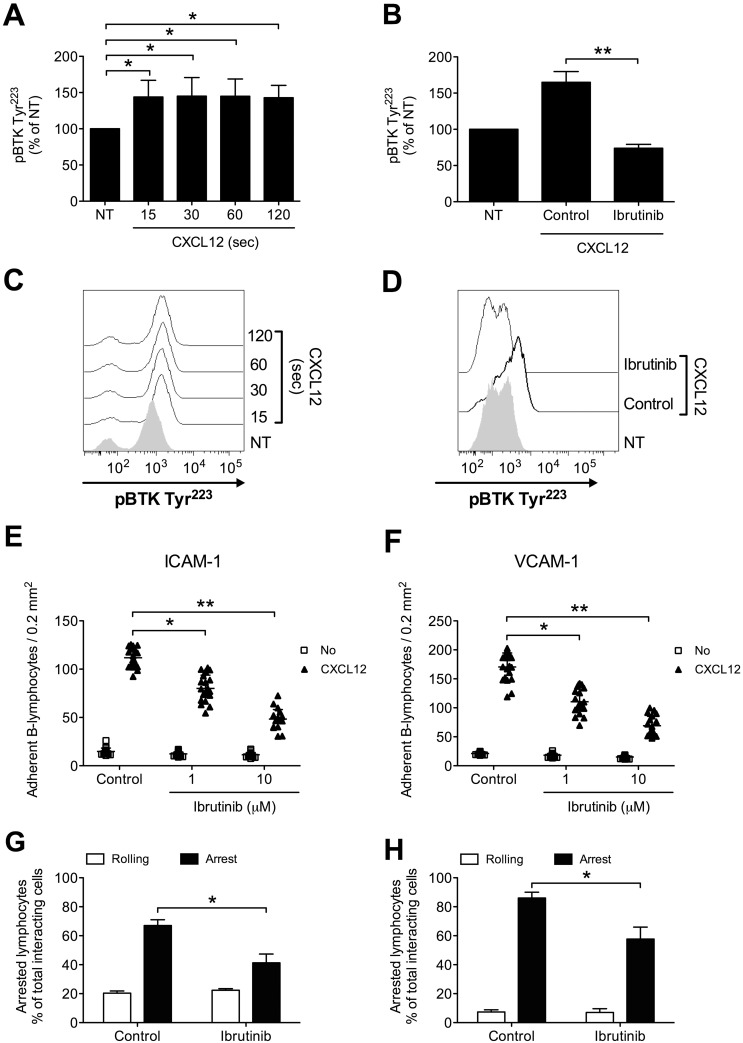
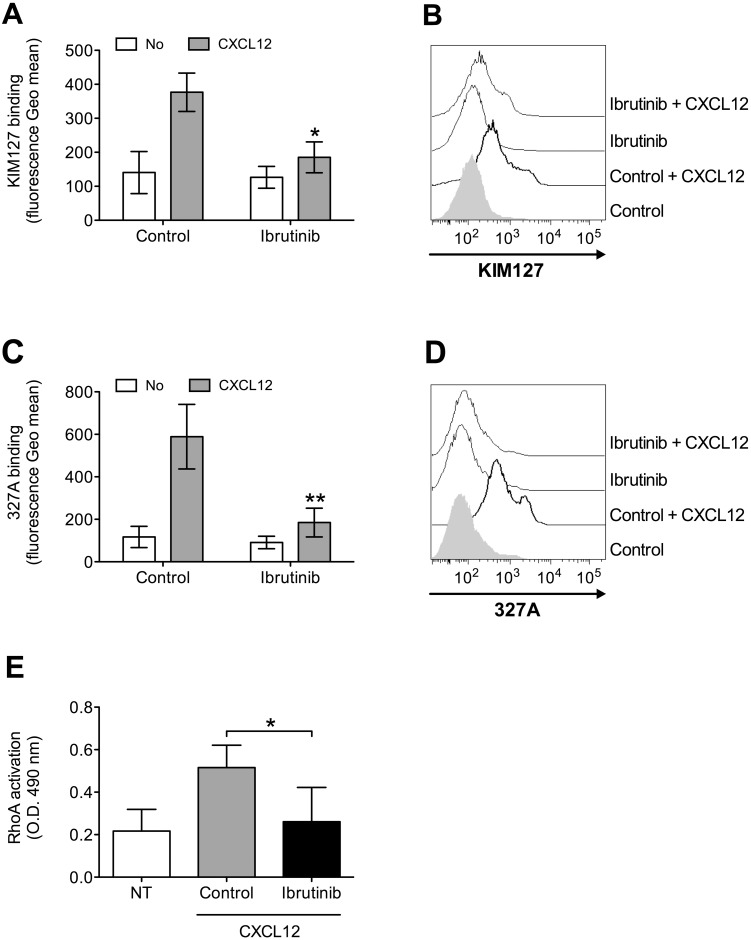
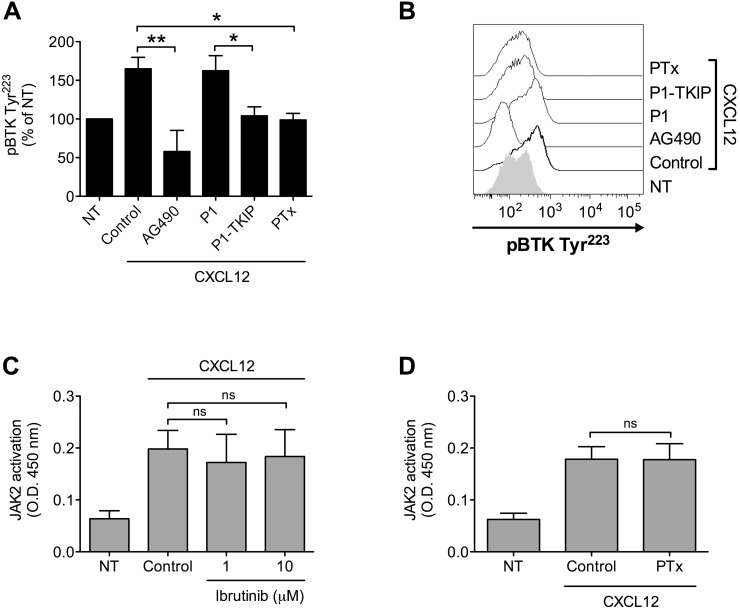
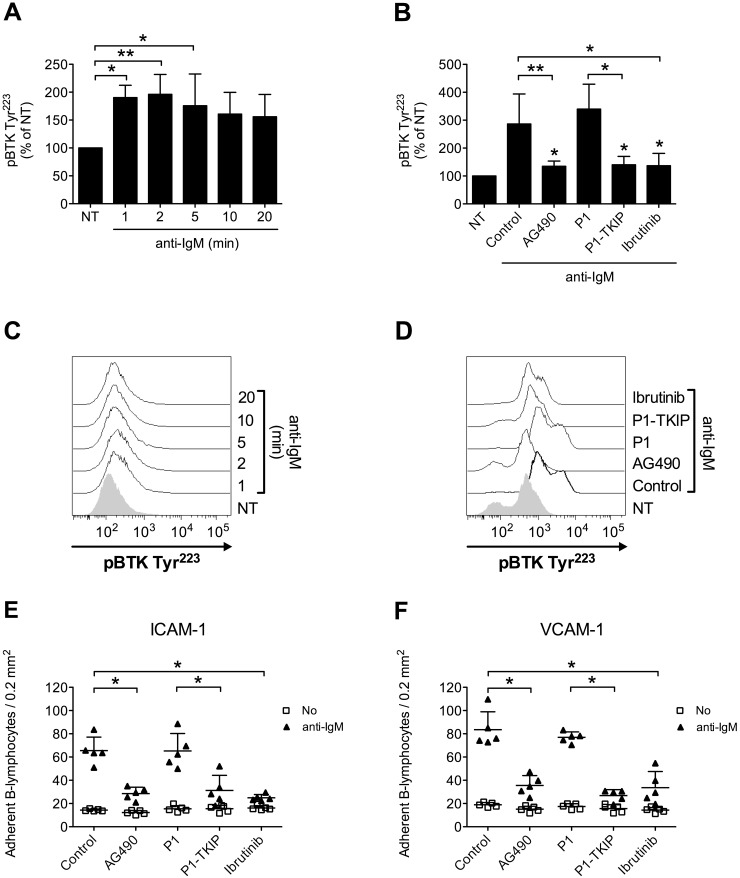
Bruton's tyrosine kinase (BTK) regulates the B-cell receptor (BCR) signaling pathway, which, in turn, plays a critical role in B-cell chronic lymphocytic leukemia (B-CLL) pathogenesis. The BTK-specific inhibitor Ibrutinib blocks BCR signaling and is now approved as effective B-CLL therapy. Chemokines, such as the homeostatic chemokine CXCL12, play a central role in B-CLL pathogenesis and progression, by regulating CLL cell interaction with the stromal microenvironment, leading to cells survival and proliferation. In this study, we investigated, in normal versus CLL B-lymphocytes, the role of BTK in signal transduction activated by the CXCL12-CXCR4 signaling axis and its involvement in rapid integrin activation. We show that BTK is rapidly activated by CXCL12 in healthy as well as CLL B-lymphocytes, with a kinetic of tyr-phosphorylation coherent with rapid adhesion triggering. BTK inhibition prevents CXCL12-induced triggering of lymphocyte function-associated antigen-1 (LFA-1) and very late antigen-4 (VLA-4) integrins. Furthermore, BTK inhibition blocks the activation of the small GTP-binding protein RhoA, controlling integrin affinity. Very importantly, we show that BTK tyr-phosphorylation and activation by CXCL12 depends on upstream activation of JAK2 tyrosine kinase. A comparative analysis of 36 B-CLL patients demonstrates that JAK2-dependent BTK regulatory role on integrin activation by CXCL12 is fully conserved in CLL cells. Finally, we show that the JAK2-BTK axis also regulates signaling to integrin activation by BCR. Thus, BTK and JAK protein tyrosine kinases (PTKs) manifest a hierarchical activity both in chemokine- as well as BCR-mediated integrin activation and dependent adhesion, potentially suggesting the possibility of combined therapeutic approaches to B-CLL treatment.
布鲁顿酪氨酸激酶(BTK)调节B细胞受体(BCR)信号通路,而该通路在B细胞慢性淋巴细胞白血病(B-CLL)发病机制中起关键作用。BTK特异性抑制剂依鲁替尼可阻断BCR信号传导,目前已被批准作为有效的B-CLL治疗药物。趋化因子,如稳态趋化因子CXCL12,通过调节CLL细胞与基质微环境的相互作用,在B-CLL发病机制和进展中发挥核心作用,从而导致细胞存活和增殖。在本研究中,我们在正常与CLL B淋巴细胞中研究了BTK在由CXCL12-CXCR4信号轴激活的信号转导中的作用及其在快速整合素激活中的参与情况。我们发现,在健康以及CLL B淋巴细胞中,CXCL12可迅速激活BTK,其酪氨酸磷酸化动力学与快速黏附触发一致。抑制BTK可阻止CXCL12诱导的淋巴细胞功能相关抗原-1(LFA-1)和极晚期抗原-4(VLA-4)整合素的触发。此外,抑制BTK可阻断小GTP结合蛋白RhoA的激活,后者控制整合素亲和力。非常重要的是,我们发现CXCL12诱导的BTK酪氨酸磷酸化和激活依赖于JAK2酪氨酸激酶的上游激活。对36例B-CLL患者的比较分析表明,JAK2依赖的BTK对CXCL12激活整合素的调节作用在CLL细胞中完全保守。最后,我们表明JAK2-BTK轴也调节BCR激活整合素的信号传导。因此,BTK和JAK蛋白酪氨酸激酶(PTK)在趋化因子以及BCR介导的整合素激活和依赖性黏附中均表现出分级活性,这可能提示联合治疗B-CLL的可能性。