Weigel Benjamin, Bonsdorff Erik
Environmental and Marine Biology, Faculty of Science and Engineering, Åbo Akademi University, Turku, Finland.
Research Centre for Ecological Change, Organismal and Evolutionary Biology Research Programme, University of Helsinki, Helsinki, Finland.
PeerJ. 2018 Nov 6;6:e5899. doi: 10.7717/peerj.5899. eCollection 2018.
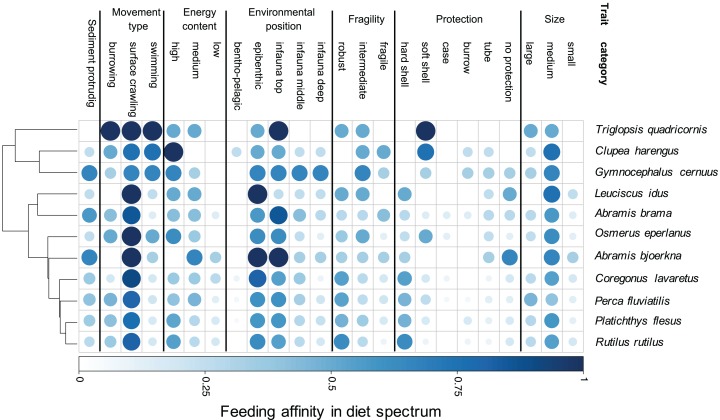
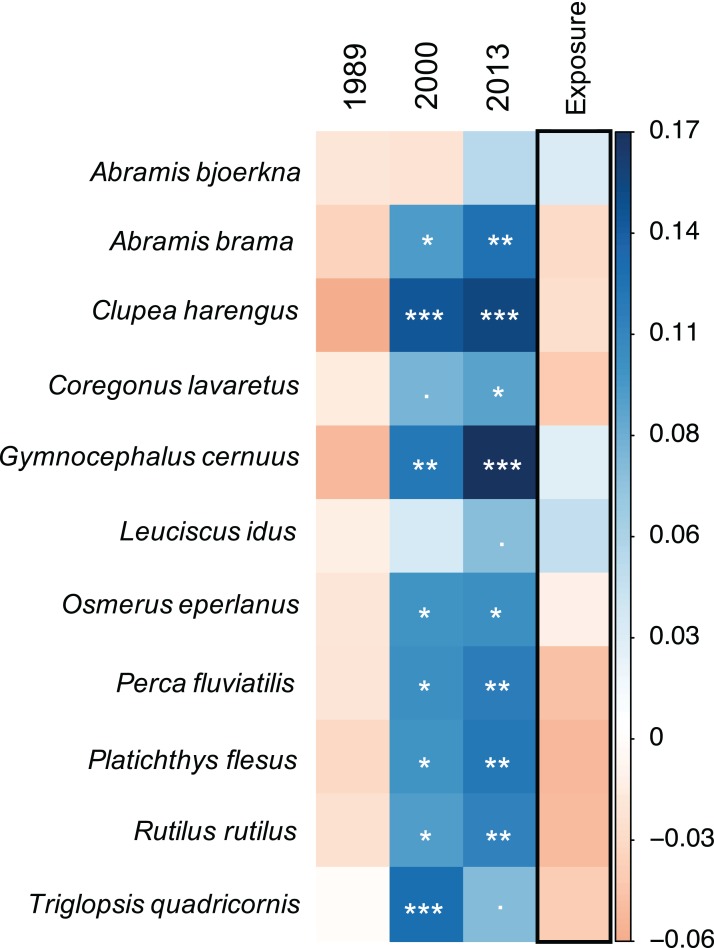
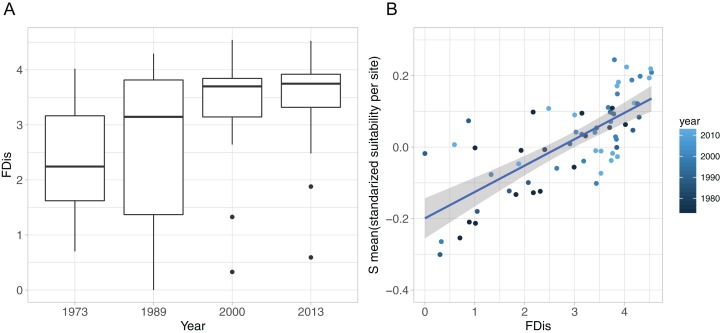
Increasing environmental pressures and human impacts are reshaping community structures and species interactions throughout all trophic levels. The morphological and behavioural characteristics of species communities contain key ecological information on why prey species appear attractive to predators but are rarely applied when exploring predator-prey (PP) relationships. Expanding our knowledge on how changing prey communities can alter the food resource suitability (RS) for predators is vital for understanding PP dynamics in changing ecosystems. Detailed predator diet data are commonly restricted to commercially important species and often not available over long temporal scales. To find out whether structural changes of prey communities impact the food RS for predator communities over space and time, we apply a novel framework to describe and interpret changes in predator diet-suitability based on predation-relevant traits of prey. We use information on described feeding links from the literature to compile the prey spectrum for each predator and subsequently translate the prey-species into a prey-trait spectrum. For each predator, we then calculate a frequency-based prey-trait affinity score and relate it to the available food resource pool, the community weighted means of prey traits, resulting in a prey-suitability measure. We aim to reveal whether a described multi-decadal change in the community structure of zoobenthos had an impact on the food suitability for the benthic-feeding fish in a coastal system of the Baltic Sea. We assess the direction of change in resource quality from the perspective of benthic-feeding fish and describe predator-specific responses to examine which species are likely to profit or be disadvantaged by changes in their prey spectrum. Furthermore, we test the relationship between functional diversity of prey communities and food suitability for predators, and whether predation linkage-structures are affected through prey community-changes. Our results show that changes in zoobenthic communities had a positive effect on the food suitability for most benthic-feeding fish, implying more suitable food resources. Species-specific responses of predators suggest varying plasticity to cope with prey assemblages of different trait compositions. Additionally, the functional diversity of zoobenthos had a positive effect on the food suitability for predator fish. The changing trait compositions of prey influenced the PP linkage-structure, indicating varying specialisation of benthic feeding fish towards available food resources. Our findings suggest that changing morphological characteristics of prey can impact food RS features for its predators. This approach enables long-term evaluation of prey quality characteristics where no detailed diet data is available and allows for cross-system comparison as it is not relying on taxonomic identities .
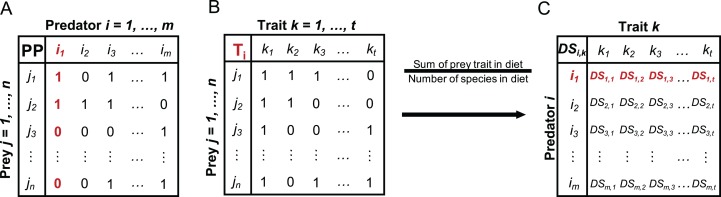
日益增加的环境压力和人类影响正在重塑所有营养级别的群落结构和物种相互作用。物种群落的形态和行为特征包含关于猎物物种为何对捕食者具有吸引力的关键生态信息,但在探索捕食者 - 猎物(PP)关系时却很少被应用。扩展我们对猎物群落变化如何改变捕食者的食物资源适宜性(RS)的认识,对于理解不断变化的生态系统中的PP动态至关重要。详细的捕食者饮食数据通常仅限于具有商业重要性的物种,并且通常无法在长时间尺度上获得。为了弄清楚猎物群落的结构变化是否会在空间和时间上影响捕食者群落的食物RS,我们应用了一个新颖的框架,基于猎物与捕食相关的特征来描述和解释捕食者饮食适宜性的变化。我们利用文献中描述的摄食联系信息来编制每个捕食者的猎物谱,随后将猎物物种转化为猎物特征谱。然后,对于每个捕食者,我们计算基于频率的猎物特征亲和度得分,并将其与可用食物资源库、猎物特征的群落加权均值相关联,从而得出猎物适宜性度量。我们旨在揭示所描述的底栖动物群落结构的数十年变化是否对波罗的海沿海系统中以底栖生物为食的鱼类的食物适宜性产生影响。我们从以底栖生物为食的鱼类的角度评估资源质量的变化方向,并描述捕食者特定的反应,以检查哪些物种可能从其猎物谱的变化中受益或处于不利地位。此外,我们测试猎物群落的功能多样性与捕食者食物适宜性之间的关系,以及捕食联系结构是否受到猎物群落变化的影响。我们的结果表明,底栖动物群落的变化对大多数以底栖生物为食的鱼类的食物适宜性产生了积极影响,这意味着有更适宜的食物资源。捕食者的物种特异性反应表明,它们具有不同的可塑性来应对不同特征组成的猎物组合。此外,底栖动物的功能多样性对捕食性鱼类的食物适宜性产生了积极影响。猎物不断变化的特征组成影响了PP联系结构,表明以底栖生物为食的鱼类对可用食物资源的专业化程度各不相同。我们的研究结果表明,猎物形态特征的变化会影响其捕食者的食物RS特征。这种方法能够在没有详细饮食数据的情况下对猎物质量特征进行长期评估,并且由于不依赖分类身份,还允许进行跨系统比较。