Huang Fei
School of Pharmaceutical Sciences, Nanjing Tech University, Nanjing, China.
Synth Syst Biotechnol. 2018 Nov 2;3(4):244-245. doi: 10.1016/j.synbio.2018.10.006. eCollection 2018 Dec.
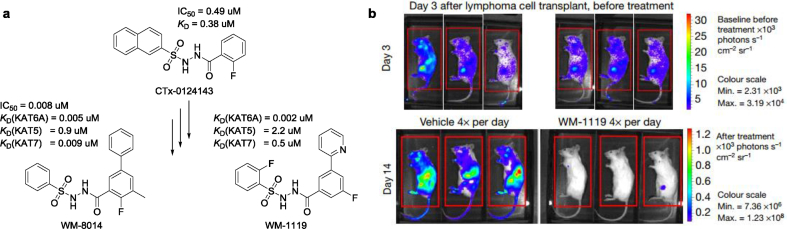
Lysine acetyltransferases (KATs) catalyze lysine acetylation, a reversible protein modification implicated in a wide variety of disease states. Histone acetyltransferases (HATs) comprise a KAT sub-class that acetylate specific lysines in histones, hence playing an important role in the regulation of chromatin organization and function. HATs are critical regulators of signaling in many diseases, including cancer. KAT6A (also known as monocytic leukemia zinc finger protein, MOZ) and KAT6B (also known as MORF and QKF) belong to the MYST family of HATs, that comprise KAT5-KAT8. They are the targets of chromosomal translocations identified in acute myeloid leukaemia and various cancers. It seems logical therefore that inhibition of KAT6A and KAT6B may provide a therapeutic benefit in cancer. Baell et al. discovered a new class of anti-cancer drug that can put cancer cells into a permanent sleep or senescence, using high-throughput screening followed by medicinal chemistry optimization, in-cell assays, biochemical assessment of target engagement, and tumour models in mice and fish. This research showed promise in arresting tumour growth in pre-clinical models of blood and liver cancers as well as delaying or stopping relapse without damaging the cells' DNA or some harmful side-effects caused by chemotherapy and radiotherapy.
赖氨酸乙酰转移酶(KATs)催化赖氨酸乙酰化,这是一种与多种疾病状态相关的可逆蛋白质修饰。组蛋白乙酰转移酶(HATs)是KAT的一个亚类,可使组蛋白中的特定赖氨酸乙酰化,因此在染色质组织和功能的调节中发挥重要作用。HATs是包括癌症在内的许多疾病信号传导的关键调节因子。KAT6A(也称为单核细胞白血病锌指蛋白,MOZ)和KAT6B(也称为MORF和QKF)属于HATs的MYST家族,该家族包括KAT5 - KAT8。它们是在急性髓性白血病和各种癌症中鉴定出的染色体易位的靶点。因此,抑制KAT6A和KAT6B可能对癌症具有治疗益处似乎是合乎逻辑的。贝尔等人通过高通量筛选,随后进行药物化学优化、细胞内试验、靶点结合的生化评估以及小鼠和鱼类肿瘤模型,发现了一类新的抗癌药物,该药物可使癌细胞进入永久休眠或衰老状态。这项研究在血液和肝癌的临床前模型中显示出抑制肿瘤生长的前景,以及延迟或阻止复发,而不会损害细胞DNA或产生化疗和放疗引起的一些有害副作用。