Division of Gynecologic Oncology, University of Alabama at Birmingham, Birmingham, Alabama.
Division of Clinical Immunology and Rheumatology, University of Alabama at Birmingham, Birmingham, Alabama.
Cancer. 2018 Dec 15;124(24):4657-4666. doi: 10.1002/cncr.31761. Epub 2018 Nov 13.
Ovarian cancer is poorly immunogenic; however, increased major histocompatibility complex class II (MHCII) expression correlates with improved immune response and prolonged survival in patients with ovarian cancer. The authors previously demonstrated that the histone deacetylase inhibitor entinostat increases MHCII expression on ovarian cancer cells. In the current study, they evaluated whether entinostat treatment and resultant MHCII expression would enhance beneficial immune responses and impair tumor growth in mice with ovarian cancer.
C57BL/6 mice bearing intraperitoneal ID8 tumors were randomized to receive entinostat 20 mg/kg daily versus control. Changes in messenger RNA (mRNA) expression of 46 genes important for antitumor immunity were evaluated using NanoString analysis, and multicolor flow cytometry was used to measure changes in protein expression and tumor-infiltrating immune cells.
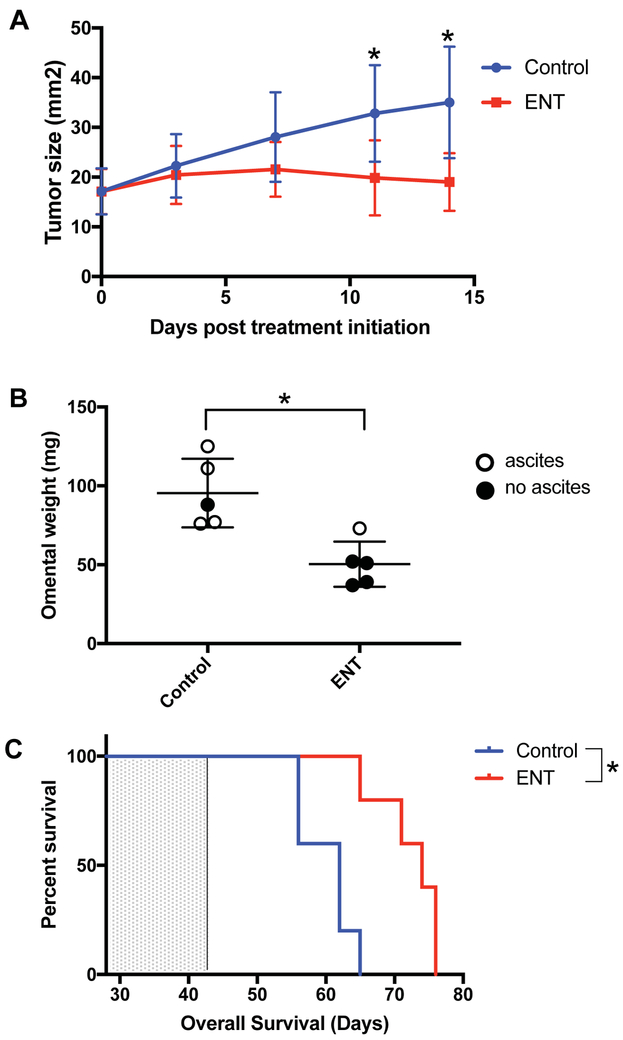
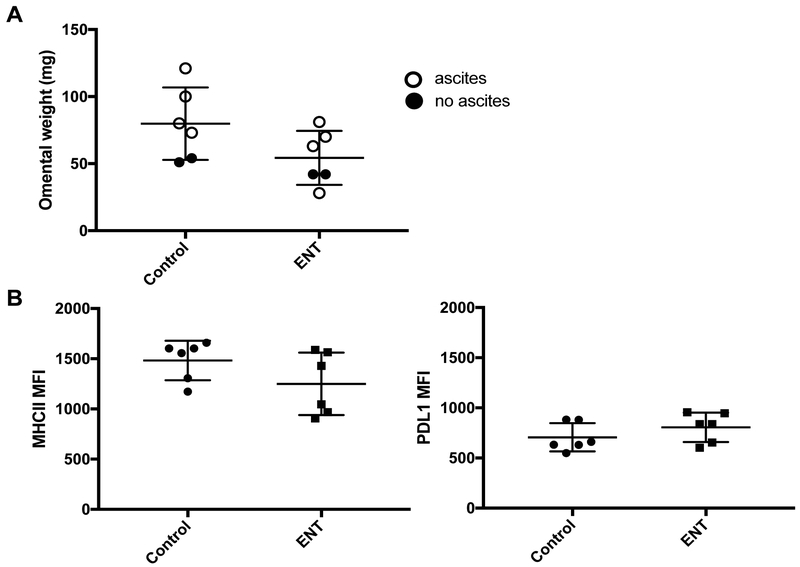
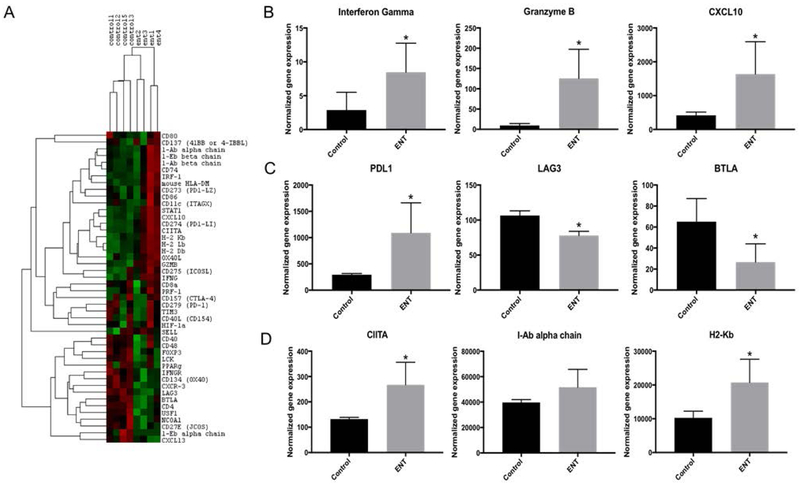
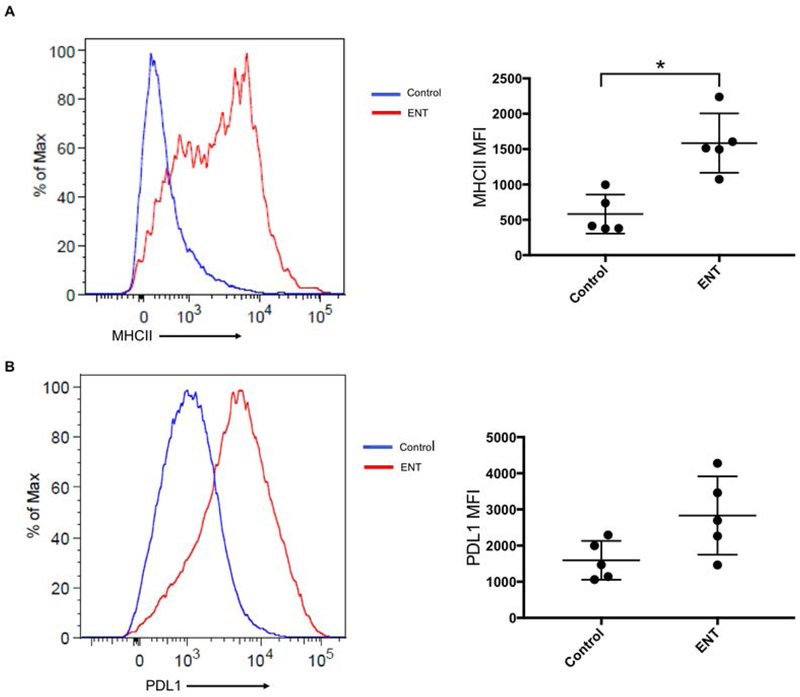
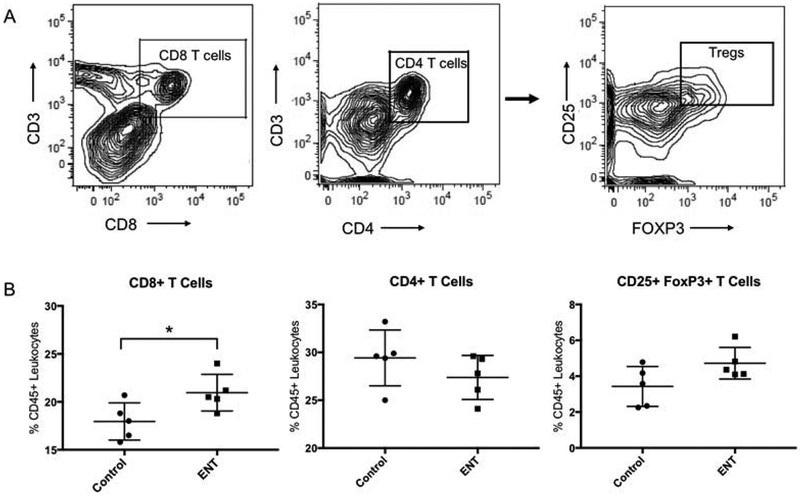
Entinostat treatment decreased the growth of both subcutaneously and omental ID8 tumors and prolonged survival in immunocompetent C57BL/6 mice. NanoString analysis revealed significant changes in mRNA expression in 21 of 46 genes, including increased expression of the MHCI pathway, the MHCII transactivator (CIITA), interferon γ, and granzyme B. C57BL/6 mice that received entinostat had increased MHCII expression on omental tumor cells and a higher frequency of tumor-infiltrating, CD8-positive T cells by flow cytometry. In immunocompromised mice, treatment with entinostat had no effect on tumor size and did not increase MHCII expression.
In the current murine ovarian cancer model, entinostat treatment enhances beneficial immune responses. Moreover, these antitumor effects of entinostat are dependent on an intact immune system. Future studies combining entinostat with checkpoint inhibitors or other immunomodulatory agents may achieve more durable antitumor responses in patients with ovarian cancer.
卵巢癌的免疫原性较差;然而,主要组织相容性复合体 II 类(MHCII)表达增加与卵巢癌患者免疫反应增强和生存时间延长相关。作者先前证明组蛋白去乙酰化酶抑制剂恩替诺特能增加卵巢癌细胞上 MHCII 的表达。在本研究中,他们评估了恩替诺特治疗和由此产生的 MHCII 表达是否会增强有益的免疫反应并抑制患有卵巢癌的小鼠的肿瘤生长。
携带腹腔 ID8 肿瘤的 C57BL/6 小鼠被随机分为接受恩替诺特 20mg/kg 每日治疗与对照组。使用 NanoString 分析评估 46 个与抗肿瘤免疫相关的重要基因的信使 RNA(mRNA)表达变化,并用多色流式细胞术测量蛋白表达和肿瘤浸润免疫细胞的变化。
恩替诺特治疗可降低皮下和网膜 ID8 肿瘤的生长,并延长免疫功能正常的 C57BL/6 小鼠的生存时间。NanoString 分析显示 46 个基因中的 21 个基因的 mRNA 表达发生显著变化,包括 MHC I 途径、MHCII 转录激活物(CIITA)、干扰素 γ 和颗粒酶 B 的表达增加。接受恩替诺特治疗的 C57BL/6 小鼠的网膜肿瘤细胞上 MHCII 表达增加,流式细胞术检测到肿瘤浸润的 CD8 阳性 T 细胞频率更高。在免疫功能低下的小鼠中,恩替诺特治疗对肿瘤大小没有影响,也不会增加 MHCII 的表达。
在当前的小鼠卵巢癌模型中,恩替诺特治疗增强了有益的免疫反应。此外,恩替诺特的这些抗肿瘤作用依赖于完整的免疫系统。未来将恩替诺特与检查点抑制剂或其他免疫调节药物联合使用,可能会在卵巢癌患者中实现更持久的抗肿瘤反应。