Institute of Enzymology, Research Centre for Natural Sciences, Hungarian Academy of Sciences, Budapest, Hungary.
Tesaro, Waltham, MA, USA.
Br J Cancer. 2018 Nov;119(11):1392-1400. doi: 10.1038/s41416-018-0312-6. Epub 2018 Nov 14.
Poly-ADP ribose polymerase (PARP) inhibitor-based cancer therapy selectively targets cells with deficient homologous recombination repair. Considering their long-term use in maintenance treatment, any potential mutagenic effect of PARP inhibitor treatment could accelerate the development of resistance or harm non-malignant somatic cells.
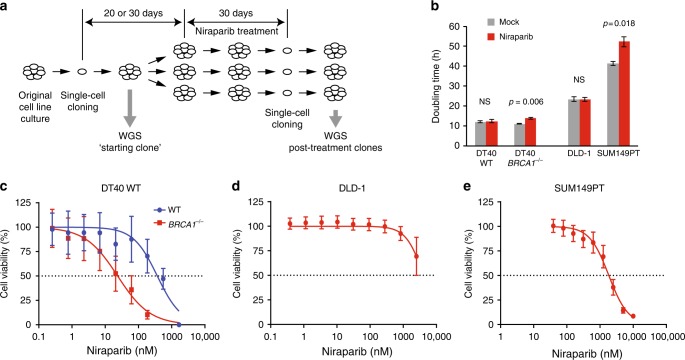
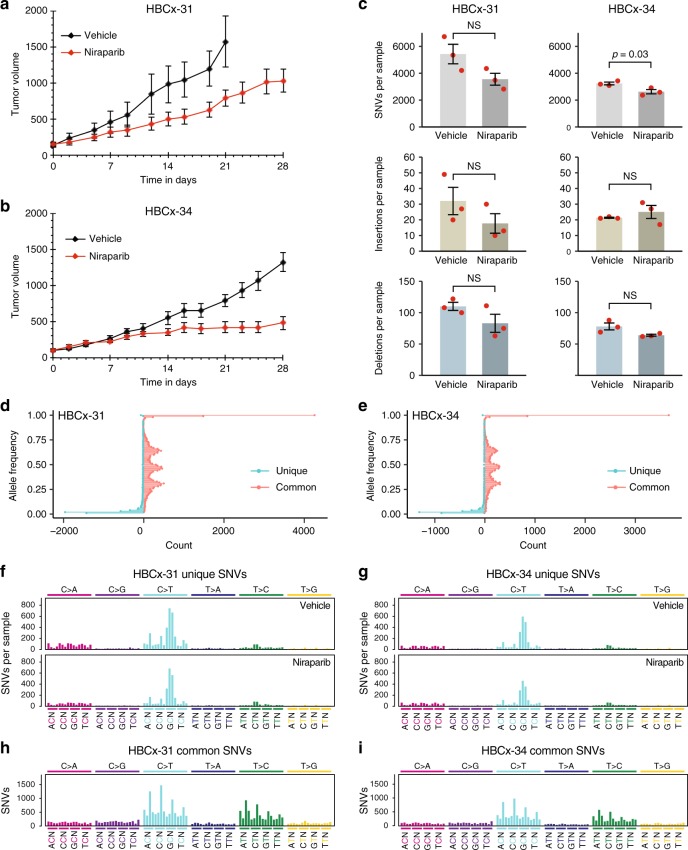
We tested the mutagenicity of long-term treatment with the PARP inhibitor niraparib using whole-genome sequencing of cultured cell clones and whole-exome sequencing of patient-derived breast cancer xenografts.
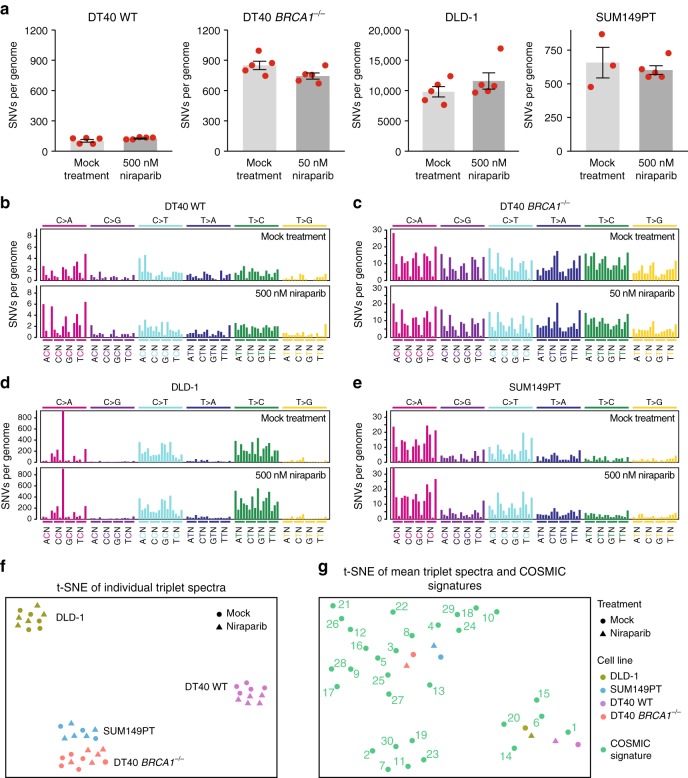
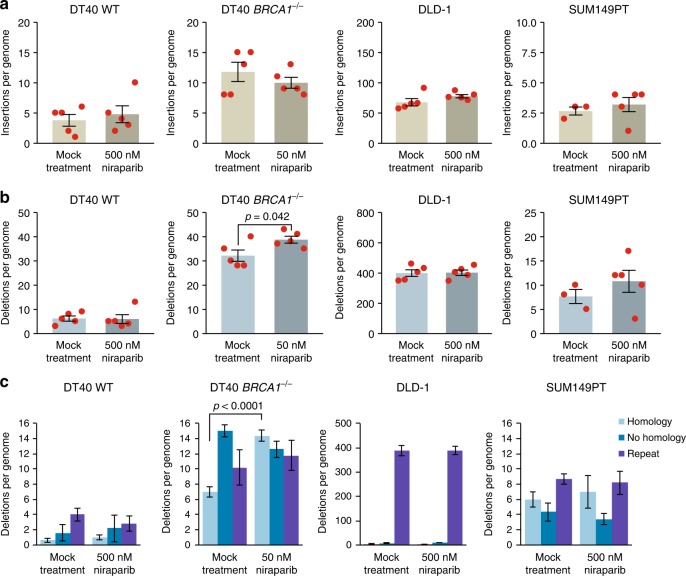
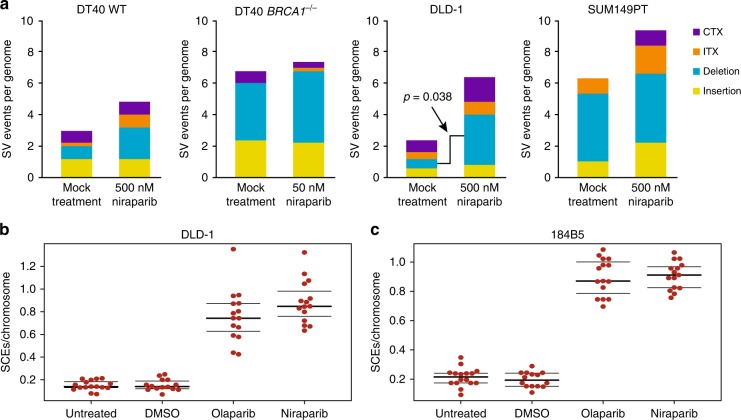
We observed no significant increase in the number and alteration in the spectrum of base substitutions, short insertions and deletions and genomic rearrangements upon niraparib treatment of human DLD-1 colon adenocarcinoma cells, wild-type and BRCA1 mutant chicken DT40 lymphoblastoma cells and BRCA1-defective SUM149PT breast carcinoma cells, except for a minor increase in specific deletion classes. We also did not detect any contribution of in vivo niraparib treatment to subclonal mutations arising in breast cancer-derived xenografts.
The results suggest that long-term inhibition of DNA repair with PARP inhibitors has no or only limited mutagenic effect. Mutagenesis due to prolonged use of PARP inhibitors in cancer treatment is therefore not expected to contribute to the genetic evolution of resistance, generate significant immunogenic neoepitopes or induce secondary malignancies.
聚 ADP 核糖聚合酶(PARP)抑制剂为基础的癌症治疗方法选择性地针对同源重组修复缺陷的细胞。考虑到它们在维持治疗中的长期使用,PARP 抑制剂治疗的任何潜在致突变作用都可能加速耐药性的发展或损害非恶性体细胞。
我们使用培养细胞克隆的全基因组测序和患者来源的乳腺癌异种移植物的全外显子组测序来测试 PARP 抑制剂尼拉帕利的长期治疗的致突变性。
我们观察到,在人类 DLD-1 结肠腺癌细胞、野生型和 BRCA1 突变型鸡 DT40 淋巴母细胞瘤细胞以及 BRCA1 缺陷型 SUM149PT 乳腺癌细胞中,尼拉帕利处理并没有导致碱基替换、短插入和缺失以及基因组重排的数量和谱发生显著增加,除了特定缺失类别的轻微增加。我们也没有检测到体内尼拉帕利治疗对乳腺癌衍生异种移植物中出现的亚克隆突变有任何贡献。
这些结果表明,长期抑制 DNA 修复的 PARP 抑制剂没有或只有有限的致突变作用。因此,PARP 抑制剂在癌症治疗中的长期使用导致的突变不太可能导致耐药性的遗传进化,产生显著的免疫原性新表位或诱导继发性恶性肿瘤。