Medlock Gareth, Stevenson Iain M, Johnstone Alan J
Trauma and Orthopaedic Unit, Aberdeen Royal Infirmary, Wards 212/213, Foresterhill, Aberdeen, AB25 2ZN, UK.
Strategies Trauma Limb Reconstr. 2018 Nov;13(3):119-128. doi: 10.1007/s11751-018-0323-0. Epub 2018 Nov 13.
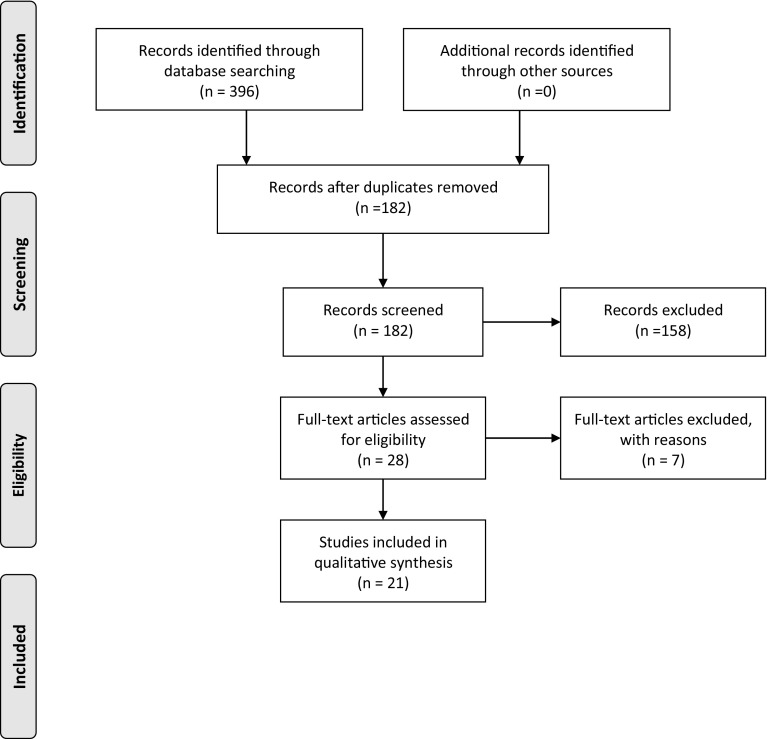
The majority of femoral fractures are surgically treated with intramedullary nails. Non-union rate is low but challenging and costly if it occurs. There have been encouraging results from the use of augmentative plating as a treatment for non-union of femoral fractures. We performed a systematic review of the literature to compare union rates, time to union and complications between exchange nailing and augmentative plating as a primary procedure following a diagnosis of femoral non-union following initial nailing. We found a total of 21 papers, which found the mean union rate of augmentative plating to be 99.8% compared to 74% (P = 2.05) found for exchange nailing. Times to union were comparable at 5.9 months for augmentative plating and 6.3 months for exchange nailing (P = 0.68916), and complication rate was 4% for augmentative plating compared to 20% for exchange nailing. From the evidence available, plate augmentation provides a more reliable union rate if used as the first operative intervention on a non-union of a femoral fracture compared to exchange nailing.Level of Evidence IV Systematic review of therapeutic studies.
大多数股骨骨折采用髓内钉进行手术治疗。骨不连发生率较低,但一旦发生则具有挑战性且成本高昂。使用增强钢板治疗股骨骨折骨不连已取得令人鼓舞的成果。我们对文献进行了系统综述,以比较在初次髓内钉固定后诊断为股骨骨不连时,更换髓内钉和增强钢板作为主要治疗方法的骨愈合率、骨愈合时间及并发症情况。我们共找到21篇论文,其中增强钢板的平均骨愈合率为99.8%,而更换髓内钉的骨愈合率为74%(P = 2.05)。增强钢板的骨愈合时间为5.9个月,更换髓内钉为6.3个月,二者相当(P = 0.68916),增强钢板的并发症发生率为4%,更换髓内钉为20%。根据现有证据,与更换髓内钉相比,若将钢板增强作为股骨骨折骨不连的首次手术干预措施,其骨愈合率更可靠。证据级别IV 治疗性研究的系统综述