Laboratory of Molecular Biology, Center for Cancer Research, National Cancer Institute, National Institutes of Health, Bethesda, MD 20892, USA.
Laboratory of Molecular Immunology, Faculty of Biology and Technion Integrated Cancer Center, Technion-Israel Institute of Technology, Haifa 3200003, Israel.
Toxins (Basel). 2018 Nov 14;10(11):470. doi: 10.3390/toxins10110470.
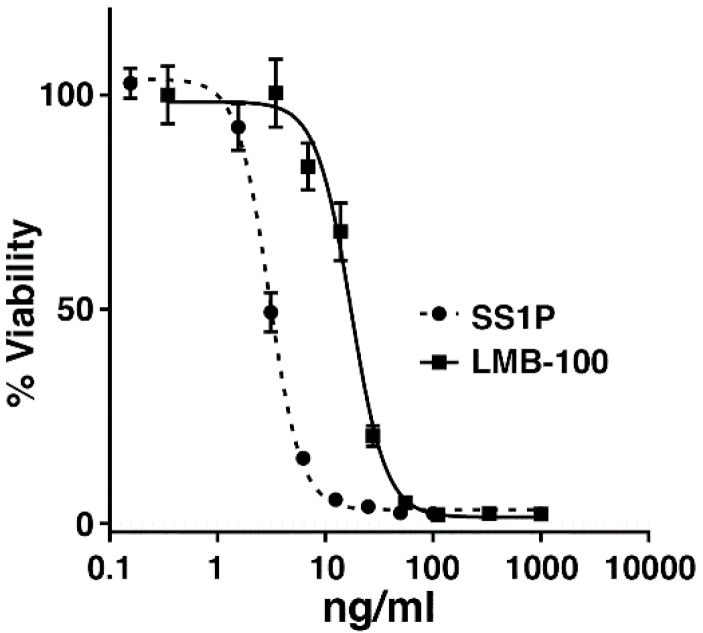
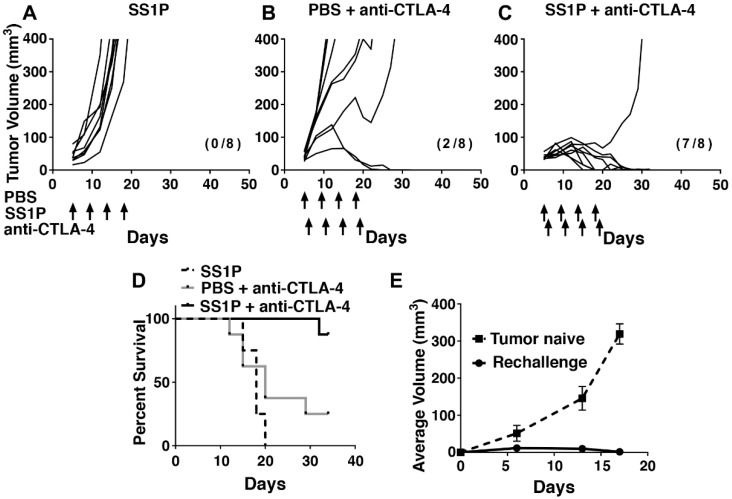
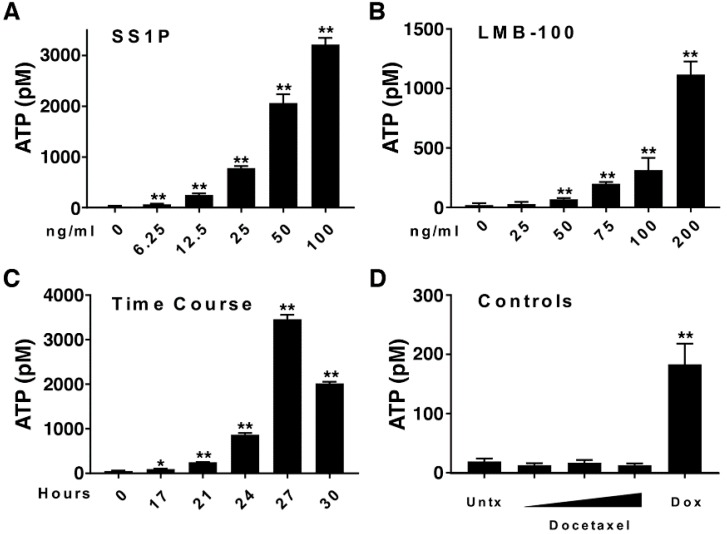
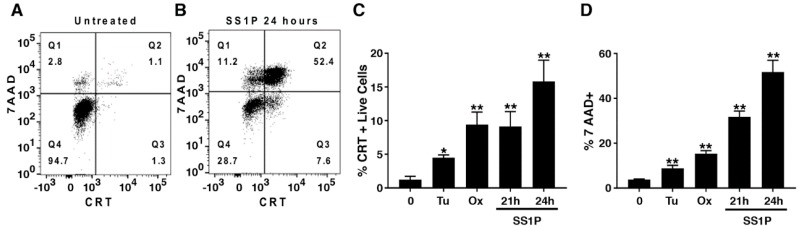
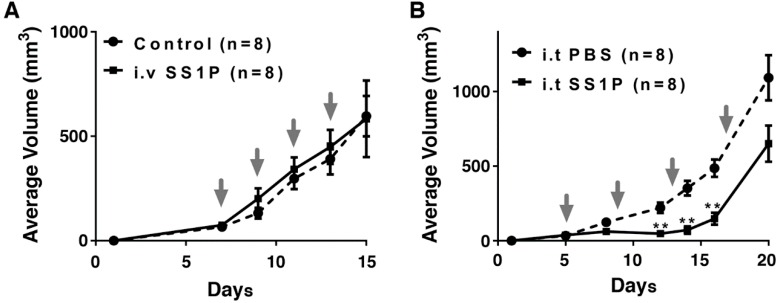
SS1P is an anti-mesothelin immunotoxin composed of a targeting antibody fragment genetically fused to a truncated fragment of Pseudomonas exotoxin A. Delayed responses reported in mesothelioma patients receiving SS1P suggest that anti-tumor immunity is induced. The goal of this study is to evaluate if SS1P therapy renders mesothelioma tumors more sensitive to cytotoxic T-lymphocyte-associated antigen 4 (CTLA-4) immune checkpoint blockade. We evaluated the ability of SS1P to induce adenosine triphosphate (ATP) secretion and calreticulin expression on the surface of AE17M mouse mesothelioma cells. Both properties are associated with immunogenic cell death. Furthermore, we treated these tumors with intra-tumoral SS1P and systemic CTLA-4. We found that SS1P increased the release of ATP from AE17M cells in a dose and time-dependent manner. In addition, SS1P induced calreticulin expression on the surface of AE17M cells. These results suggest that SS1P promotes immunogenic cell death and could sensitize tumors to anti-CTLA-4 based therapy. In mouse studies, we found that the combination of anti-CTLA-4 with intra-tumoral SS1P induced complete regressions in most mice and provided a statistically significant survival benefit compared to monotherapy. The surviving mice were protected from tumor re-challenge, indicating the development of anti-tumor immunity. These findings support the use of intra-tumoral SS1P in combination with anti-CTLA-4.
SS1P 是一种抗间皮素免疫毒素,由靶向抗体片段通过基因融合到假单胞菌外毒素 A 的截断片段组成。接受 SS1P 治疗的间皮瘤患者报告的延迟反应表明诱导了抗肿瘤免疫。本研究的目的是评估 SS1P 治疗是否使间皮瘤肿瘤对细胞毒性 T 淋巴细胞相关抗原 4(CTLA-4)免疫检查点阻断更敏感。我们评估了 SS1P 诱导 AE17M 小鼠间皮瘤细胞表面三磷酸腺苷(ATP)分泌和钙网蛋白表达的能力。这两种特性都与免疫原性细胞死亡有关。此外,我们用肿瘤内 SS1P 和全身 CTLA-4 治疗这些肿瘤。我们发现 SS1P 以剂量和时间依赖的方式增加 AE17M 细胞中 ATP 的释放。此外,SS1P 诱导 AE17M 细胞表面钙网蛋白的表达。这些结果表明 SS1P 促进免疫原性细胞死亡,并可能使肿瘤对基于抗 CTLA-4 的治疗敏感。在小鼠研究中,我们发现抗 CTLA-4 与肿瘤内 SS1P 的联合使用在大多数小鼠中诱导了完全消退,并与单药治疗相比提供了统计学上显著的生存益处。存活的小鼠免受肿瘤再挑战的保护,表明抗肿瘤免疫的发展。这些发现支持在肿瘤内使用 SS1P 联合抗 CTLA-4。