Department of Life Sciences, Toyo University, 1-1-1 Itakura, Oura, Gunma, 374-0193, Japan.
Department of Aquatic Bioscience, Graduate School of Agricultural and Life Sciences, The University of Tokyo, 1-1-1 Yayoi, Bunkyo, Tokyo, 113-8657, Japan.
Sci Rep. 2018 Nov 15;8(1):16855. doi: 10.1038/s41598-018-35303-9.
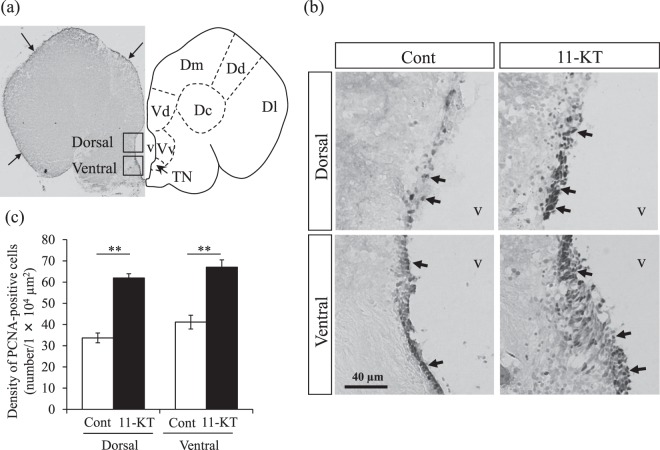
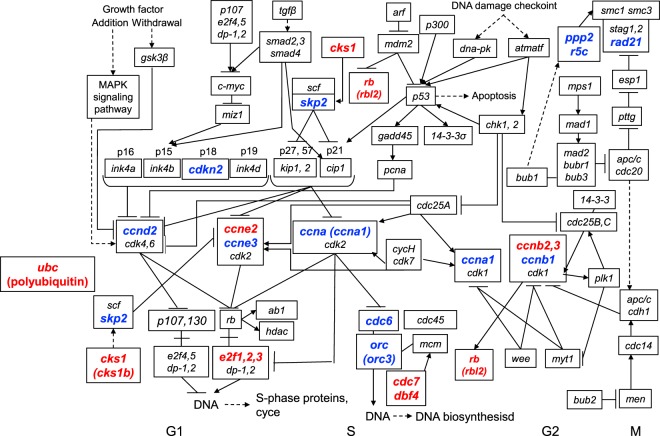
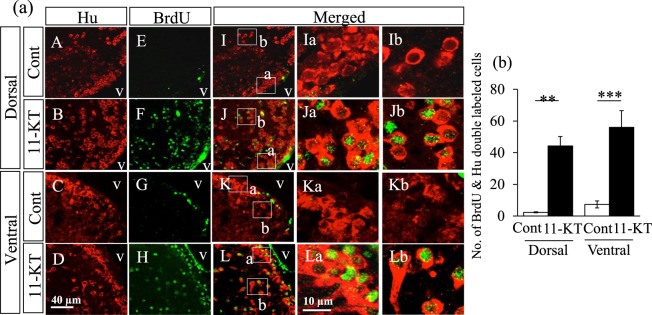
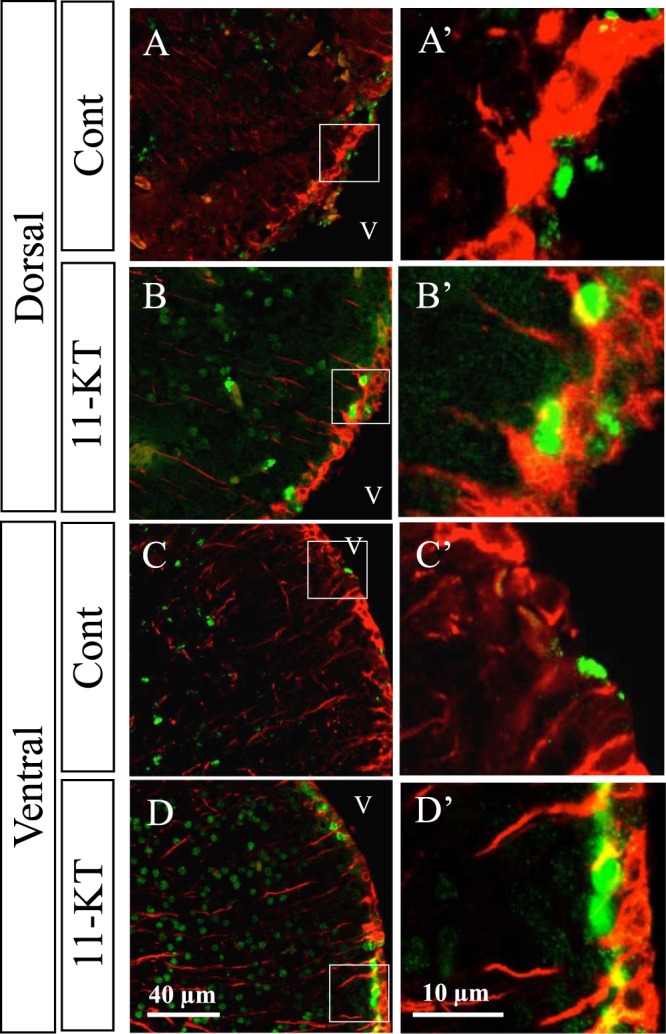
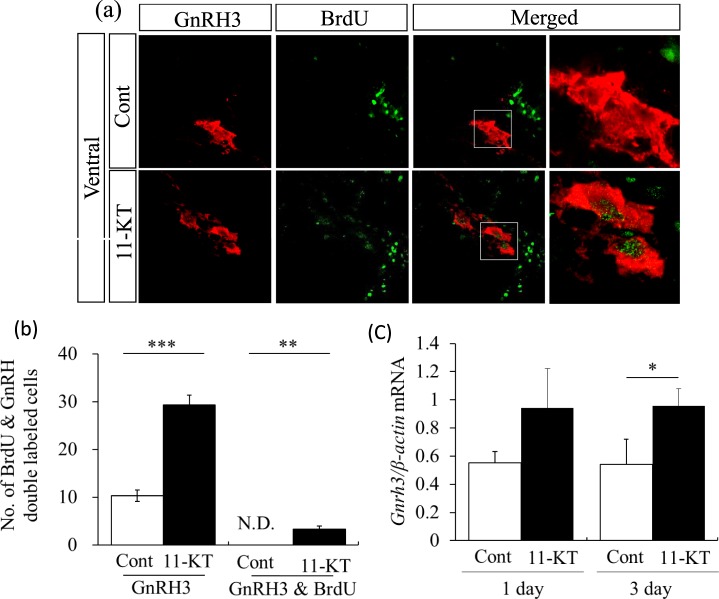
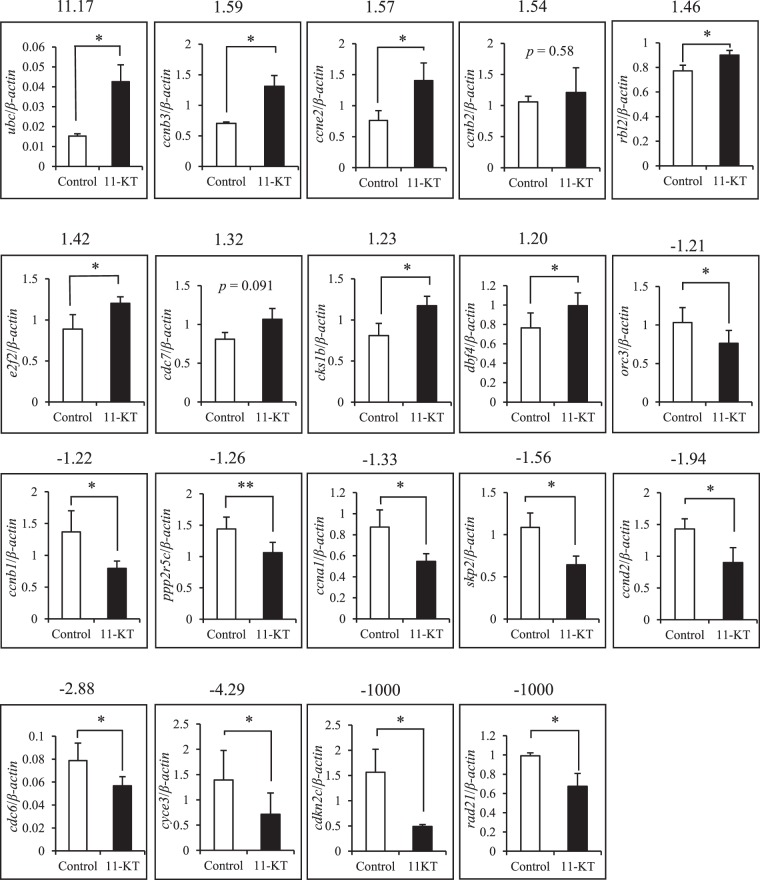
The neuroplastic mechanisms in the fish brain that underlie sex reversal remain unknown. Gonadotropin-releasing hormone 3 (GnRH3) neurons control male reproductive behaviours in Mozambique tilapia and show sexual dimorphism, with males having a greater number of GnRH3 neurons. Treatment with androgens such as 11-ketotestosterone (KT), but not 17β-estradiol, increases the number of GnRH3 neurons in mature females to a level similar to that observed in mature males. Compared with oestrogen, the effect of androgen on neurogenesis remains less clear. The present study examined the effects of 11-KT, a non-aromatizable androgen, on cellular proliferation, neurogenesis, generation of GnRH3 neurons and expression of cell cycle-related genes in mature females. The number of proliferating cell nuclear antigen-positive cells was increased by 11-KT. Simultaneous injection of bromodeoxyuridine and 11-KT significantly increased the number of newly-generated (newly-proliferated) neurons, but did not affect radial glial cells, and also resulted in newly-generated GnRH3 neurons. Transcriptome analysis showed that 11-KT modulates the expression of genes related to the cell cycle process. These findings suggest that tilapia could serve as a good animal model to elucidate the effects of androgen on adult neurogenesis and the mechanisms for sex reversal in the fish brain.
鱼类大脑中导致性别反转的神经可塑性机制尚不清楚。促性腺激素释放激素 3(GnRH3)神经元控制着莫桑比克罗非鱼的雄性生殖行为,并表现出性别二态性,即雄性 GnRH3 神经元的数量更多。雄激素(如 11-酮睾酮,KT)的处理,而不是雌激素(如 17β-雌二醇)的处理,会增加成熟雌性鱼类中 GnRH3 神经元的数量,使其达到与成熟雄性鱼类相当的水平。与雌激素相比,雄激素对神经发生的影响仍不太清楚。本研究检测了非芳香化雄激素 11-KT 对成熟雌性鱼类细胞增殖、神经发生、GnRH3 神经元生成和细胞周期相关基因表达的影响。11-KT 增加了增殖细胞核抗原阳性细胞的数量。同时注射溴脱氧尿苷和 11-KT 显著增加了新生成(新增殖)神经元的数量,但不影响放射状胶质细胞,也导致新生成 GnRH3 神经元。转录组分析表明,11-KT 调节与细胞周期过程相关的基因的表达。这些发现表明,罗非鱼可以作为一种很好的动物模型,用于阐明雄激素对成年神经发生和鱼类大脑性别反转机制的影响。