Peking University People's Hospital, Peking University Institute of Hematology, Beijing Key Laboratory of Hematopoietic Stem Cell Transplantation, Beijing, China.
Beijing Hightrust Diagnostics, Co., Ltd, Beijing, China.
Front Immunol. 2018 Nov 1;9:2528. doi: 10.3389/fimmu.2018.02528. eCollection 2018.
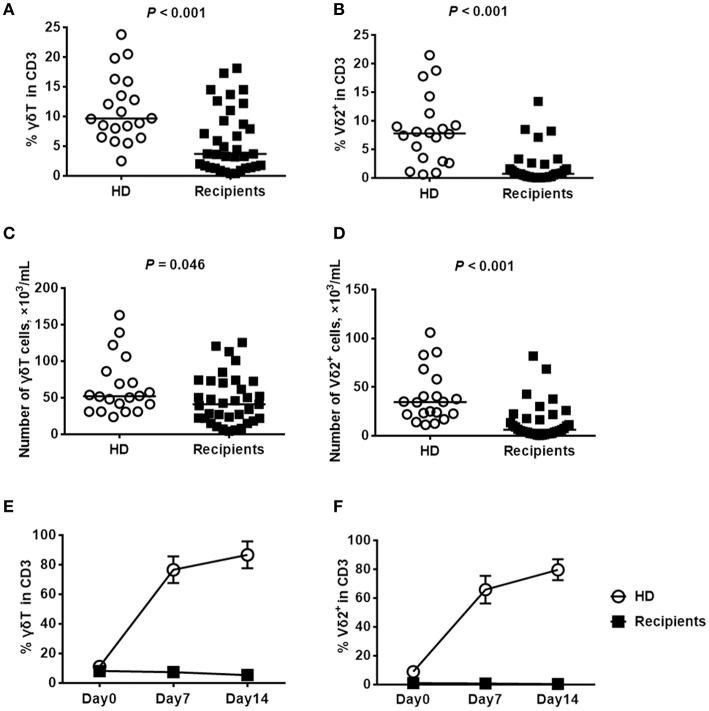
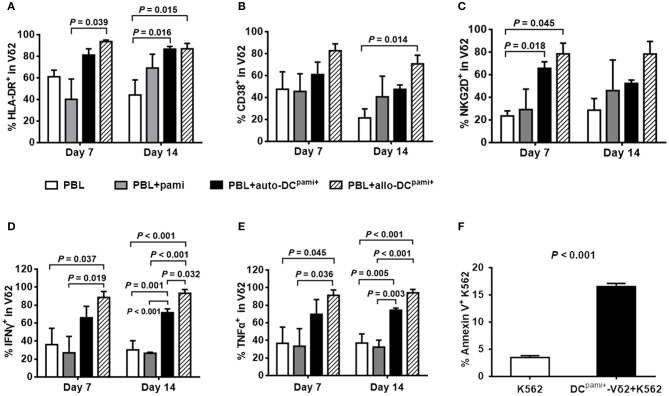
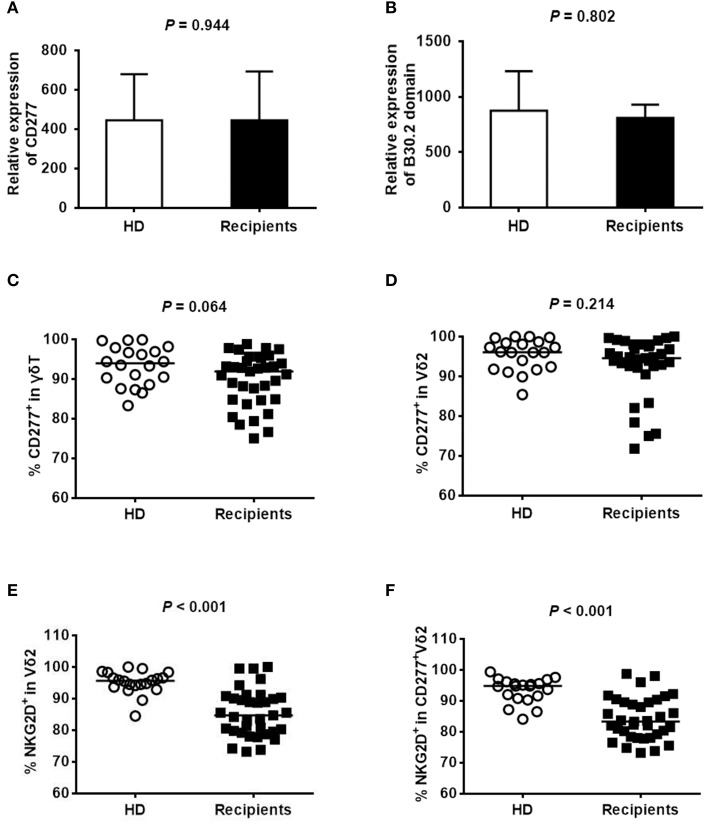
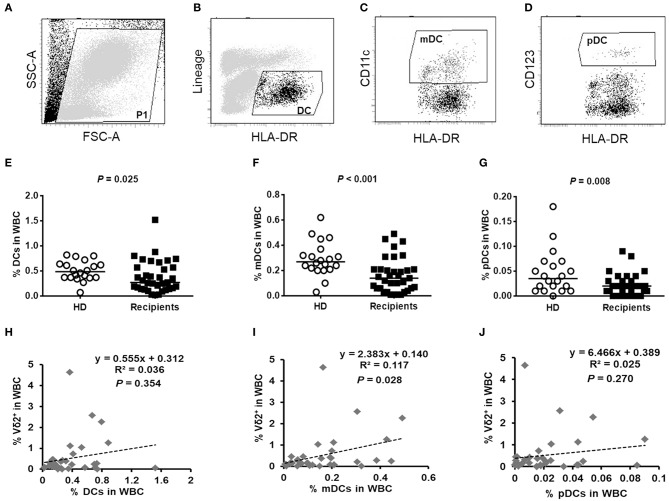
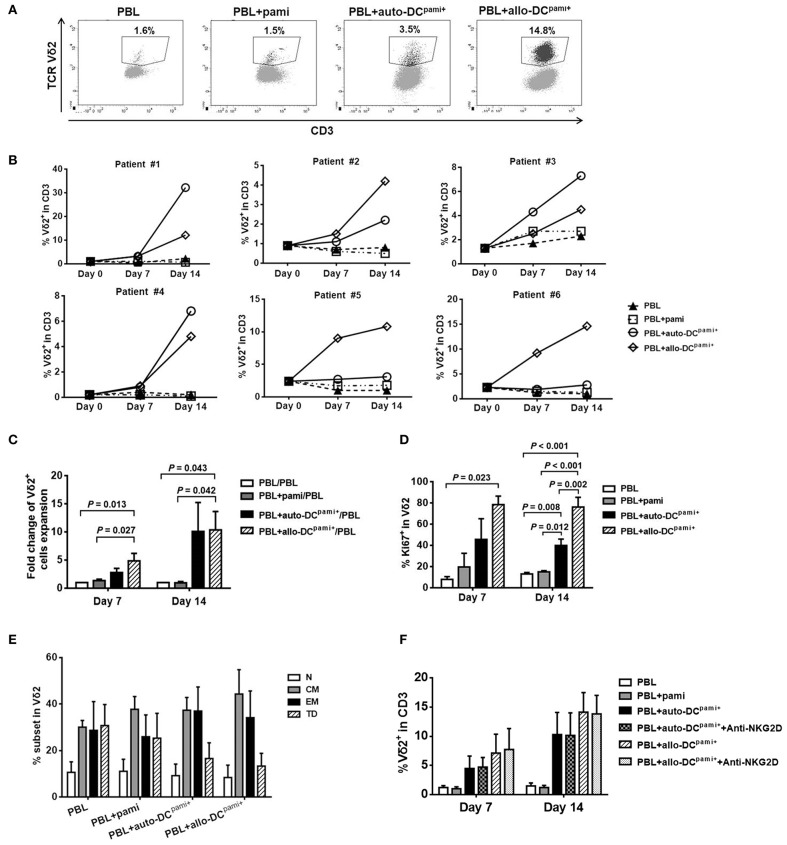
γδ T cells perform antitumor and antiviral effector functions and are involved in both innate and adaptive immunity. Vδ2 T cells represent the predominant γδ T subset in the peripheral blood of healthy subjects. Vδ2 T cells can be selectively activated and expanded by phosphoantigens (pAgs). Dendritic cells (DCs), as potent antigen-presenting cells, are capable of mediating pAgs-triggered Vδ2 T cells expansion. However, the association between DCs and Vδ2 T cell recovery in the context of hematopoietic stem cell transplantation (HSCT) remains unclear. We previously demonstrated that the recovery of Vδ2 T cells was hampered and inversely correlated with Epstein-Barr virus (EBV) reactivation in patients undergoing haploidentical HSCT (haploHSCT). Whether Vδ2 T cells from haploHSCT recipients can be expanded by stimulation with aminobisphosphonates or pAg-presenting DCs is of particular interest. Herein, we showed that Vδ2 T cells recovered after haploHSCT failed to expand after stimulation with pamidronate. In addition, we found that the recovery of DC subsets was significantly decreased, and the concentration of myeloid DCs (mDCs) correlated significantly with Vδ2 T cell recovery in the setting of allogeneic HSCT. Furthermore, coculture of peripheral lymphocytes from recipients with monocyte-derived and pamidronate-pretreated autologous or allogeneic DCs induced the successful expansion of Vδ2 T cells. Of note, allogeneic DCs from third-party donors stimulated a significantly higher efficiency of Vδ2 T cell expansion than autologous DCs. More importantly, the memory features were well-retained and the cytotoxic cytokines-production capacity was significantly enhanced in the expanded Vδ2 T cells. Taken together, these results suggest that the frequency and function of DCs are critical for the recovery of Vδ2 T cells after allogeneic HSCT. The fact that vigorous expansions of Vδ2 T cells were induced by phosphoantigen-pretreated DCs, especially by allogeneic third-party DCs, provides additional options for the development of individualized immunotherapy strategies that utilize the anti-viral and anti-leukemic effects of γδ T cells in the context of hematopoietic transplantation.
γδ T 细胞具有抗肿瘤和抗病毒效应功能,参与固有免疫和适应性免疫。Vδ2 T 细胞是健康受试者外周血中主要的 γδ T 亚群。磷酸抗原 (pAg) 可选择性激活和扩增 Vδ2 T 细胞。树突状细胞 (DC) 作为有效的抗原提呈细胞,能够介导 pAg 触发的 Vδ2 T 细胞扩增。然而,在造血干细胞移植 (HSCT) 背景下,DC 与 Vδ2 T 细胞恢复之间的关联尚不清楚。我们之前的研究表明,在接受半相合 HSCT(haploHSCT)的患者中,Vδ2 T 细胞的恢复受到阻碍,与 EBV 再激活呈负相关。haploHSCT 受者的 Vδ2 T 细胞是否可以通过刺激氨基双膦酸盐或 pAg 呈递 DC 来扩增,这是一个特别感兴趣的问题。在此,我们发现haploHSCT 后恢复的 Vδ2 T 细胞在 pamidronate 刺激后未能扩增。此外,我们发现,在异基因 HSCT 中,DC 亚群的恢复明显减少,髓样 DC(mDC)的浓度与 Vδ2 T 细胞的恢复显著相关。此外,受体的外周淋巴细胞与单核细胞衍生的和 pamidronate 预处理的自体或同种异体 DC 共培养可诱导 Vδ2 T 细胞的成功扩增。值得注意的是,来自第三方供体的同种异体 DC 刺激 Vδ2 T 细胞扩增的效率明显高于自体 DC。更重要的是,在扩增的 Vδ2 T 细胞中保留了记忆特征,并且细胞毒性细胞因子的产生能力得到了显著增强。总之,这些结果表明,DC 的频率和功能对异基因 HSCT 后 Vδ2 T 细胞的恢复至关重要。事实上,磷酸抗原预处理的 DC,特别是同种异体第三方 DC,可强烈扩增 Vδ2 T 细胞,为在造血移植背景下利用 γδ T 细胞的抗病毒和抗白血病作用开发个体化免疫治疗策略提供了更多选择。