Belvederesi Chiara, Thompson Megan S, Komers Petr E
MSES Inc, Canada.
Heliyon. 2018 Nov 7;4(11):e00901. doi: 10.1016/j.heliyon.2018.e00901. eCollection 2018 Nov.
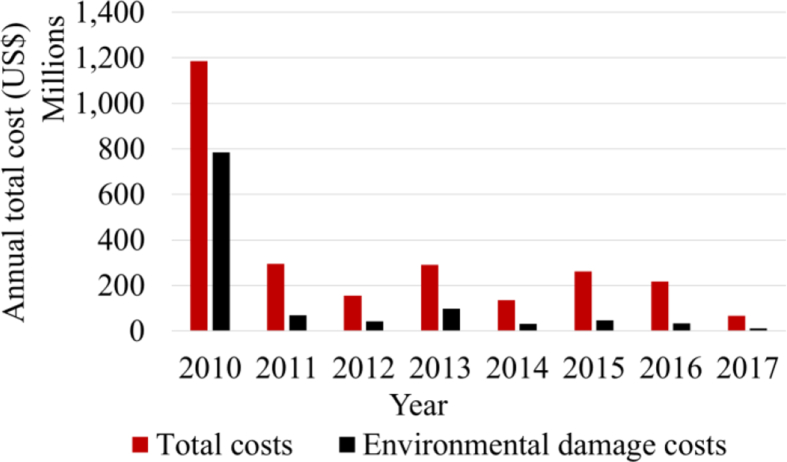
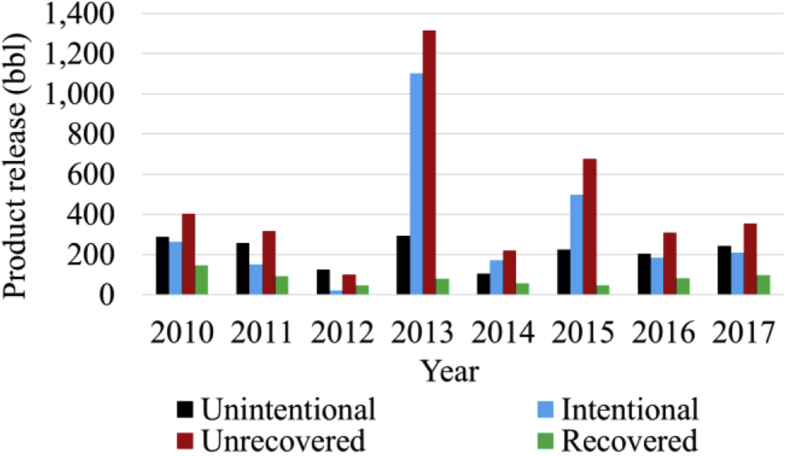
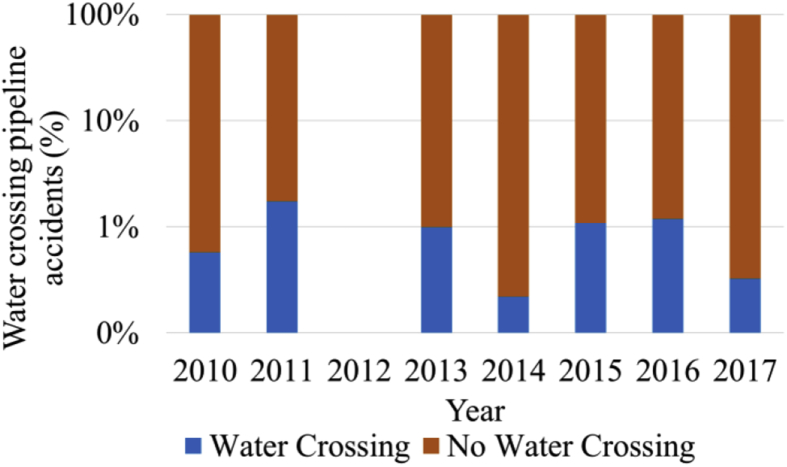
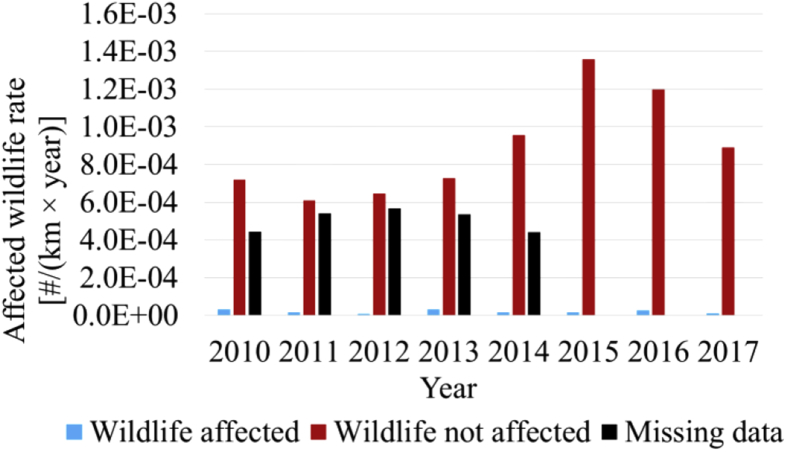
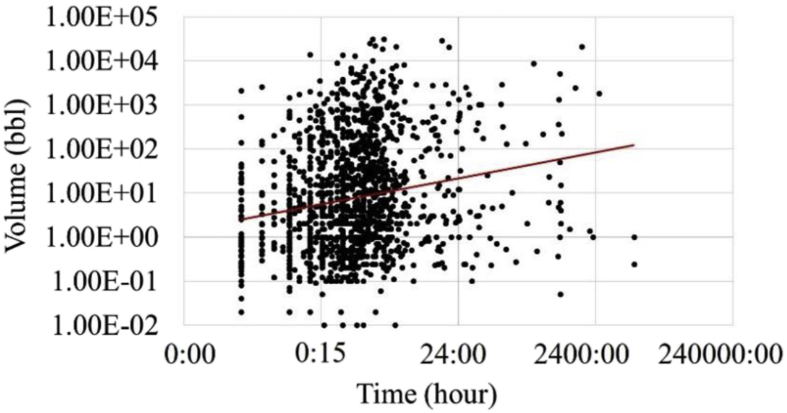
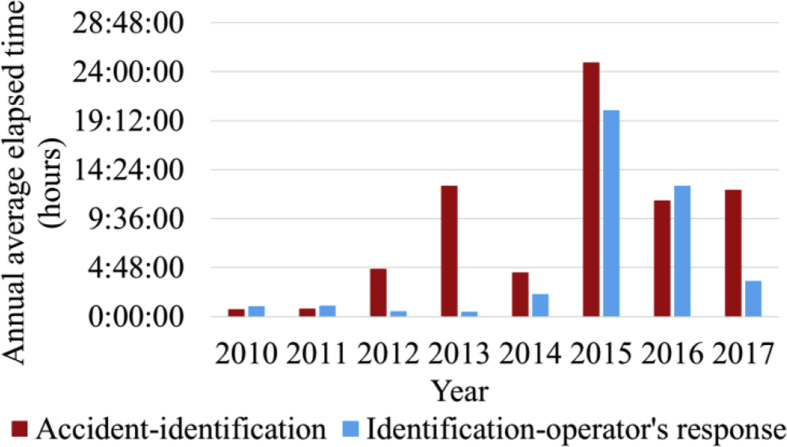
Although pipelines are the safest method to transport fuels, they are associated with risks due to failures, leading to significant negative consequences. This paper investigates pipeline accident data provided by PHMSA (Pipeline and Hazardous Material Safety Administration) between 2010 and 2017, with a focus on environmental consequences of hazardous liquid pipeline accidents. The average amount of released product, the average time elapsed between the accident, the emergency response from the oil company, and the average costs of environmental remediation are estimated. The impact on soil, water, and wildlife is investigated for frequency and magnitude, where possible. It was found that, on average, 85% of product released after an accident remained unrecovered, 53% of accidents led to soil contamination, 41% of accidents impacted environmentally sensitive areas, and 92% of water crossing pipelines involved in accidents were uncased. From an annual average total cost of USD 326 million, annual average environmental damage and remediation costs were USD 140 million. This analysis assists in the diagnosis of challenges that might be addressed with improved maintenance and inspection programs, especially for pipelines at higher risk of negative environmental consequences. Finally, the performance of safety management systems should be improved to efficiently respond to emergencies.
尽管管道是运输燃料最安全的方式,但由于故障,它们仍存在风险,会导致重大负面后果。本文调查了管道与危险物品安全管理局(PHMSA)在2010年至2017年期间提供的管道事故数据,重点关注危险液体管道事故的环境后果。估算了事故发生后释放产品的平均数量、事故发生至石油公司应急响应之间的平均时间以及环境修复的平均成本。在可能的情况下,研究了对土壤、水和野生动物的影响频率和程度。结果发现,平均而言,事故发生后85%释放的产品仍未回收,53%的事故导致土壤污染,41%的事故影响了环境敏感区域,92%发生事故的穿越水域管道没有套管。在每年平均总成本3.26亿美元中,年度平均环境破坏和修复成本为1.4亿美元。该分析有助于诊断通过改进维护和检查计划可能解决的挑战,特别是对于具有负面环境后果高风险的管道。最后,应改进安全管理系统的性能,以有效应对紧急情况。