Ishida Kazuyuki, Yamashita Rina, Osakabe Mitsumasa, Uesugi Noriyuki, Yamada Noriyuki, Nitta Hiroyuki, Fujishima Fumiyoshi, Motoi Fuyuhiko, Suzuki Hiroyoshi, Shimamura Hiromune, Noda Yutaka, Sawai Takashi, Unno Michiaki, Sasano Hironobu, Sasaki Akira, Sugai Tamotsu
From the Departments of Molecular Diagnostic Pathology and.
Surgery, Iwate Medical University, Morioka.
Pancreas. 2019 Jan;48(1):36-42. doi: 10.1097/MPA.0000000000001199.
The aim of this study was to identify an association of pancreatic anaplastic carcinoma (APC) with the epithelial-mesenchymal transition (EMT).
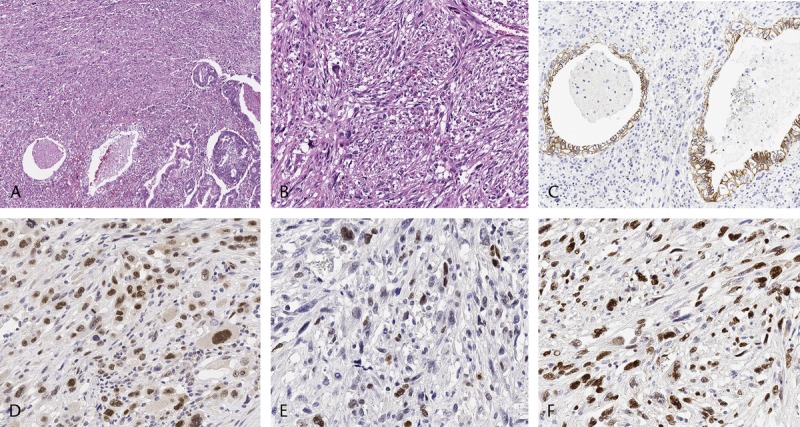
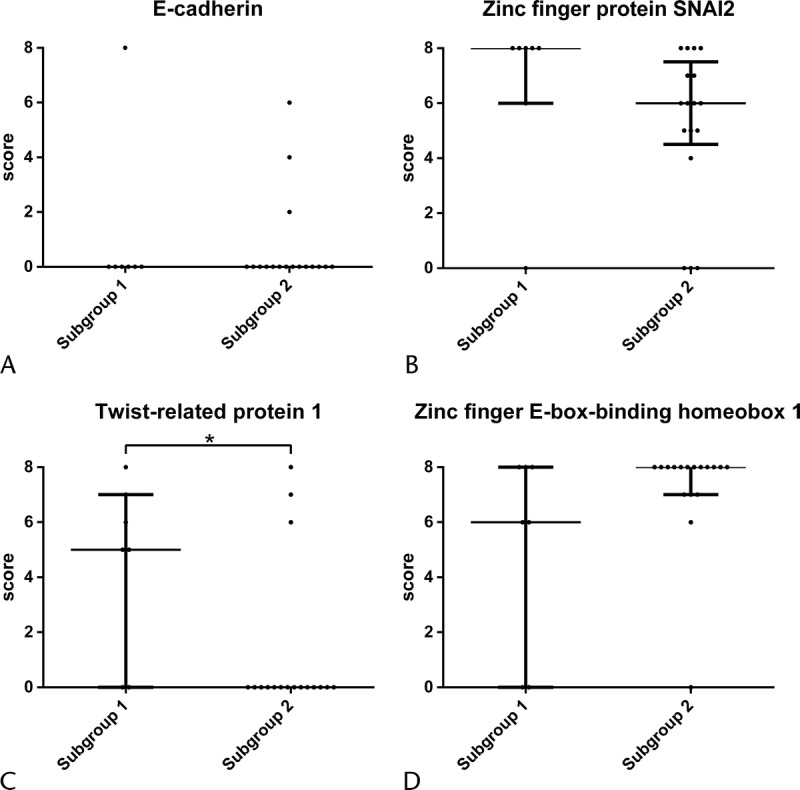
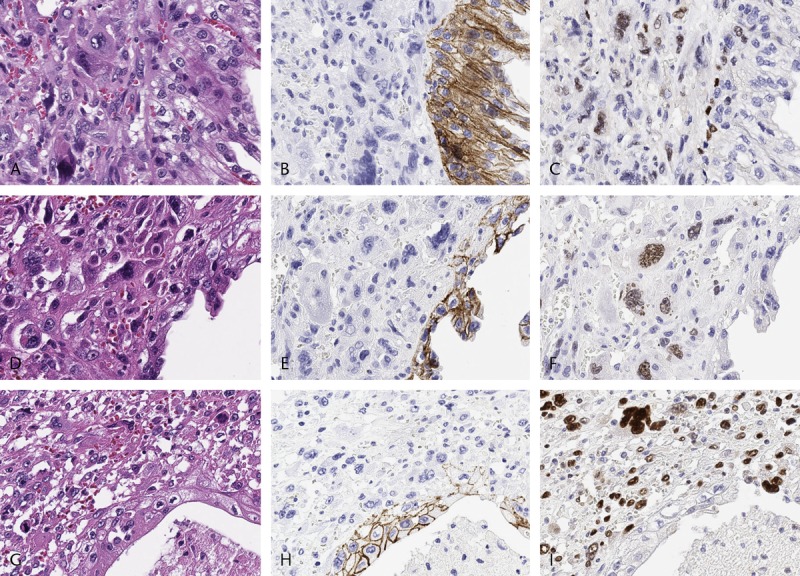
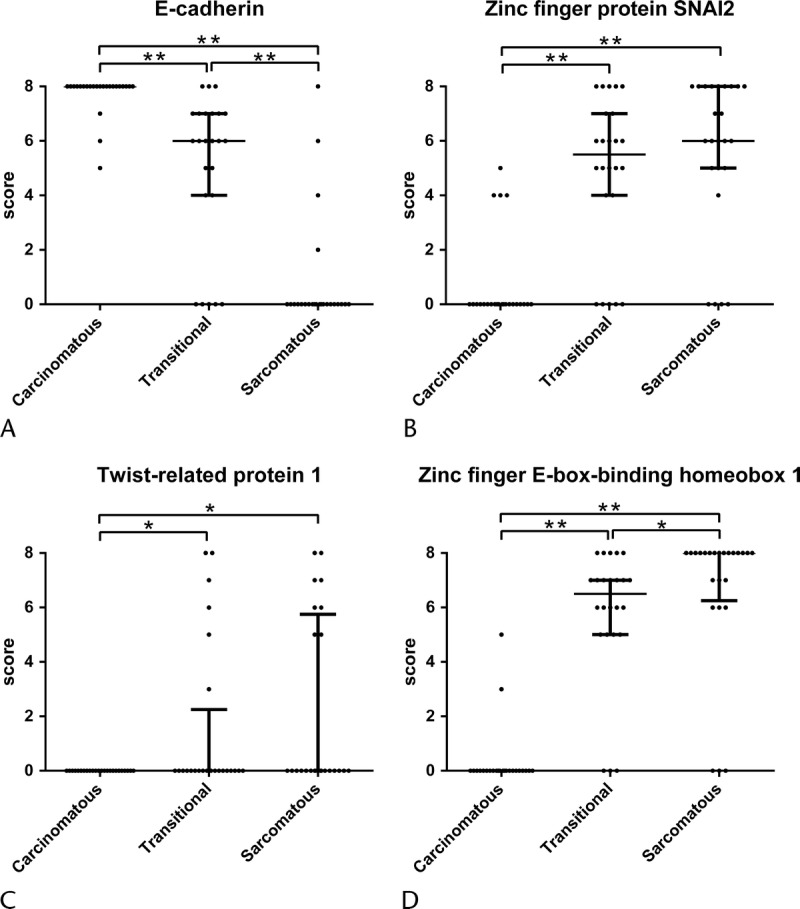
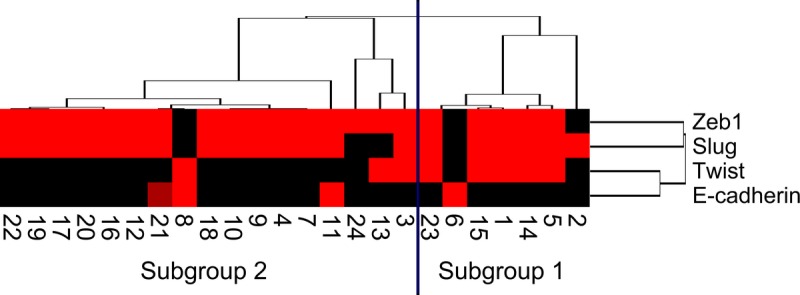
Resected APCs (n = 24) were examined to assess components of APCs, including carcinomatous, transitional, and sarcomatous regions. Analysis was performed based on the immunoreactivity of E-cadherin and 3 EMT-related proteins: Slug (zinc finger protein SNAI2), Twist (Twist-related protein 1), and Zeb1 (zinc finger E-box-binding homeobox 1). Expression score was determined based on staining intensity and stained area of the target cells. Finally, we performed a hierarchical clustering based on the expression pattern of E-cadherin and EMT-related proteins of the sarcomatous component.
The expression score of E-cadherin decreased in the order of sarcomatous > transitional > carcinomatous components (P < 0.01). Although there were significant differences in the immunohistochemical scores of Slug, Twist, and Zeb1 between carcinomatous and transitional components (P < 0.01), the significant difference in immunohistochemical score of Zeb1 between transitional and sarcomatous components was found (P < 0.05). Furthermore, APCs were divided into 2 subgroups based on the expression patterns of E-cadherin and EMT-related proteins (hierarchical clustering analysis). Consequently, these subgroups were distinguished by Twist expression.
Epithelial-mesenchymal transition plays an essential role in the pathogenesis of APC.
本研究旨在确定胰腺间变性癌(APC)与上皮-间质转化(EMT)之间的关联。
对24例切除的APC进行检查,以评估APC的组成部分,包括癌性、过渡性和肉瘤样区域。基于E-钙黏蛋白和3种EMT相关蛋白(锌指蛋白SNAI2、Twist相关蛋白1和锌指E盒结合同源框1)的免疫反应性进行分析。根据靶细胞的染色强度和染色面积确定表达评分。最后,我们基于肉瘤样成分的E-钙黏蛋白和EMT相关蛋白的表达模式进行了层次聚类。
E-钙黏蛋白的表达评分按肉瘤样>过渡性>癌性成分的顺序降低(P<0.01)。虽然癌性和过渡性成分之间Slug、Twist和Zeb1的免疫组化评分存在显著差异(P<0.01),但过渡性和肉瘤样成分之间Zeb1的免疫组化评分也存在显著差异(P<0.05)。此外,根据E-钙黏蛋白和EMT相关蛋白的表达模式(层次聚类分析),APC被分为2个亚组。因此,这些亚组通过Twist表达得以区分。
上皮-间质转化在APC的发病机制中起重要作用。