Tsinghua-Berkeley Shenzhen Institute, Tsinghua University, Shenzhen, Guangdong, PR China.
Hefei National Laboratory for Physical Sciences at Microscale and School of Life Sciences, University of Science and Technology of China, Hefei, Anhui, PR China.
Cell Death Dis. 2018 Nov 19;9(12):1147. doi: 10.1038/s41419-018-1177-6.
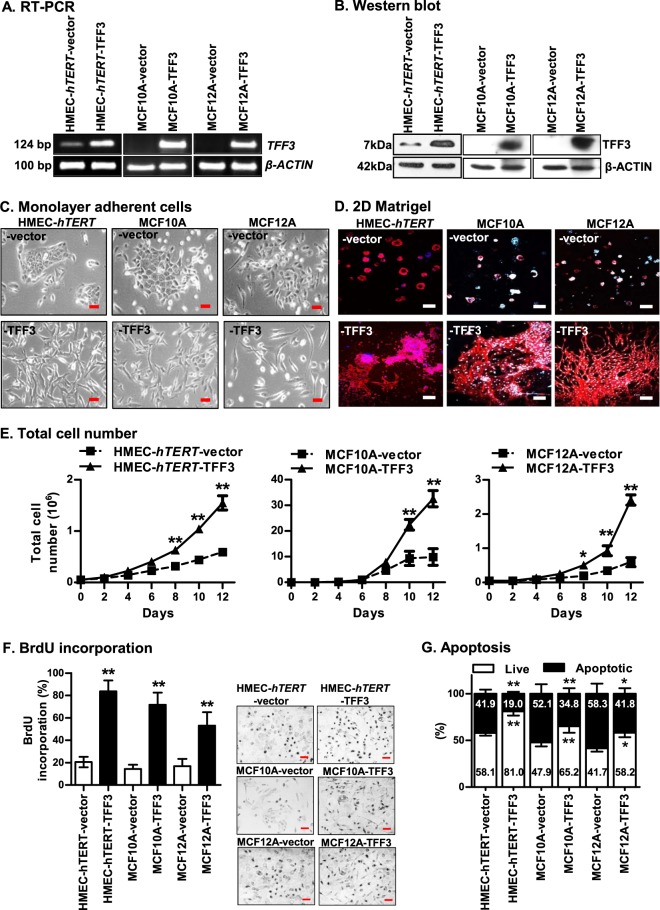
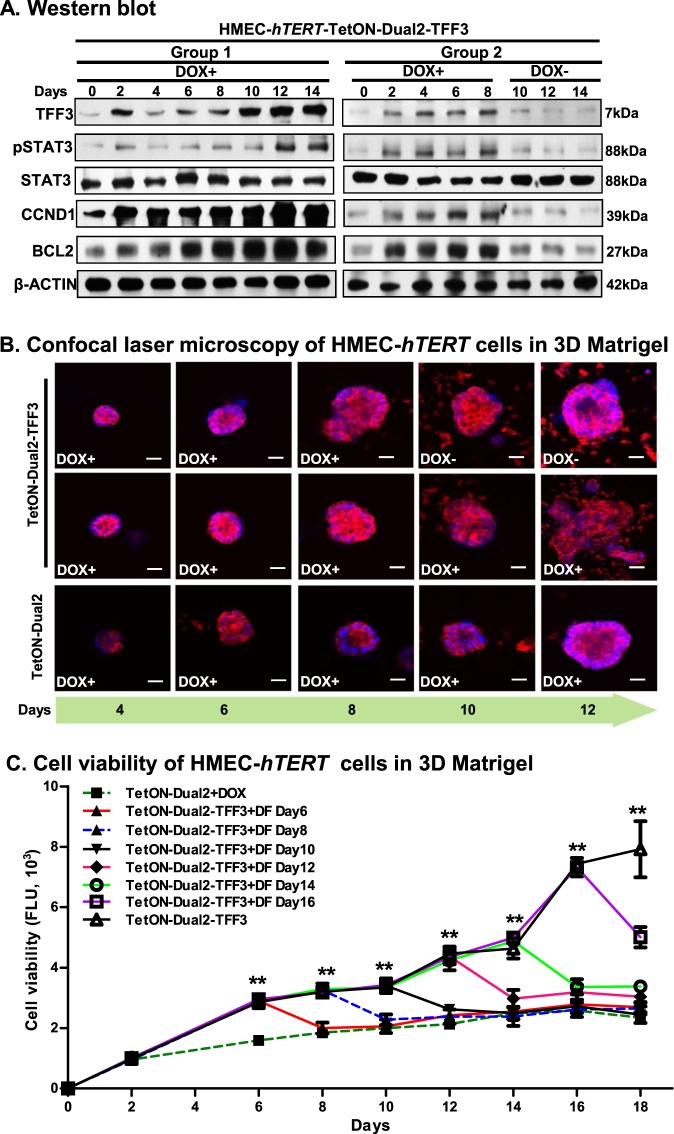
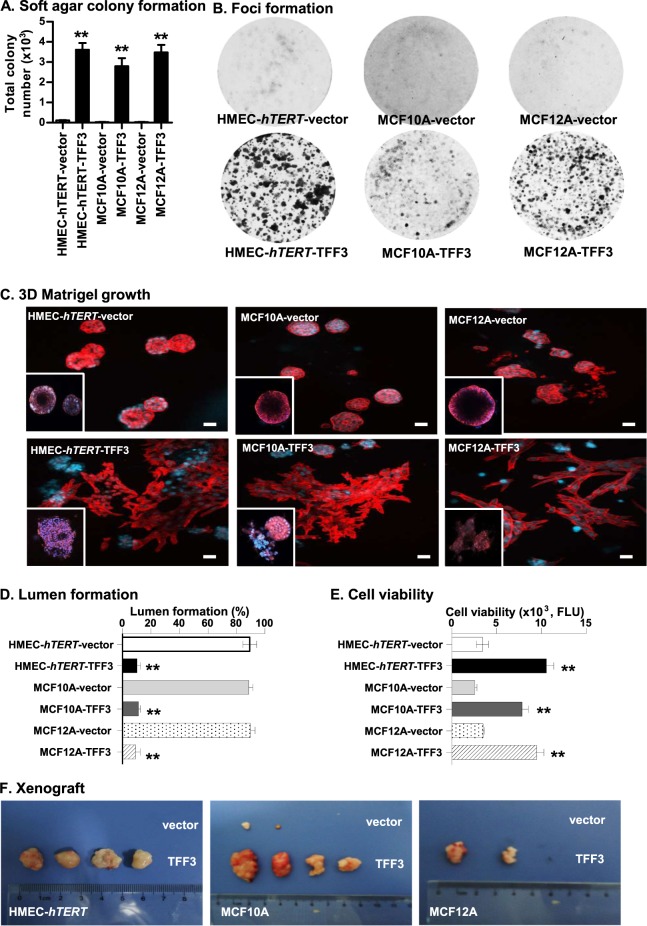
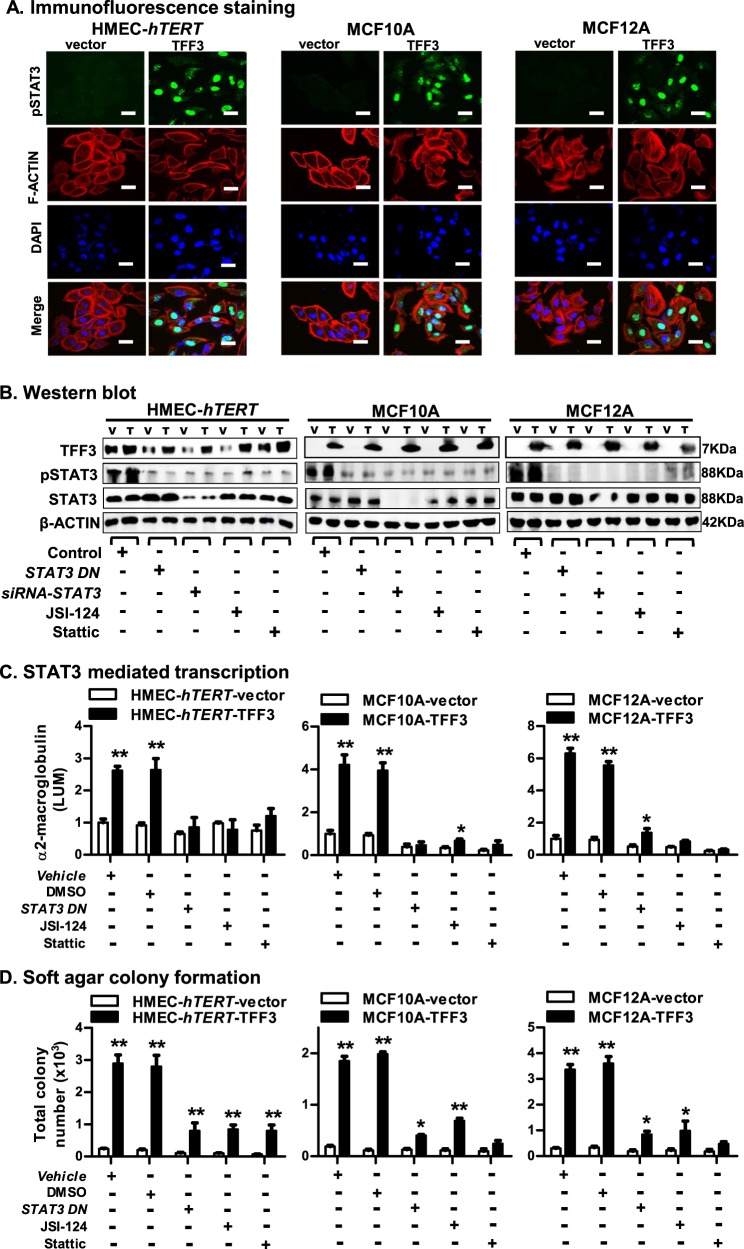
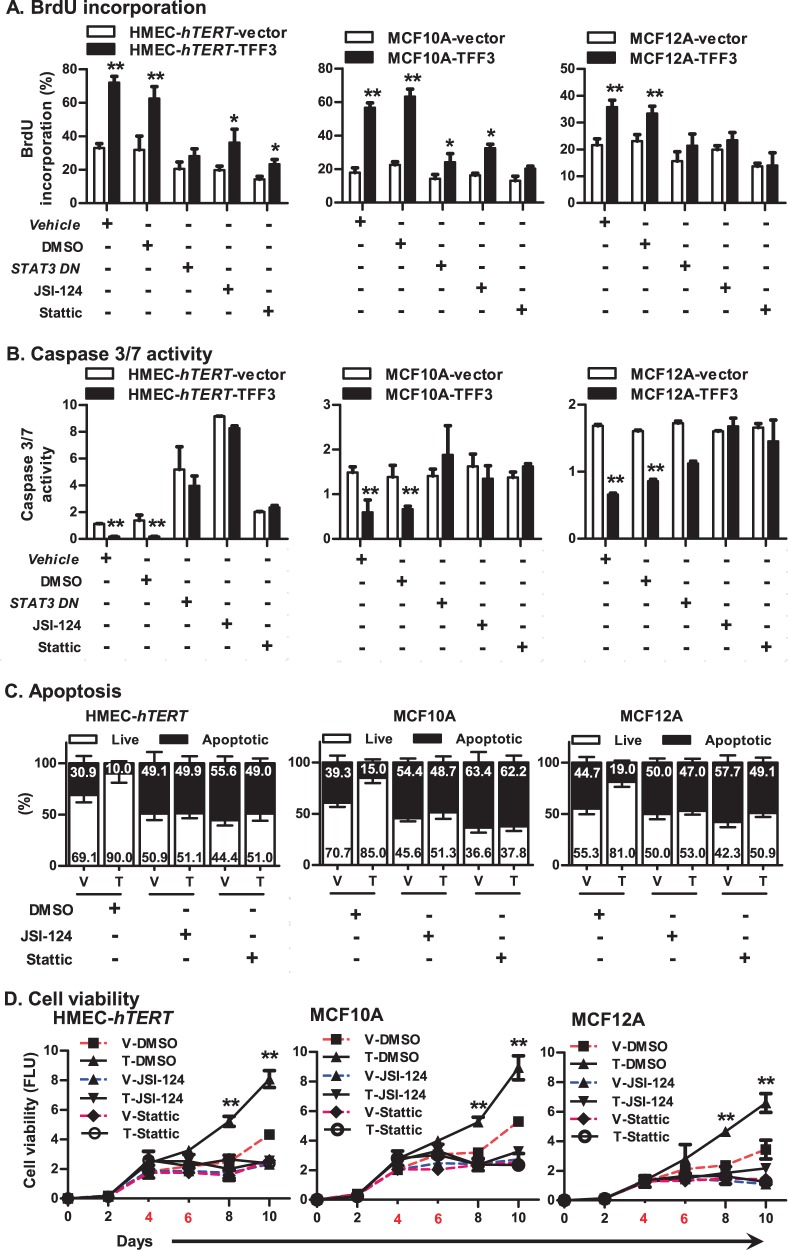
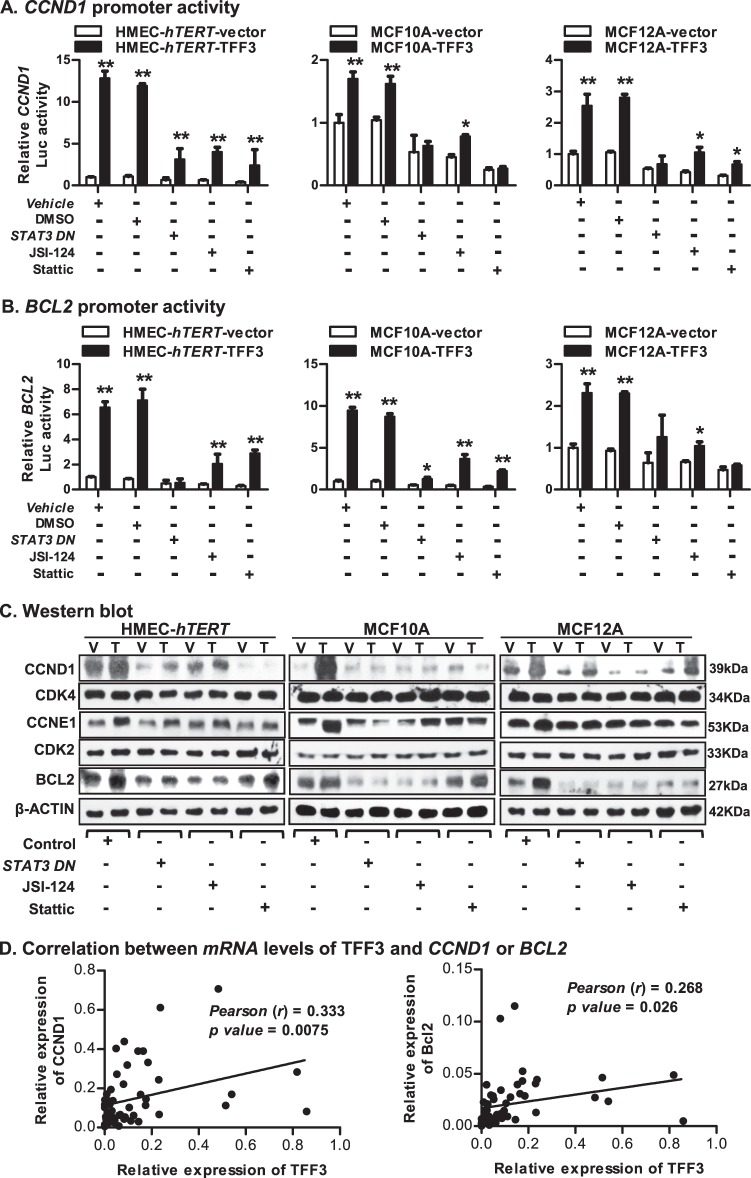
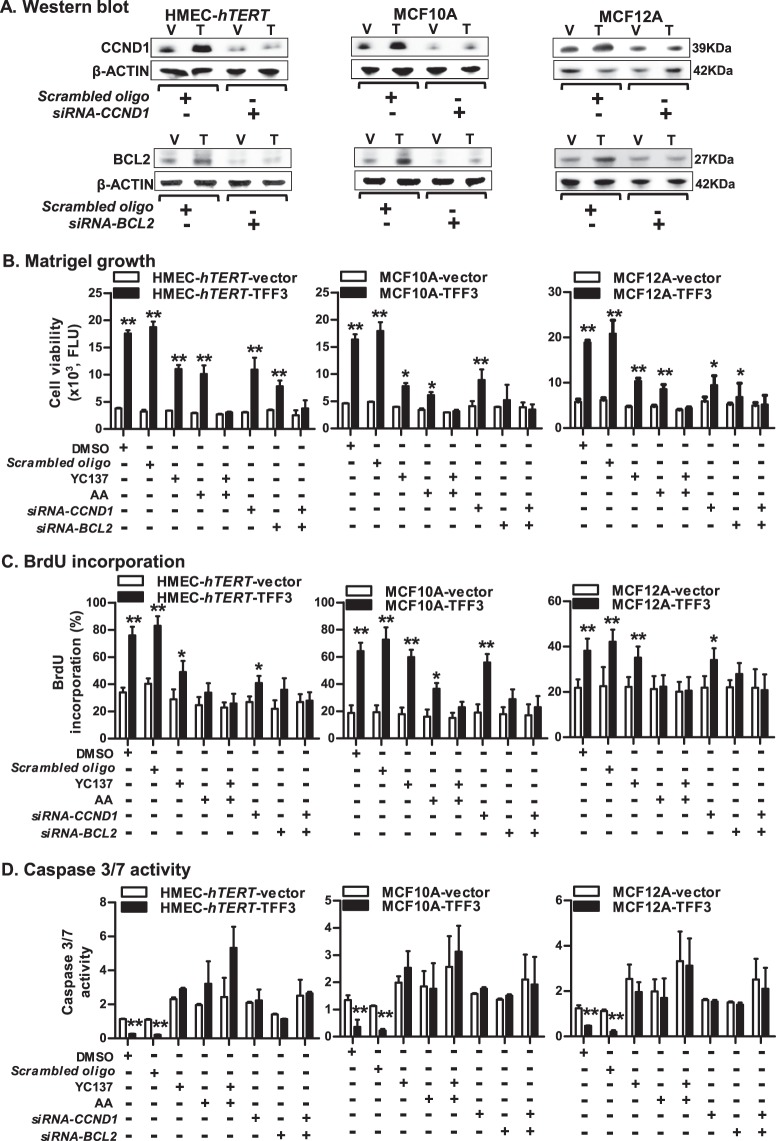
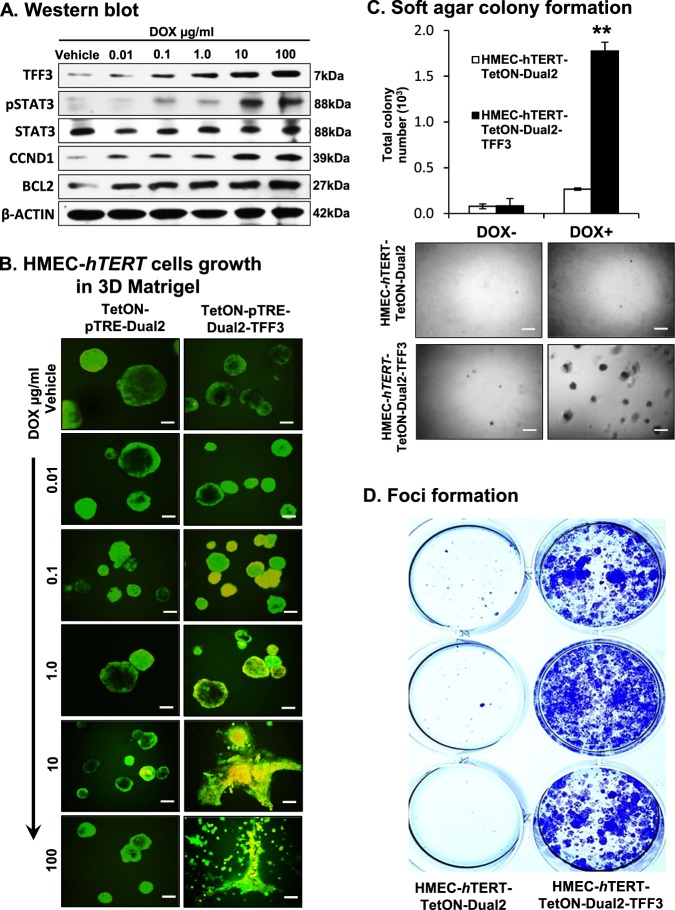
Trefoil factor 3 (TFF3) expression is positively associated with advanced clinicopathological features of mammary carcinoma (MC). Herein, we provide evidence for a functional role of TFF3 in oncogenic transformation of immortalized, but otherwise normal human mammary epithelial cells (HMECs), namely, HMEC-hTERT, MCF10A, and MCF12A. Forced expression of TFF3 in immortalized-HMECs enhanced cell proliferation, cell survival, anchorage-independent growth, produced highly disorganised three-dimensional (3D) acinar structures and generated tumours in immunocompromised mice. Forced expression of TFF3 in immortalized-HMECs stimulated STAT3 activity that was required for TFF3-stimulated cell proliferation, survival, and anchorage-independent growth. TFF3 specifically utilised STAT3 activity to govern a transcriptional program, which was required for TFF3-stimulated oncogenic transformation of immortalized-HMECs, including transcriptional upregulation of CCND1 and BCL2. siRNA-mediated depletion or functional inhibition of STAT3 significantly inhibited the TFF3-stimulated transcription of CCND1 and BCL2 and oncogenicity in immortalized-HMECs. Furthermore, DOX-inducible expression of TFF3 in HMEC-hTERT cells also permitted anchorage-independent growth and produced disorganized acinar structures in 3D Matrigel culture. Removal of DOX-induced expression of TFF3 in HMEC-hTERT cells, previously grown with DOX, resulted in efficient normalisation of the disorganized acinar architecture and attenuated cell viability in Matrigel culture. Cumulatively, these findings suggest that TFF3 is a potent oncogene and its increased expression along with hTERT in HMECs is sufficient to produce oncogenic transformation.
三叶因子 3(TFF3)的表达与乳腺癌(MC)的先进临床病理特征呈正相关。在此,我们提供了 TFF3 在永生化但正常的人乳腺上皮细胞(HMEC)中的致癌转化中具有功能作用的证据,即 HMEC-hTERT、MCF10A 和 MCF12A。在永生化-HMEC 中强制表达 TFF3 可增强细胞增殖、细胞存活、锚定独立生长,产生高度紊乱的三维(3D)腺泡结构,并在免疫缺陷小鼠中产生肿瘤。在永生化-HMEC 中强制表达 TFF3 可刺激 STAT3 活性,这是 TFF3 刺激细胞增殖、存活和锚定独立生长所必需的。TFF3 特异性利用 STAT3 活性来控制转录程序,这是 TFF3 刺激永生化-HMEC 致癌转化所必需的,包括 CCND1 和 BCL2 的转录上调。siRNA 介导的 STAT3 耗竭或功能抑制显著抑制了 TFF3 刺激的 CCND1 和 BCL2 的转录和永生化-HMEC 的致癌性。此外,在 HMEC-hTERT 细胞中 DOX 诱导表达 TFF3 也允许锚定独立生长并在 3D Matrigel 培养中产生紊乱的腺泡结构。在先前用 DOX 生长的 HMEC-hTERT 细胞中去除 DOX 诱导的 TFF3 表达,导致 Matrigel 培养中紊乱的腺泡结构的有效正常化和细胞活力的衰减。总之,这些发现表明 TFF3 是一种有效的致癌基因,其在 HMEC 中的表达增加与 hTERT 一起足以产生致癌转化。