School of Medical Science, Griffith University, Gold Coast Campus, Southport, QLD, Australia.
School of Biomedical Sciences, The University of Queensland, St Lucia, QLD, Australia.
Cell Death Dis. 2018 Nov 19;9(12):1150. doi: 10.1038/s41419-018-1190-9.
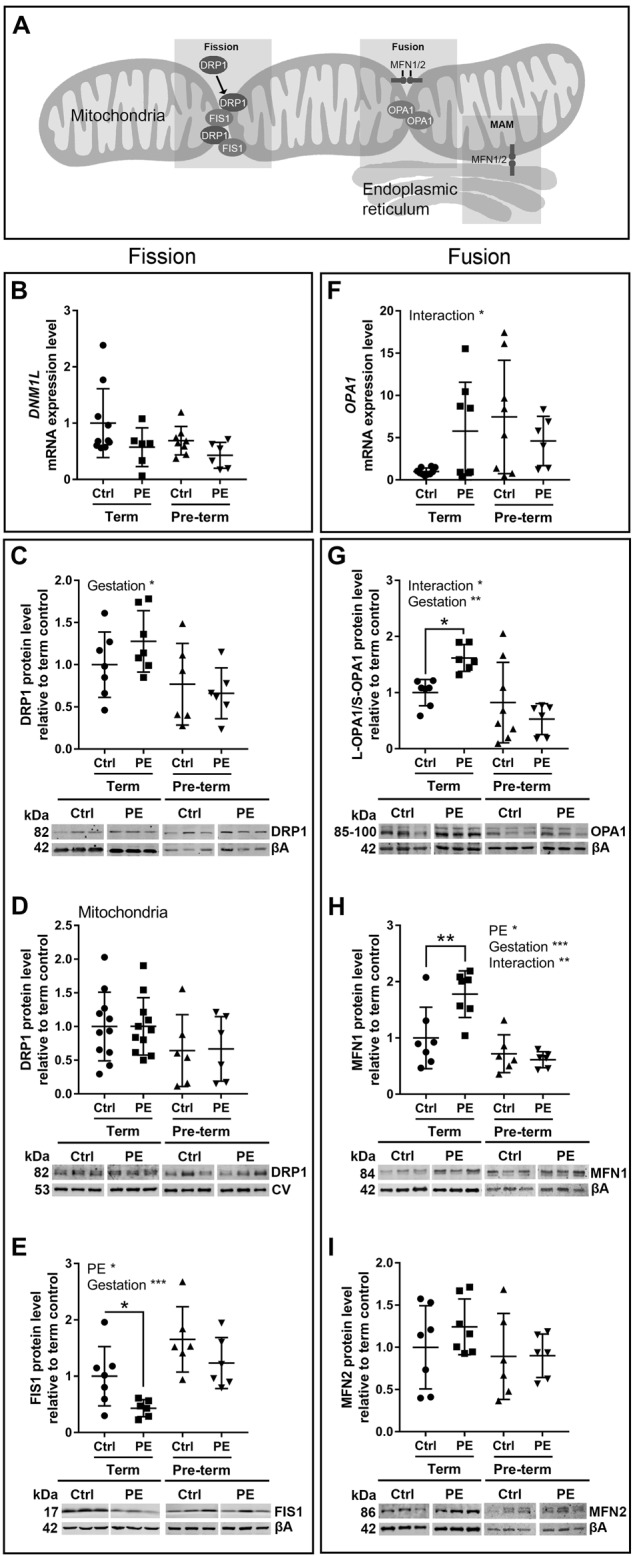
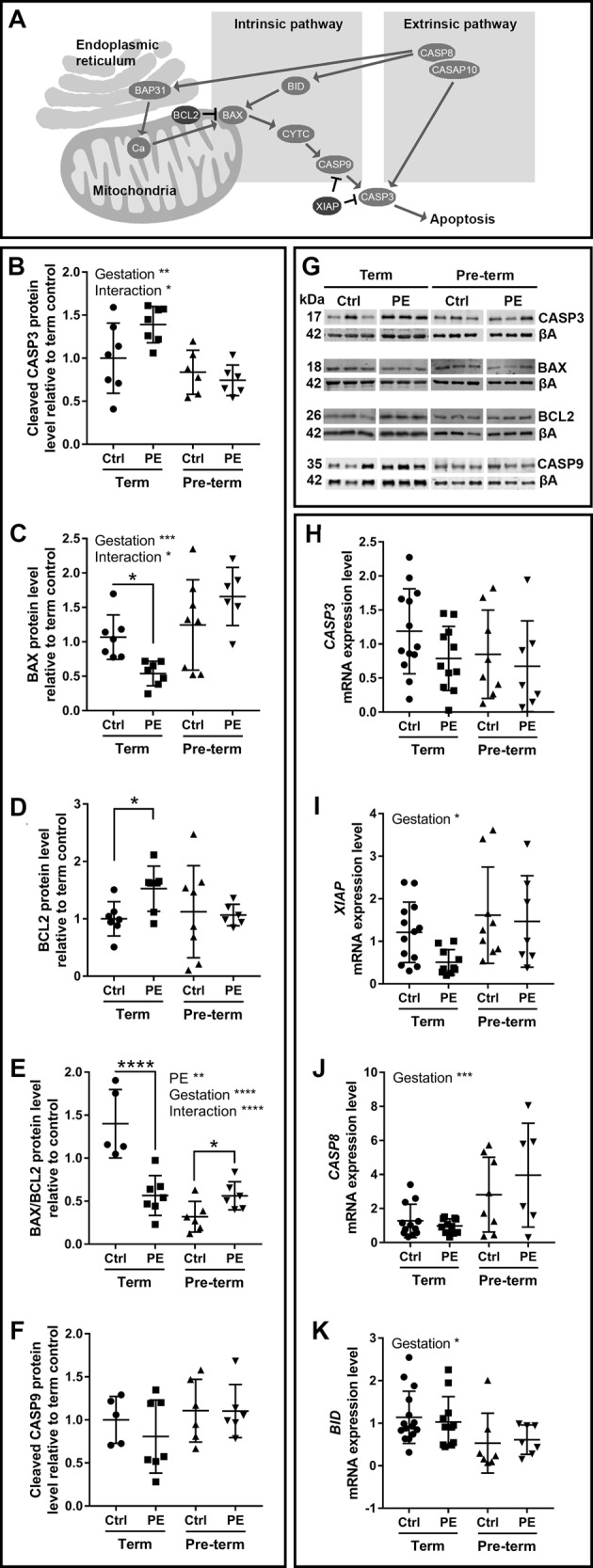
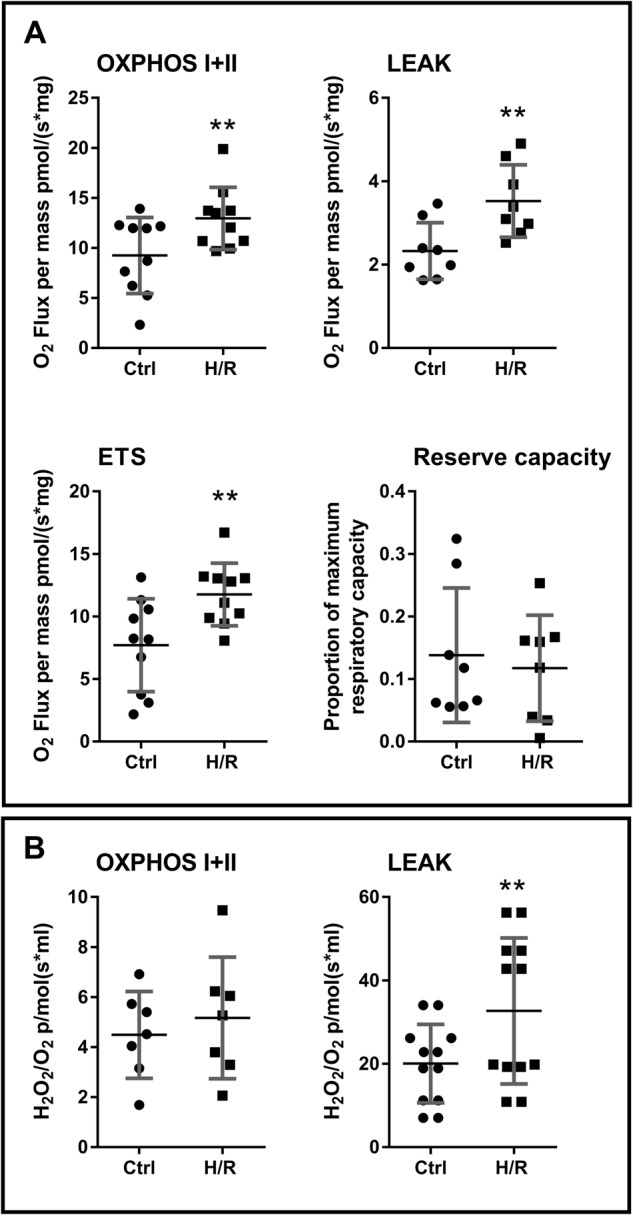
Preeclampsia is a devastating pregnancy disorder. Severity varies widely, and while severe preeclampsia often requires pre-term delivery, women with mild preeclampsia may reach term with minor interventions. The mechanisms that mediate disease severity are poorly understood, but may include adaptive processes by the placenta. We aimed to establish whether in pregnancies that reached term and those that delivered pre-term, the placental response to preeclampsia was intrinsically different, and explore potential adaptive mechanisms. Hydrogen peroxide production and antioxidant activity were increased in term preeclamptic placentae, whereas pre-term preeclamptic placentae had reduced hydrogen peroxide production and reduced function of the antioxidant system superoxide dismutase compared to control placentae. Markers of mitochondrial fission/fusion, apoptosis and the expression level of mitochondrial complexes were differentially disrupted in term compared to pre-term preeclamptic placentae. Mitochondrial respiration and content were increased in term preeclamptic placentae, but mitochondria had a lower respiratory reserve capacity. Mitochondrial respiration and hydrogen peroxide production were increased in healthy term placentae after in vitro hypoxia/reoxygenation. Placentae from preeclamptic pregnancies that reached term showed multiple adaptions that were not present in pre-term preeclamptic placentae. Increased antioxidant activity, and expression of markers of mitochondrial fusion and apoptotic suppression, may relate to salvaging damaged mitochondria. Increased mitochondrial respiration may allow ongoing tissue function even with reduced respiratory efficiency in term preeclamptic pregnancies. Response after in vitro hypoxia/reoxygenation suggests that disruption of oxygen supply is key to placental mitochondrial adaptations. Reactive oxygen species signalling in term preeclamptic placentae may be at a level to trigger compensatory antioxidant and mitochondrial responses, allowing tissue level maintenance of function when there is organelle level dysfunction.
子痫前期是一种严重的妊娠疾病。其严重程度差异很大,虽然严重的子痫前期通常需要早产,但轻度子痫前期的妇女可以通过轻微干预达到足月。介导疾病严重程度的机制尚不清楚,但可能包括胎盘的适应性过程。我们旨在确定在达到足月和早产的妊娠中,胎盘对子痫前期的反应是否存在内在差异,并探讨潜在的适应性机制。与对照组胎盘相比,足月子痫前期胎盘的过氧化氢产生和抗氧化活性增加,而早产子痫前期胎盘的过氧化氢产生减少,抗氧化系统超氧化物歧化酶的功能降低。与早产子痫前期胎盘相比,线粒体分裂/融合、细胞凋亡的标志物和线粒体复合物的表达水平在足月子痫前期胎盘中有差异破坏。与对照组胎盘相比,足月子痫前期胎盘的线粒体呼吸和含量增加,但线粒体的呼吸储备能力较低。体外缺氧/复氧后,健康足月胎盘的线粒体呼吸和过氧化氢产生增加。足月子痫前期胎盘表现出多种适应,而早产子痫前期胎盘则没有。抗氧化活性增加,以及线粒体融合和凋亡抑制标志物的表达增加,可能与挽救受损的线粒体有关。线粒体呼吸的增加可能允许即使在足月子痫前期妊娠中呼吸效率降低的情况下,仍能维持组织功能。体外缺氧/复氧后的反应表明,氧供应的中断是胎盘线粒体适应的关键。足月子痫前期胎盘的活性氧信号可能达到触发代偿性抗氧化和线粒体反应的水平,从而在细胞器功能障碍时维持组织水平的功能。