Alshamsan Aws, Kazi Mohsin, Badran Mohamed M, Alanazi Fars Kaed
Department of Pharmaceutics, College of Pharmacy, King Saud University, Riyadh, Saudi Arabia.
Nanobiotechnology Unit, College of Pharmacy, King Saud University, Riyadh, Saudi Arabia.
Front Pharmacol. 2018 Nov 6;9:1219. doi: 10.3389/fphar.2018.01219. eCollection 2018.
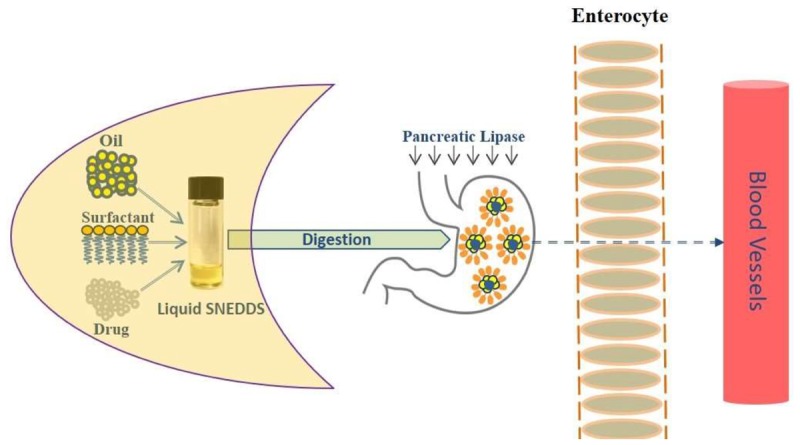
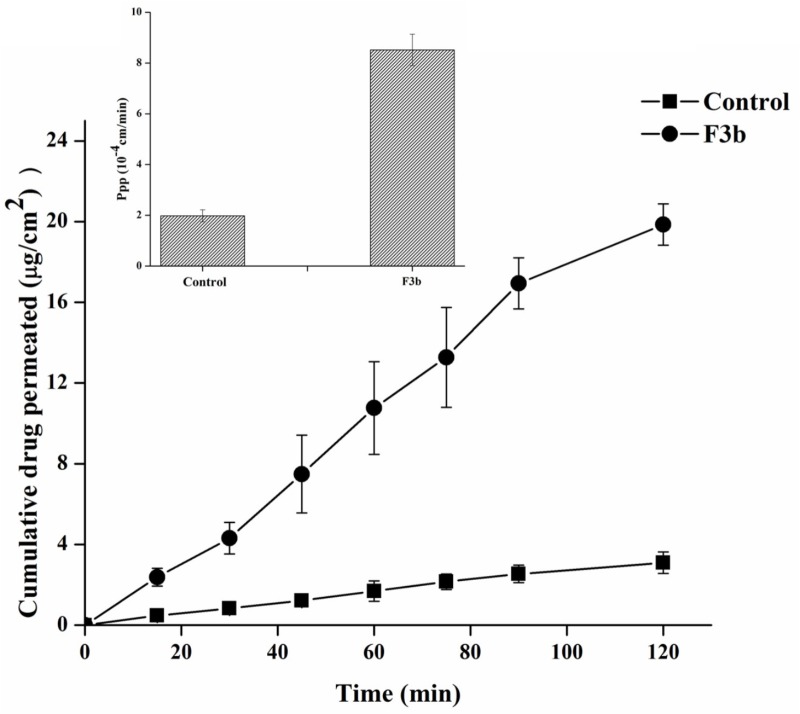
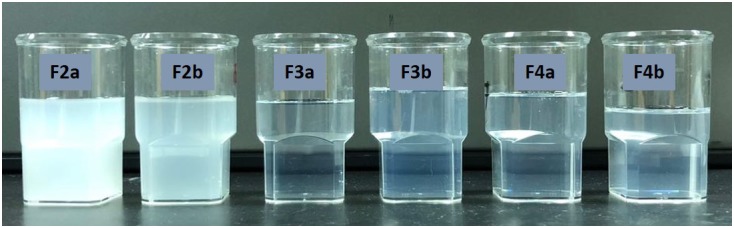
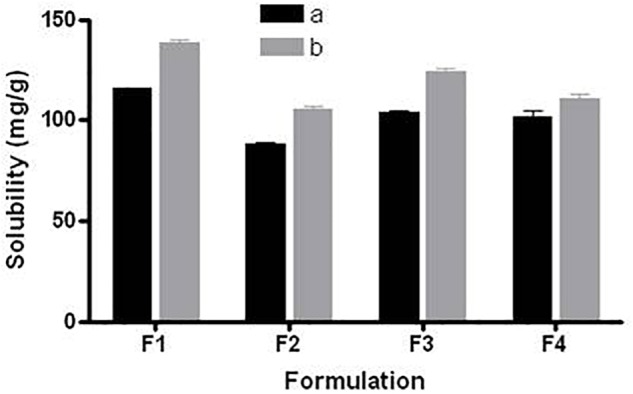
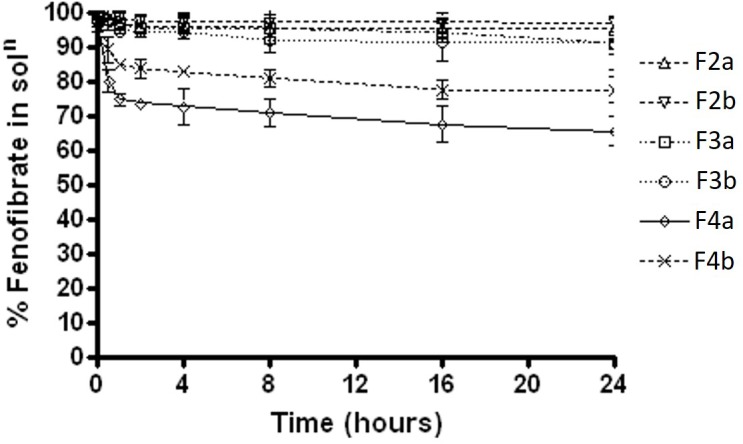
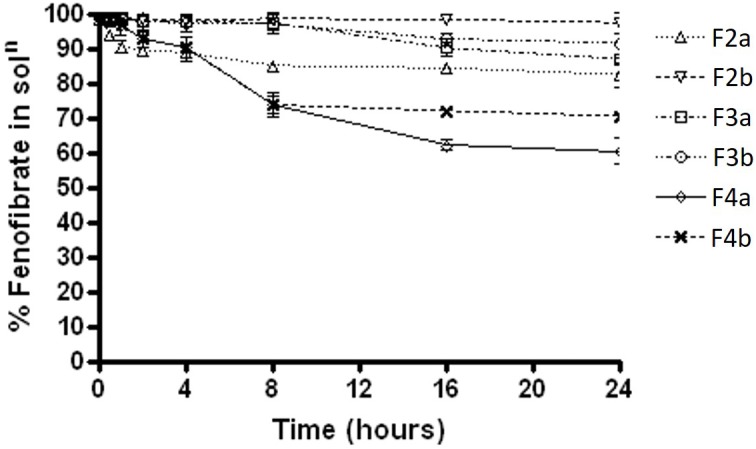
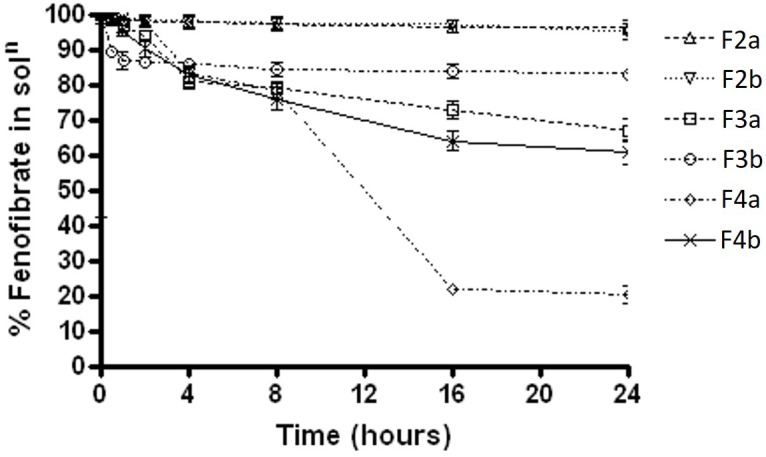
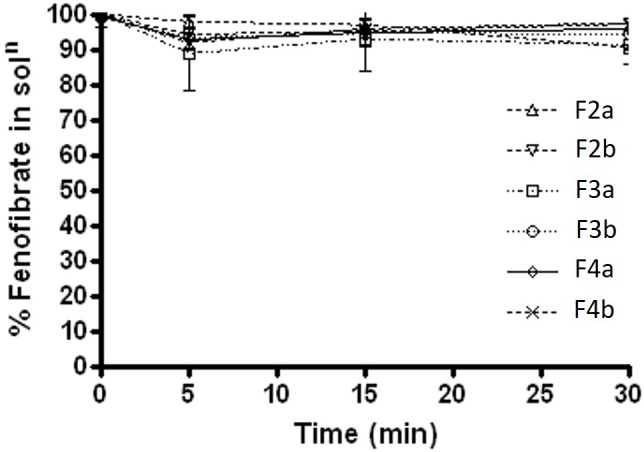
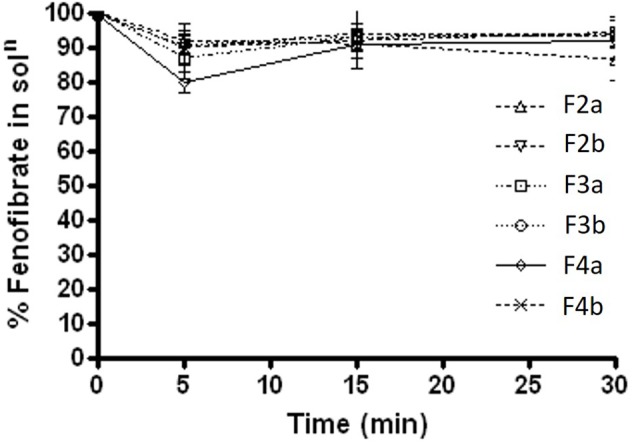
The choice of lipid excipients and their origin are crucial determinant factors in the design of self-nanoemulsifying drug delivery system (SNEDDS). To investigate the aspects of alternative excipients which can influence the development of efficient SNEDDS and determine the fate of fenofibrate in aqueous media. SNEDDS of two groups (a and b) were developed using Cremercoor MCT/Capmul MCM and Kollisolv MCT/Imwitor 742 blended oils and water soluble surfactants (to improve lipid polarity) for the model anti-cholesterol drug fenofibrate. Visual assessment was employed and droplet size measurement was taken into initial consideration for optimized SNEDDS. Further SNEDDS optimizations were done on the basis of maximum drug loading by equilibrium solubility studies and maximum solubilized drug upon aqueous dispersion by dynamic dispersion studies. lipolysis was examined under simulated Fed and Fasted conditions. Intestinal permeability study of the optimal SNEDDS formulation was compared with the raw fenofibrate dispersion using non- everted "intestinal sac technique." Initial characterization and solubility studies showed that mixed glycerides of Kollisolv MCT/Imwitor 742 (group b) containing formulations generated highly efficient SNEDDS as they are stable and produced lower nanodroplets with higher drug loading (group b) as compared to mixed glycerides of Cremercoor MCT/Capmul MCM (group a). dispersion and digestion studies confirmed that SNEDDS of group b (polar mixed glycerides) can retain high amount of drug (99% drug in solution for more than 24 h time) in dispersion media and have high recovery after digestion. The results from the permeability assessment confirmed that fenofibrate had 4.3-fold increase with F3b SNEDDS compared with the control. SNEDDS formulations containing alternative excipients (Kollisolv MCT/Imwitor 742 blend) could be a potential oral pharmaceutical product in taking anti-hyperlipidaemic agent fenofibrate to the systemic circulation as solubilized form.
脂质辅料的选择及其来源是自纳米乳化药物递送系统(SNEDDS)设计中的关键决定因素。为了研究可影响高效SNEDDS开发的替代辅料的相关方面,并确定非诺贝特在水性介质中的命运。使用Cremercoor MCT/Capmul MCM和Kollisolv MCT/Imwitor 742混合油以及水溶性表面活性剂(以改善脂质极性)为模型抗胆固醇药物非诺贝特开发了两组(a组和b组)SNEDDS。采用视觉评估,并将液滴尺寸测量作为优化SNEDDS的初步考虑因素。通过平衡溶解度研究基于最大载药量以及通过动态分散研究基于水性分散后最大增溶药物量对SNEDDS进行了进一步优化。在模拟进食和禁食条件下检查了脂解情况。使用非外翻“肠囊技术”将最佳SNEDDS制剂的肠道渗透性研究与非诺贝特原料药分散体进行了比较。初始表征和溶解度研究表明,与Cremercoor MCT/Capmul MCM(a组)的混合甘油酯相比,含有Kollisolv MCT/Imwitor 742(b组)的制剂产生的SNEDDS效率更高,因为它们稳定且产生的纳米液滴更小、载药量更高(b组)。分散和消化研究证实,b组(极性混合甘油酯)的SNEDDS在分散介质中可保留大量药物(溶液中99%的药物超过24小时),消化后回收率高。渗透性评估结果证实,与对照组相比,F3b SNEDDS使非诺贝特的渗透性提高了4.3倍。含有替代辅料(Kollisolv MCT/Imwitor 742混合物)的SNEDDS制剂可能是一种潜在的口服药物产品,可将抗高血脂药物非诺贝特以增溶形式输送到体循环。