Cancer Bioinformatics, King's College London, Innovation Hub, Cancer Centre at Guy's Hospital, Great Maze Pond, London, SE1 9RT, UK.
School of Cancer & Pharmaceutical Sciences, CRUK King's Health Partners Centre, King's College London, Innovation Hub, Comprehensive Cancer Centre at Guy's Hospital, Great Maze Pond, London, SE1 9RT, UK.
Breast Cancer Res. 2018 Nov 20;20(1):143. doi: 10.1186/s13058-018-1070-3.
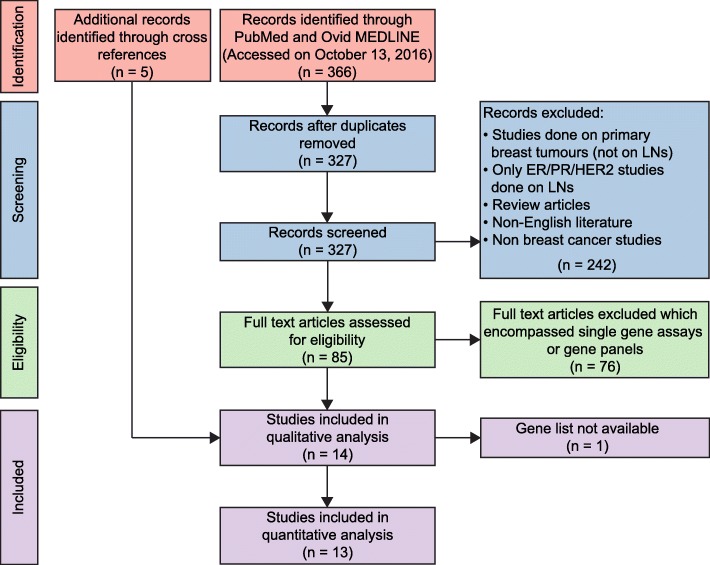
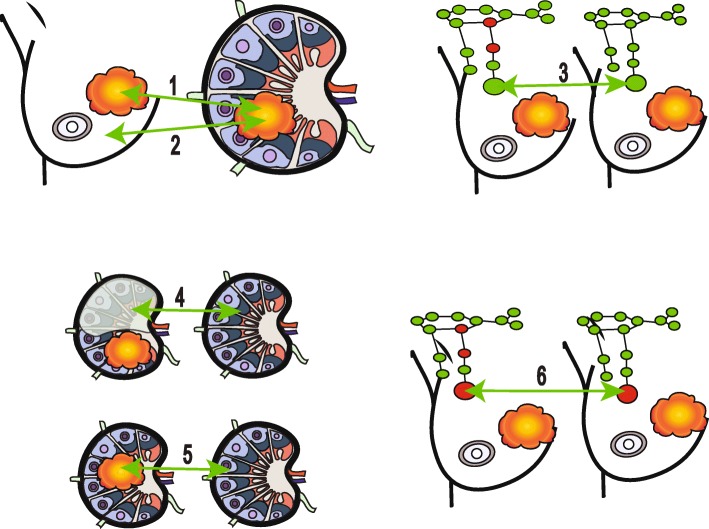
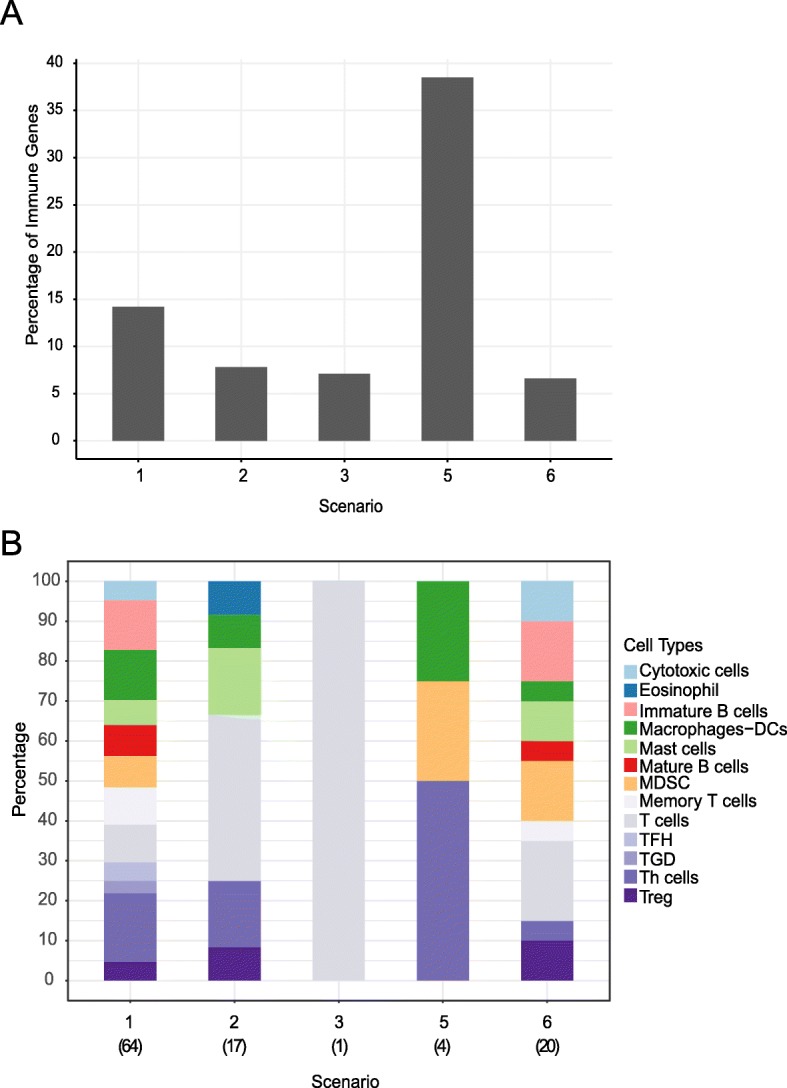
Lymph node (LN) metastasis is an important prognostic parameter in breast carcinoma, a crucial site for tumour-immune cell interaction and a gateway for further dissemination of tumour cells to other metastatic sites. To gain insight into the underlying molecular changes from the pre-metastatic, via initial colonisation to the fully involved LN, we reviewed transcriptional research along the evolving microenvironment of LNs in human breast cancers patients. Gene expression studies were compiled and subjected to pathway-based analyses, with an emphasis on immune cell-related genes. Of 366 studies, 14 performed genome-wide gene expression comparisons and were divided into six clinical-biological scenarios capturing different stages of the metastatic pathway in the LN, as follows: metastatically involved LNs are compared to their patient-matched primary breast carcinomas (scenario 1) or the normal breast tissue (scenario 2). In scenario 3, uninvolved LNs were compared between LN-positive patients and LN-negative patients. Scenario 4 homed in on the residual uninvolved portion of involved LNs and compared it to the patient-matched uninvolved LNs. Scenario 5 contrasted uninvolved and involved LNs, whilst in scenario 6 involved (sentinel) LNs were assessed between patients with other either positive or negative LNs (non-sentinel).Gene lists from these chronological steps of LN metastasis indicated that gene patterns reflecting deficiencies in dendritic cells and hyper-proliferation of B cells parallel to tumour promoting pathways, including cell adhesion, extracellular matrix remodelling, cell motility and DNA repair, play key roles in the changing microenvironment of a pro-metastatic to a metastatically involved LN. Similarities between uninvolved LNs and the residual uninvolved portion of involved LNs hinted that LN alterations expose systemic tumour-related immune responses in breast cancer patients. Despite the diverse settings, gene expression patterns at different stages of metastatic colonisation in LNs were recognised and may provide potential avenues for clinical interventions to counteract disease progression for breast cancer patients.
淋巴结 (LN) 转移是乳腺癌的一个重要预后参数,是肿瘤-免疫细胞相互作用的关键部位,也是肿瘤细胞进一步扩散到其他转移部位的门户。为了深入了解从转移前、初始定植到完全受累的 LN 的潜在分子变化,我们对人类乳腺癌患者 LN 不断演变的微环境中的转录研究进行了综述。我们汇编了基因表达研究,并进行了基于途径的分析,重点关注与免疫细胞相关的基因。在 366 项研究中,有 14 项进行了全基因组基因表达比较,并分为六个临床生物学情景,分别捕捉 LN 转移途径的不同阶段,如下:转移性受累的 LN 与其患者匹配的原发性乳腺癌(情景 1)或正常乳腺组织(情景 2)进行比较。在情景 3 中,LN 阳性患者和 LN 阴性患者之间比较未受累的 LN。情景 4 专注于受累 LN 的剩余未受累部分,并将其与患者匹配的未受累 LN 进行比较。情景 5 对比了未受累和受累的 LN,而在情景 6 中,在患者之间评估了受累(前哨)LN,这些患者的其他 LN 要么阳性要么阴性(非前哨)。这些 LN 转移的时间顺序步骤的基因列表表明,反映树突状细胞缺陷和 B 细胞过度增殖的基因模式与肿瘤促进途径平行,包括细胞黏附、细胞外基质重塑、细胞运动和 DNA 修复,在向转移性受累 LN 的变化微环境中发挥关键作用。未受累的 LN 与受累 LN 的剩余未受累部分之间的相似性表明,LN 改变暴露了乳腺癌患者的全身性肿瘤相关免疫反应。尽管环境不同,但在 LN 中转移定植的不同阶段的基因表达模式是可识别的,并且可能为临床干预提供潜在途径,以阻止乳腺癌患者的疾病进展。