Xiang Xiao, Langlois Stéphanie, St-Pierre Marie-Eve, Barré Jessica F, Grynspan David, Purgina Bibianna, Cowan Kyle N
Molecular Biomedicine Program, Children's Hospital of Eastern Ontario Research Institute, Ottawa, ON, Canada.
Department of Cellular and Molecular Medicine, University of Ottawa, Ottawa, ON, Canada.
Oncogenesis. 2018 Nov 21;7(11):89. doi: 10.1038/s41389-018-0100-4.
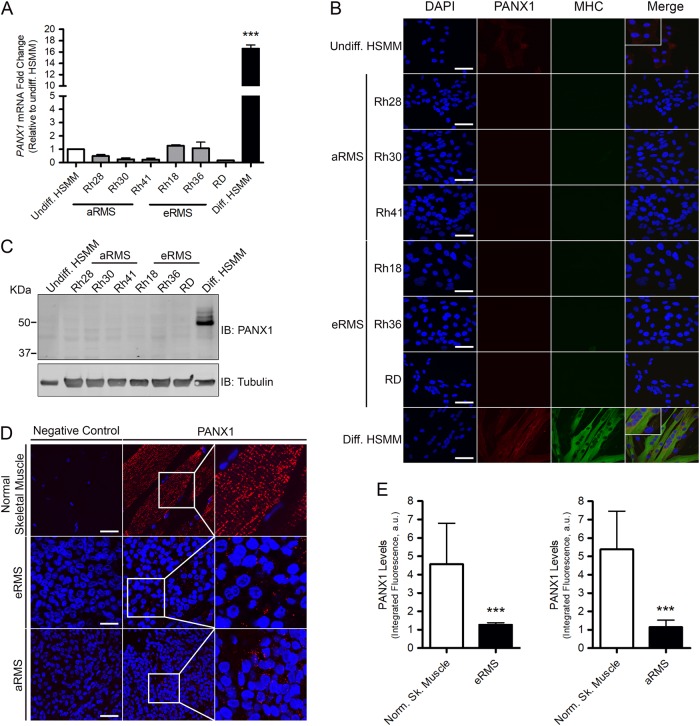
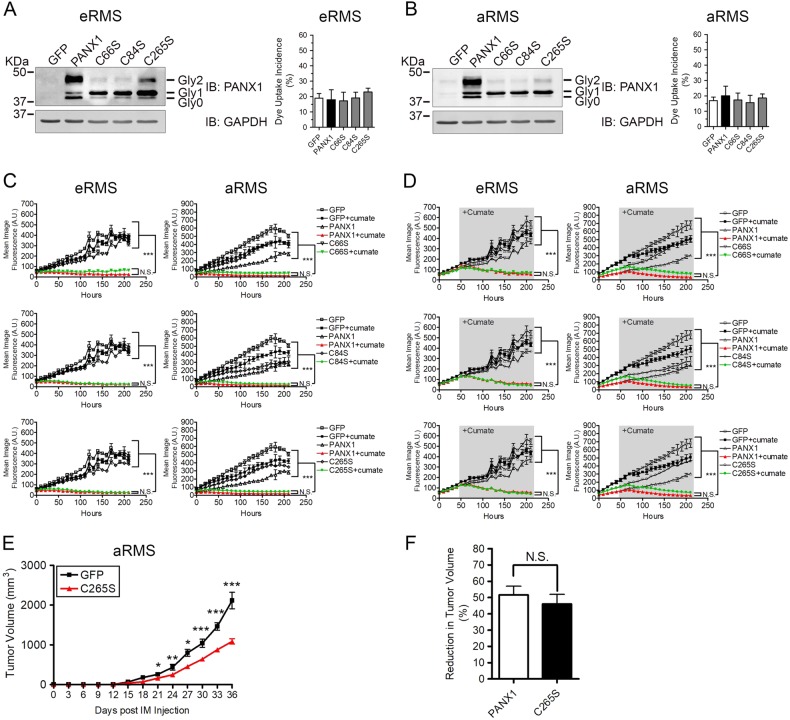
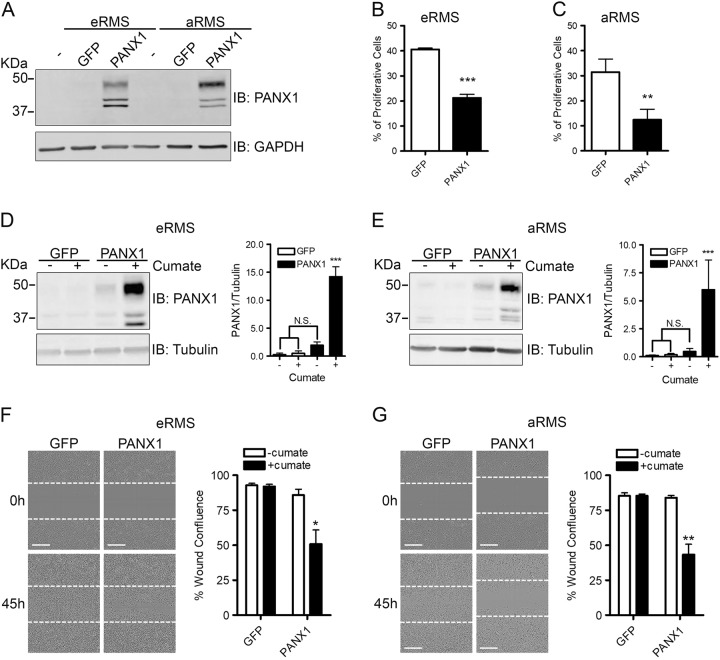
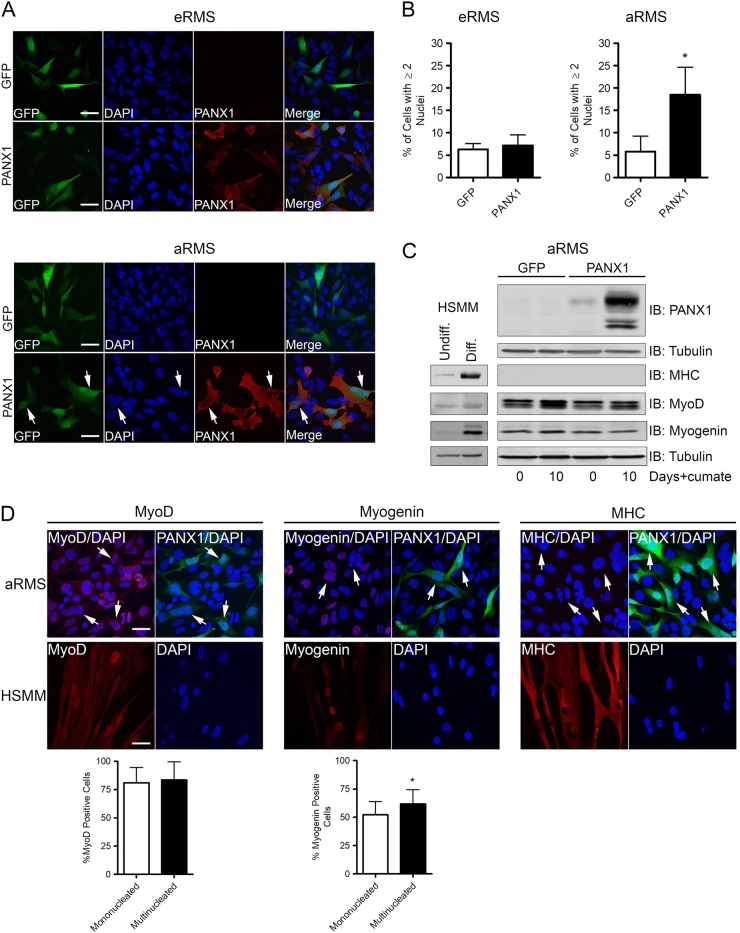
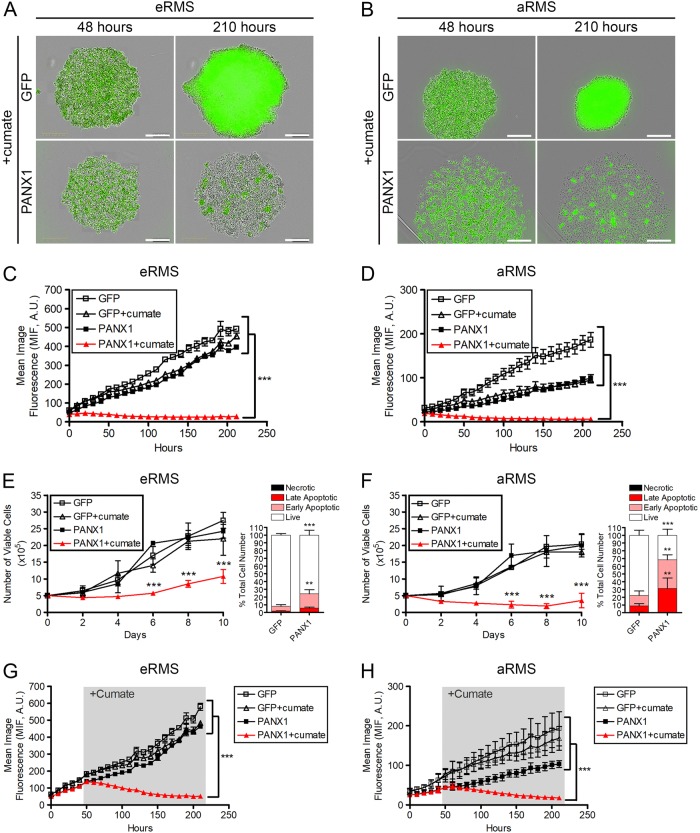
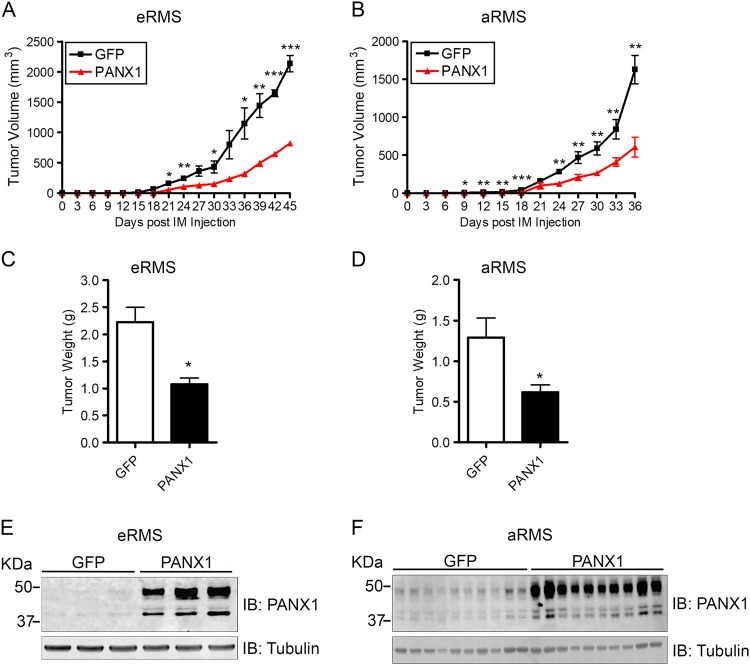
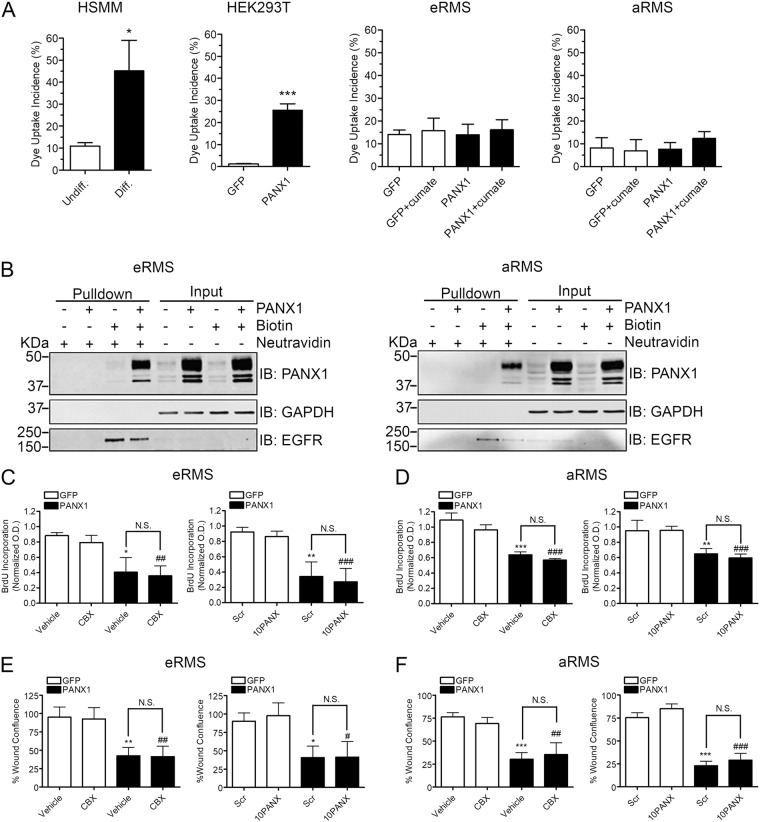
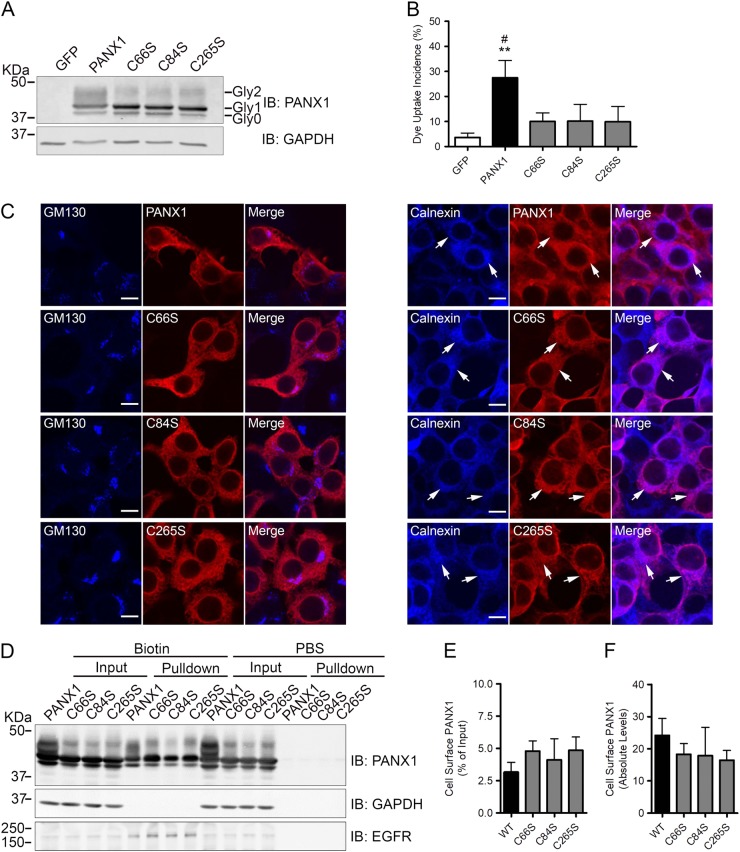
Rhabdomyosarcoma (RMS) is an aggressive soft tissue sarcoma of childhood thought to arise from impaired differentiation of skeletal muscle progenitors. We have recently identified Pannexin 1 (PANX1) channels as a novel regulator of skeletal myogenesis. In the present study, we determined that PANX1 transcript and protein levels are down-regulated in embryonal (eRMS) and alveolar RMS (aRMS) patient-derived cell lines and primary tumor specimens as compared to differentiated skeletal muscle myoblasts and tissue, respectively. While not sufficient to overcome the inability of RMS to reach terminal differentiation, ectopic expression of PANX1 in eRMS (Rh18) and aRMS (Rh30) cells significantly decreased their proliferative and migratory potential. Furthermore, ectopic PANX1 abolished 3D spheroid formation in eRMS and aRMS cells and induced regression of established spheroids through induction of apoptosis. Notably, PANX1 expression also significantly reduced the growth of human eRMS and aRMS tumor xenografts in vivo. Interestingly, PANX1 does not form active channels when expressed in eRMS (Rh18) and aRMS (Rh30) cells and the addition of PANX1 channel inhibitors did not alter or reverse the PANX1-mediated reduction of cell proliferation and migration. Moreover, expression of channel-defective PANX1 mutants not only disrupted eRMS and aRMS 3D spheroids, but also inhibited in vivo RMS tumor growth. Altogether our findings suggest that PANX1 alleviates RMS malignant properties in vitro and in vivo through a process that is independent of its canonical channel function.
横纹肌肉瘤(RMS)是一种侵袭性儿童软组织肉瘤,被认为起源于骨骼肌祖细胞分化受损。我们最近将泛连接蛋白1(PANX1)通道鉴定为骨骼肌生成的新型调节因子。在本研究中,我们确定与分化的骨骼肌成肌细胞和组织相比,PANX1转录本和蛋白水平在胚胎型(eRMS)和肺泡型RMS(aRMS)患者来源的细胞系和原发性肿瘤标本中分别下调。虽然不足以克服RMS无法达到终末分化的问题,但在eRMS(Rh18)和aRMS(Rh30)细胞中异位表达PANX1显著降低了它们的增殖和迁移潜能。此外,异位表达的PANX1消除了eRMS和aRMS细胞中的三维球体形成,并通过诱导凋亡使已形成的球体消退。值得注意的是,PANX1表达还显著降低了人eRMS和aRMS肿瘤异种移植在体内的生长。有趣的是,当在eRMS(Rh18)和aRMS(Rh30)细胞中表达时,PANX1不会形成活性通道,并且添加PANX1通道抑制剂不会改变或逆转PANX1介导的细胞增殖和迁移减少。此外,通道缺陷型PANX1突变体的表达不仅破坏了eRMS和aRMS三维球体,还抑制了体内RMS肿瘤生长。总之,我们的研究结果表明,PANX1通过一个独立于其经典通道功能的过程在体外和体内减轻了RMS的恶性特性。