Liu Chenyue, Zhu Ruyuan, Liu Haixia, Li Lin, Chen Beibei, Jia Qiangqiang, Wang Lili, Ma Rufeng, Tian Simin, Wang Min, Fu Min, Niu Jianzhao, Orekhov Alexander N, Gao Sihua, Zhang Dongwei, Zhao Baosheng
School of Chinese Material Medica, Beijing University of Chinese Medicine, Beijing, China.
Diabetes Research Center, Traditional Chinese Medicine School, Beijing University of Chinese Medicine, Beijing, China.
Front Pharmacol. 2018 Nov 6;9:1239. doi: 10.3389/fphar.2018.01239. eCollection 2018.
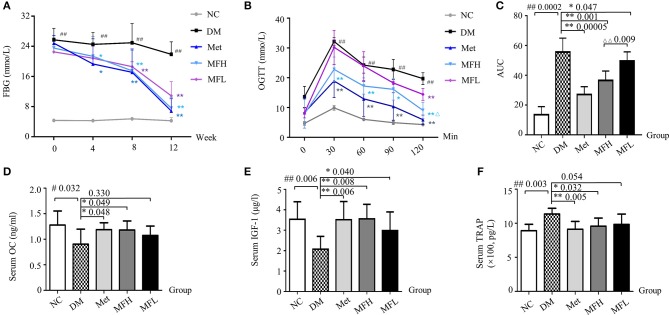
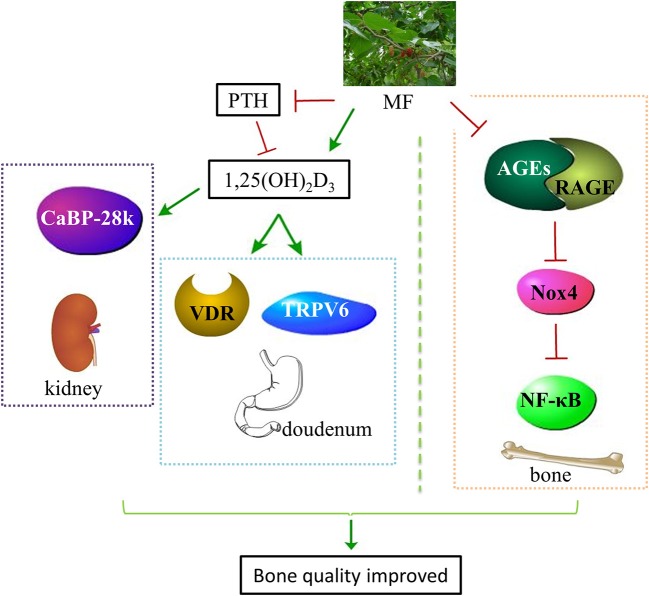
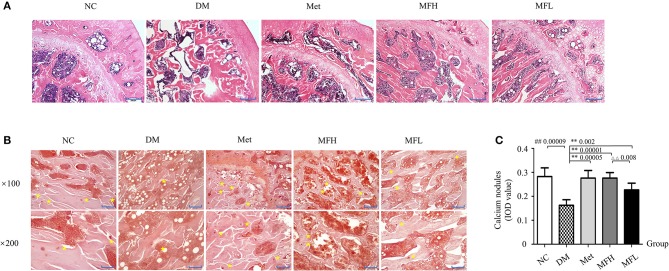
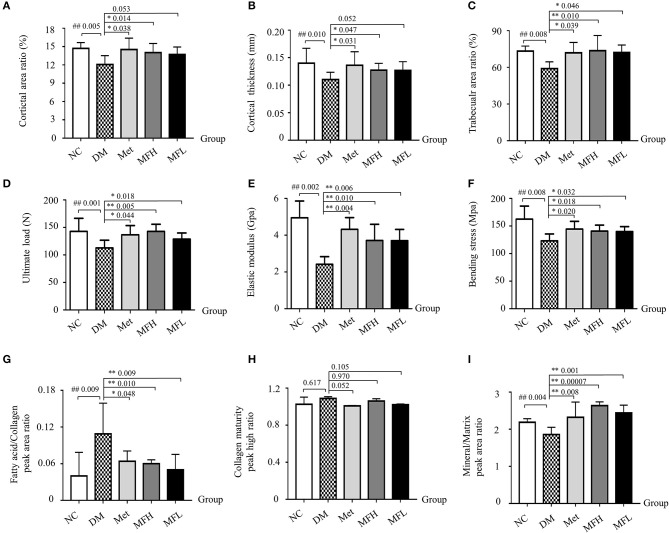
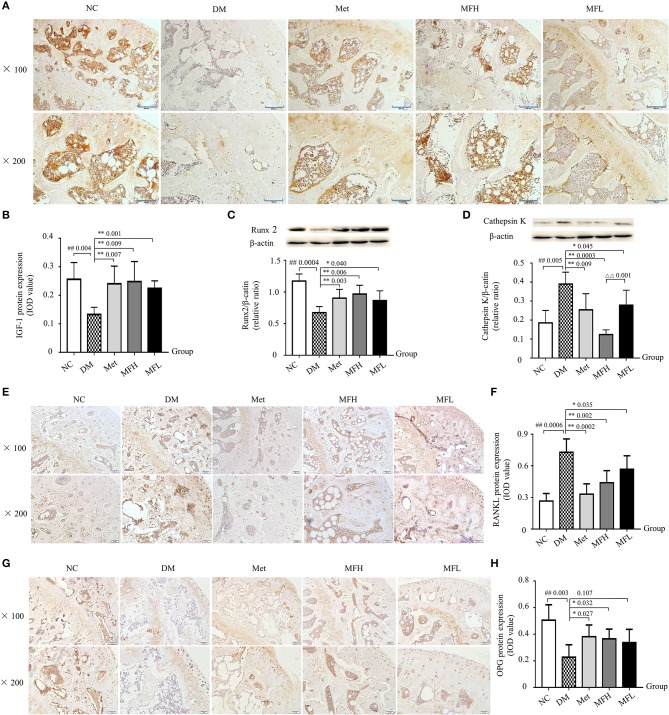
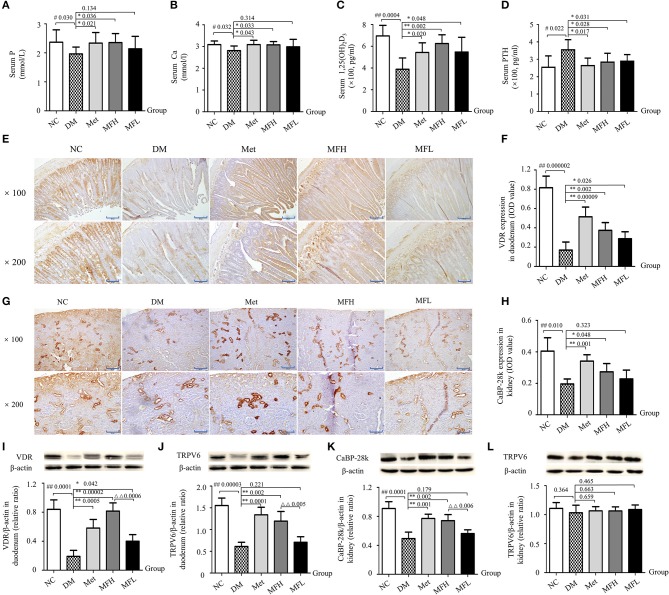
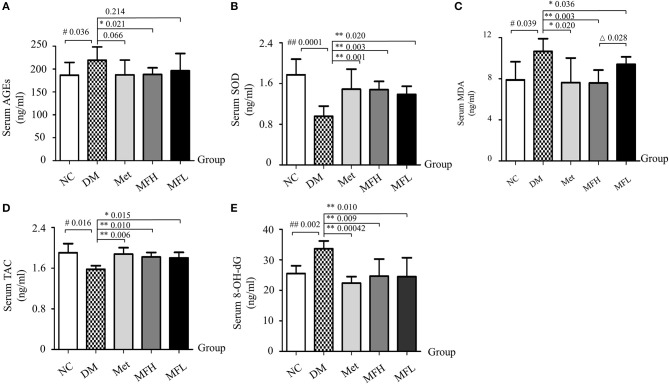
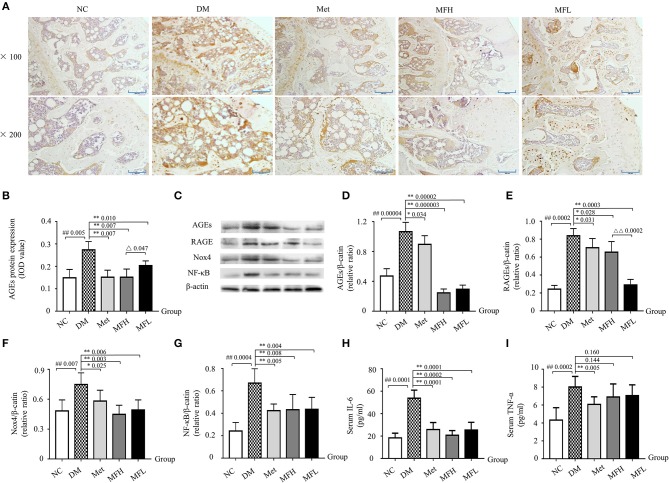
The present study is aimed to explore whether the aqueous extract of (MF) exhibits bone protective effect by regulating calcium and redox homeostasis in diabetic rats, and to identify the signaling pathways involved in this process. Diabetic rats were established using high-sugar and high-fat diet and streptozotocin (STZ) (30 mg/kg for 3 consecutive days). The serum levels of osteocalcin (OC), insulin-like growth factor-1 (IGF-1), tartrate-resistant acid phosphatase (TRAP), phosphorus (P), calcium (Ca), 1,25-dihydroxyvitamin D [1,25(OH)D], parathormone (PTH), advanced glycation end products (AGEs), superoxide dismutase (SOD), and malondialdehyde (MDA), total antioxidant capacity (TAC), 8-hydroxy-2'-deoxyguanosine (8-OH-dG), and interleukin 6 (IL-6) were determined by ELISA or biochemical assays. Histopathological alterations in the femurs were evaluated by the stainings of hematoxylin-eosin (H&E) and alizarin red S. In addition, femoral strength was detected by a three-point bending assay, bone microstructure was detected with micro-computer tomography. Bone material properties were examined by Fourier-transform infrared spectroscopy. Furthermore, the expressions of IGF-1, runt-related transcription factor 2 (Runx2), osteoprotegerin (OPG), receptor activator of nuclear factor kappa-B ligand (RANKL), cathepsin K, AGEs, receptor of advanced glycation end products (RAGE), NADPH oxidase 4 (Nox4), and nuclear factor kappa-B (NF-κB) in the femurs and tibias, and the alterations in the levels of calcium-binding protein-28k (CaBP-28k), transient receptor potential V6 (TRPV6), and vitamin D receptor (VDR) in the kidneys and duodenums were determined by western blot and immunohistochemical analysis. Treatment of diabetic rats with MF aqueous extract induces an increase in the levels of OC and IGF-1 as well as a decrease in TRAP level in serum. MF treatment also upregulates the expression of OPG, downregulates the expressions of AGEs, RAGE, Nox4, NF-κB, and RANKL, which leads to improve bone microstructure and strength exhibited by an increase in cortical area ratio, cortical thickness, and trabecular area ratio as well as ultimate load, elastic modulus, and bending stress in the femurs and tibias of diabetic rats. In addition, MF aqueous extract preserves bone material properties by decreasing the ratio of fatty acid/collagen and increasing the ratio of mineral/matrix in the femurs of diabetic rats. Moreover, MF treatment increases the levels of P, Ca, and 1,25(OH)D, and decreases the level of PTH in the serum, as well as upregulates the expressions of TRPV6 and VDR in the duodenums and CaBP-28k in the kidneys of diabetic rats. Additionally, MF has ability of rebuilding redox homeostasis and eliminating inflammatory stress by increasing the levels of SOD and TAC as well as decreasing the levels of IL-6, AGEs, MDA, and 8-OH-dG. MF treatment may improve bone quality through maintenance of calcium homeostasis via regulating the PTH/VDR/CaBP signaling, and elimination of oxidative stress via regulating the AGEs/RAGE/Nox4/NF-κB signaling. These results may suggest the potential of MF in preventing the development of diabetic osteoporosis.
本研究旨在探讨(MF)水提取物是否通过调节糖尿病大鼠的钙和氧化还原稳态发挥骨保护作用,并确定参与该过程的信号通路。采用高糖高脂饮食和链脲佐菌素(STZ)(30mg/kg,连续3天)建立糖尿病大鼠模型。通过酶联免疫吸附测定(ELISA)或生化分析测定血清中骨钙素(OC)、胰岛素样生长因子-1(IGF-1)、抗酒石酸酸性磷酸酶(TRAP)、磷(P)、钙(Ca)、1,25-二羟基维生素D[1,25(OH)D]、甲状旁腺激素(PTH)、晚期糖基化终产物(AGEs)、超氧化物歧化酶(SOD)、丙二醛(MDA)、总抗氧化能力(TAC)、8-羟基-2'-脱氧鸟苷(8-OH-dG)和白细胞介素6(IL-6)的水平。通过苏木精-伊红(H&E)染色和茜素红S染色评估股骨的组织病理学改变。此外,通过三点弯曲试验检测股骨强度,用微型计算机断层扫描检测骨微结构。通过傅里叶变换红外光谱检查骨材料特性。此外,通过蛋白质印迹法和免疫组织化学分析测定股骨和胫骨中IGF-1、 runt相关转录因子2(Runx2)、骨保护素(OPG)、核因子κB受体激活剂配体(RANKL)、组织蛋白酶K、AGEs、晚期糖基化终产物受体(RAGE)、NADPH氧化酶4(Nox4)和核因子κB(NF-κB)的表达,以及肾脏和十二指肠中钙结合蛋白-28k(CaBP-28k)、瞬时受体电位V6(TRPV6)和维生素D受体(VDR)水平的变化。用MF水提取物治疗糖尿病大鼠可使血清中OC和IGF-1水平升高,TRAP水平降低。MF治疗还上调OPG的表达,下调AGEs、RAGE、Nox4和NF-κB以及RANKL的表达,这导致糖尿病大鼠股骨和胫骨的皮质面积比、皮质厚度和小梁面积比增加,以及极限负荷、弹性模量和弯曲应力增加,从而改善骨微结构和强度。此外,MF水提取物通过降低糖尿病大鼠股骨中脂肪酸/胶原蛋白的比例并增加矿物质/基质的比例来保持骨材料特性。此外,MF治疗可增加血清中P、Ca和1,25(OH)D的水平,降低PTH的水平,并上调糖尿病大鼠十二指肠中TRPV6和VDR以及肾脏中CaBP-28k的表达。此外,MF具有通过增加SOD和TAC水平以及降低IL-6、AGEs、MDA和8-OH-dG水平来重建氧化还原稳态和消除炎症应激的能力。MF治疗可能通过调节PTH/VDR/CaBP信号维持钙稳态以及通过调节AGEs/RAGE/Nox4/NF-κB信号消除氧化应激来改善骨质量。这些结果可能提示MF在预防糖尿病性骨质疏松症发展方面的潜力。