Seghieri Marta, Christensen Alexander S, Andersen Andreas, Solini Anna, Knop Filip K, Vilsbøll Tina
Clinical Metabolic Physiology, Steno Diabetes Center Copenhagen, Gentofte Hospital, University of Copenhagen, Copenhagen, Denmark.
Department of Clinical and Experimental Medicine, University of Pisa, Pisa, Italy.
Front Endocrinol (Lausanne). 2018 Nov 6;9:649. doi: 10.3389/fendo.2018.00649. eCollection 2018.
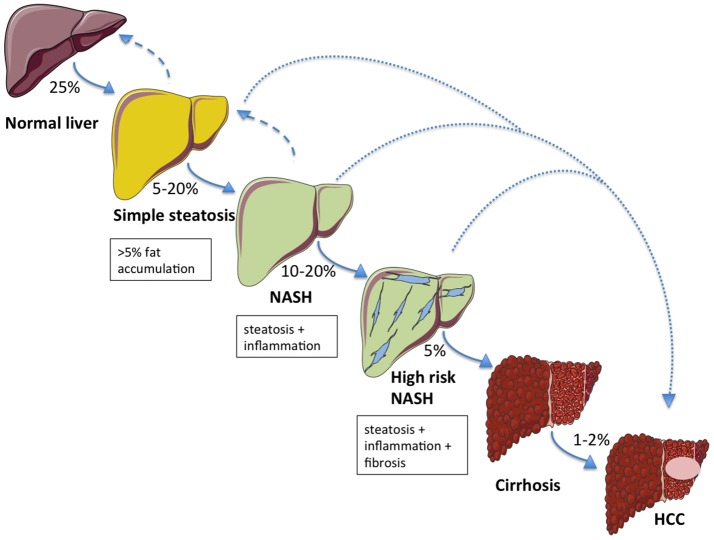
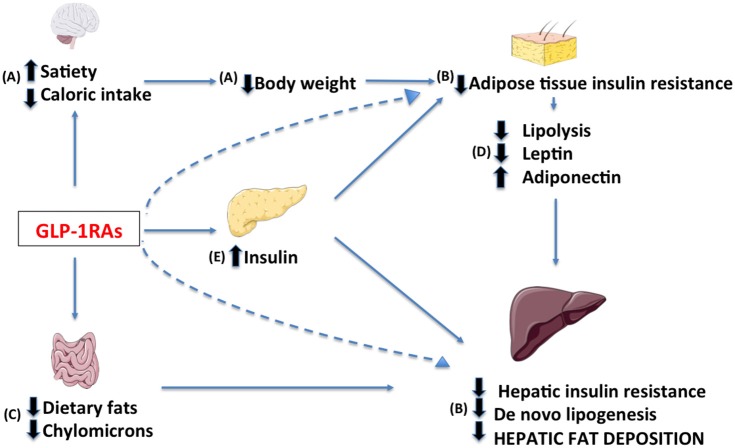
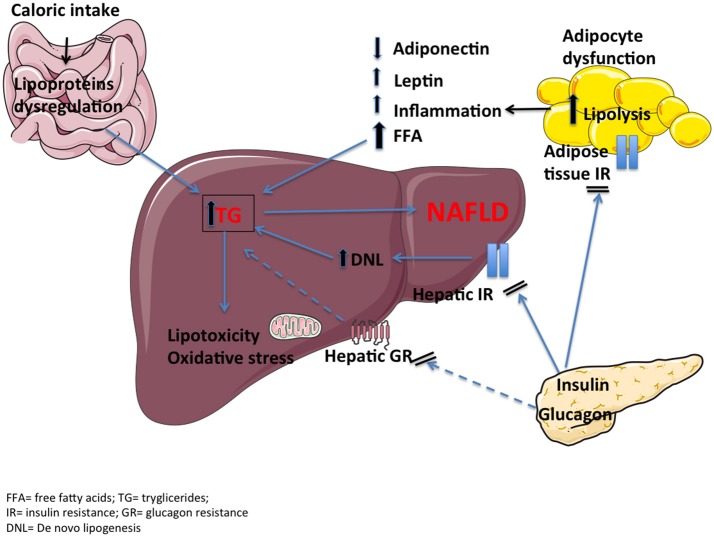
Along the obesity pandemic, the prevalence of non-alcoholic fatty liver disease (NAFLD), often regarded as the hepatic manifestation of the metabolic syndrome, increases worldwide representing now the prevalent liver disease in western countries. No pharmacotherapy is approved for the treatment of NAFLD and, currently, the cornerstone treatment is lifestyle modifications focusing on bodyweight loss, notoriously difficult to obtain and even more difficult to maintain. Thus, novel therapeutic approaches are highly demanded. Glucagon-like peptide-1 (GLP-1) receptor agonists (GLP-1RAs) are approved for the treatment of type 2 diabetes and obesity. They exert their body weight-lowering effect by reducing satiety and food intake. GLP-1RAs have also been shown to reduce liver inflammation and fibrosis. Furthermore, glucagon receptor agonism is being investigated for the treatment of NAFLD due to its appetite and food intake-reducing effects, as well as its ability to increase lipid oxidation and thermogenesis. Recent studies suggest that glucagon receptor signaling is disrupted in NAFLD, indicating that supra-physiological glucagon receptor agonism might represent a new NAFLD treatment target. The present review provides (1) an overview in the pathophysiology of NAFLD, including the potential involvement of GLP-1 and glucagon, (2) an introduction to the currently available GLP-1RAs and (3) outlines the potential of emerging GLP-1RAs and GLP-1/glucagon receptor co-agonists in the treatment of NAFLD.
随着肥胖症的流行,非酒精性脂肪性肝病(NAFLD)的患病率在全球范围内不断上升,这种疾病通常被视为代谢综合征的肝脏表现,目前已成为西方国家最常见的肝脏疾病。目前尚无获批用于治疗NAFLD的药物疗法,当前,基础治疗方法是通过改变生活方式来减轻体重,但众所周知,这很难实现,而且更难维持。因此,迫切需要新的治疗方法。胰高血糖素样肽-1(GLP-1)受体激动剂(GLP-1RAs)已获批用于治疗2型糖尿病和肥胖症。它们通过降低饱腹感和食物摄入量来发挥减轻体重的作用。GLP-1RAs还被证明可以减轻肝脏炎症和纤维化。此外,由于胰高血糖素受体激动剂具有降低食欲和食物摄入量的作用,以及增加脂质氧化和产热的能力,目前正在研究其用于治疗NAFLD。最近的研究表明,NAFLD中胰高血糖素受体信号传导受到破坏,这表明超生理水平的胰高血糖素受体激动作用可能代表了一个新的NAFLD治疗靶点。本综述提供了:(1)NAFLD病理生理学概述,包括GLP-1和胰高血糖素的潜在作用;(2)目前可用的GLP-1RAs介绍;(3)概述新兴的GLP-1RAs和GLP-1/胰高血糖素受体共同激动剂在治疗NAFLD方面的潜力。